China Prepares Humanoid Robots For Combat
China’s armed forces are studying how the machines could work alongside troops.

September 8, 2026 by Artem
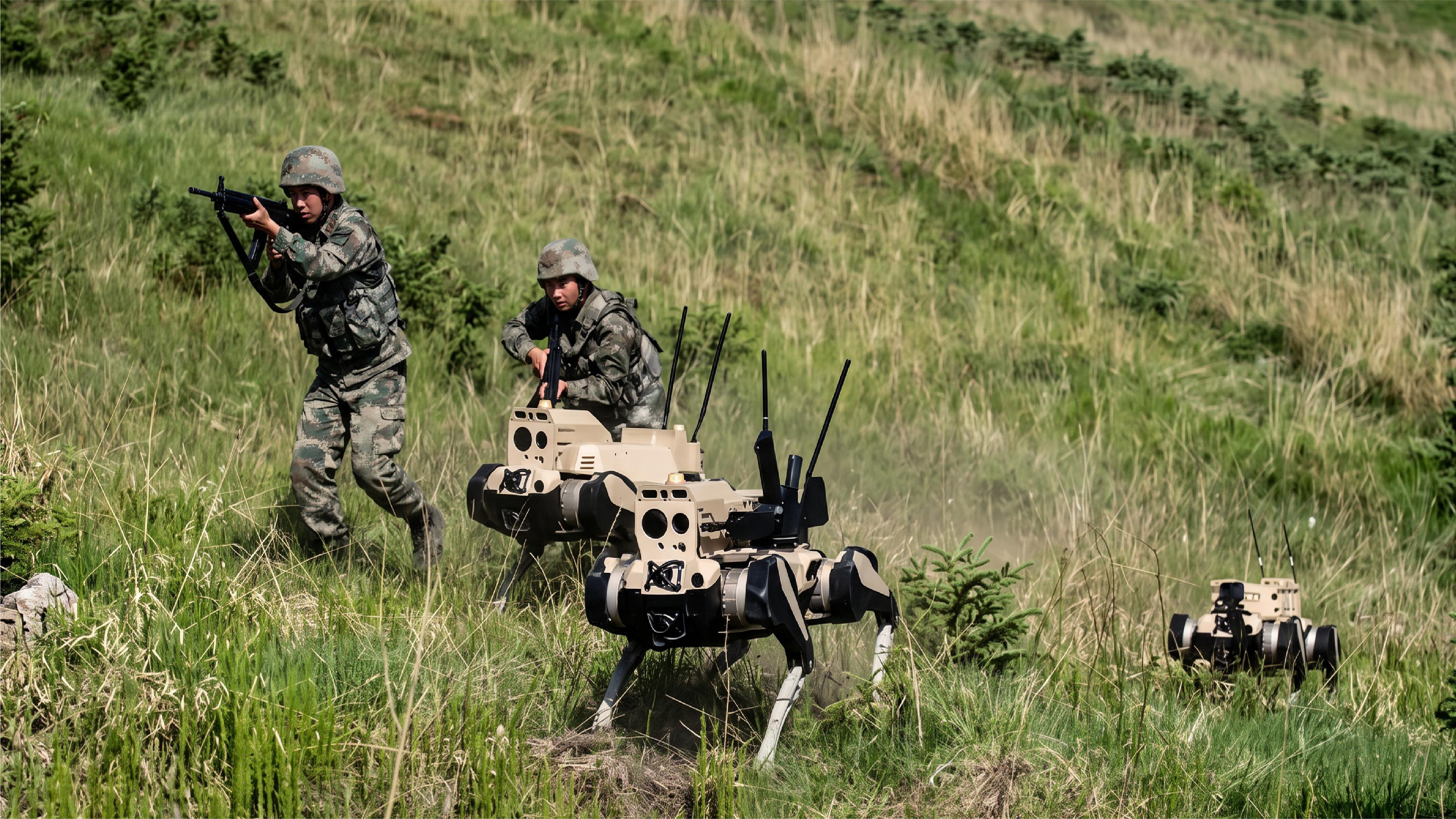
BEIJING — China’s defense establishment increased its work on military humanoid robots during 2025 and 2026, pursuing hardware, perception systems and training data for possible battlefield use, according to a Reuters report published Sept. 7.
The agency reviewed more than 100 military procurement notices, research papers, patents, government records and defense-company materials.
The records describe proposed roles ranging from reconnaissance and base patrols to urban assaults, but do not establish that China has deployed an armed humanoid with an operational People’s Liberation Army unit.
One official military tender (Chinese language source), issued in May 2025, sought a humanoid robot along with installation and technical training. It required the selected supplier to install and commission the system within 90 days of a contract taking effect, according to the agency’s report.
The notice did not publicly identify a model, supplier or intended application. Reuters said it could not determine whether that tender or another seeking a humanoid perception and dexterous-manipulation system resulted in contracts.
A separate procurement document from June 2026 budgeted about $300,000 for a system to collect and label camera, radar and motion data, including information about terrain humanoids could traverse, Reuters reported.
Military researchers are also modeling how robots might accompany soldiers.
In June 2025, a university competition required robots to enter a simulated area, map it and locate targets in an exercise described as infiltration behind enemy lines. Other tasks included identity checks, inspections and security patrols at military installations.
Norinco, China’s state-owned defense manufacturer, has separately promoted its full-size Fuxi humanoid for sentry, patrol and reconnaissance duties. Those capabilities are company claims, and Norinco did not respond to Reuters’ questions.
Humanoids could eventually operate in buildings, tunnels and ships designed around the human body. Wheeled, tracked or quadruped systems remain cheaper and more practical for many reconnaissance and logistics jobs, however. Current humanoids also consume substantial energy and remain unreliable in unpredictable environments.
Malcolm Davis, a senior analyst at the Australian Strategic Policy Institute, told Reuters that humanoid robots are not practical battlefield systems at present but could become viable within five to 10 years.
More articles on this topic
224 articles ReportRobots vs. Drones: What Is the Real Difference?
 ReportHow Animals Inspire Better Robots
 ReportFrom Toys to Tools: The Coolest Robots in Schools Today
 ReportWhat it Really Costs to Own a Personal Assistant Robot at Home
 ReportThis Tiny Robot Hops Like a Frog And Swims Using Elastic Limbs
 ReportJapan Tests Robot Bins at Tokyo’s Busiest Railway Station
 ReportThe Dawn of the Mechanical Safari: Why Robotic Zoos Are the Talk
 ReportHumanoids Struggle With Unfamiliar Chores, New Research Finds
 ReportQuadruped Solves Giant Rubik’s Cube Using Only Its Feet
 ReportNVIDIA Uses AI Agents to Teach Tiny Walking Robot to Navigate Obstacles
 ReportScientists Develop System to Help Robots Gesture Without Losing Balance
 ReportRobotic Fish Offer New Way to Track River Pollution
BUSINESS NEWS WEEKLY LETTER
The Weekly Letter for Robotics Professionals, Summarizing the Most Important Industry Moves, Launches, Deals and Signals.