Japan Tests Robot Bins at Tokyo’s Busiest Railway Station
Three mobile bins are being tested in Shinjuku Station’s underground concourse as JR East studies whether they can collect rubbish while moving safely through crowds.

By Vaishnavi
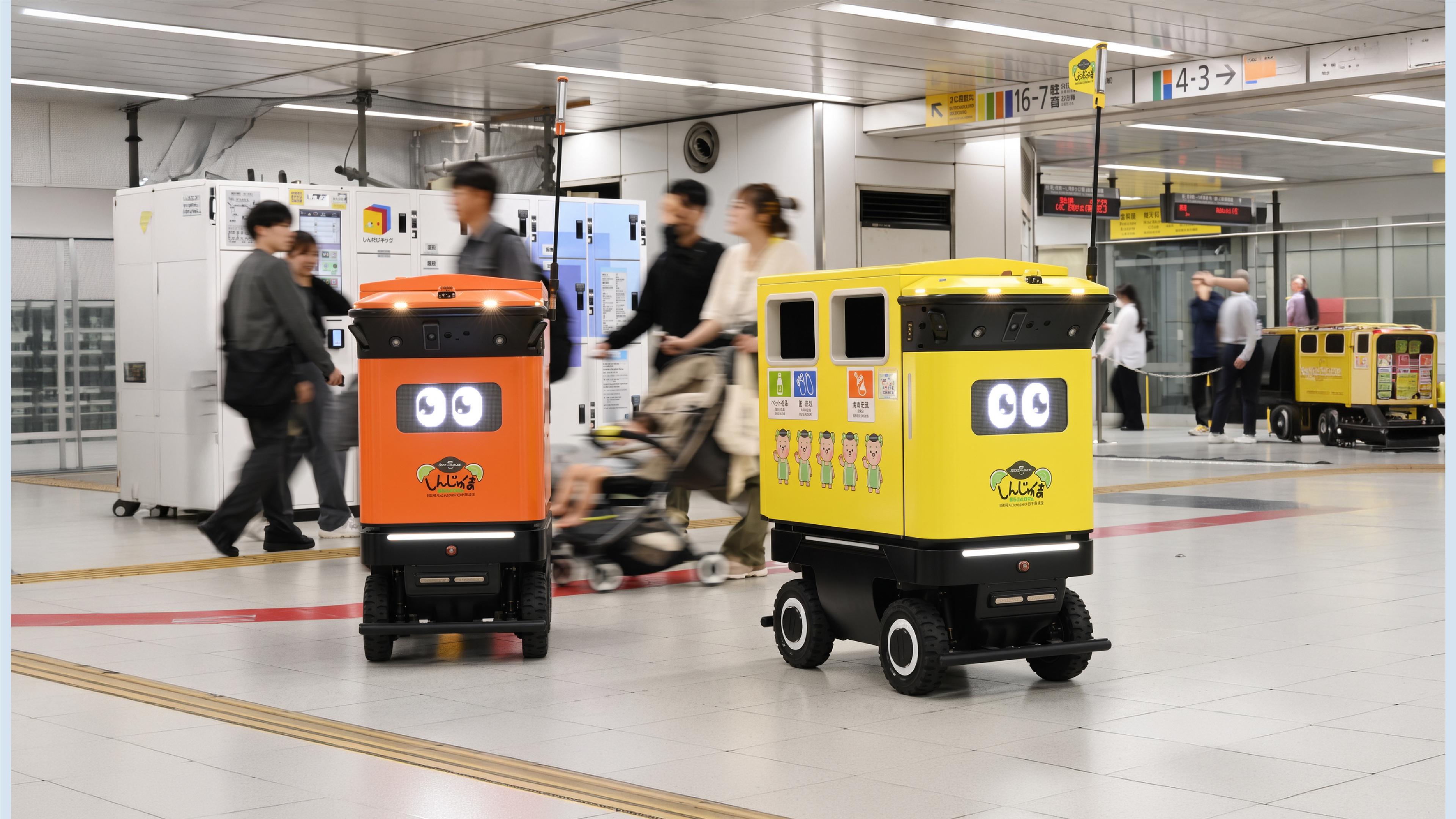
TOKYO, Sept. 21, 2026: Japan is testing robot rubbish bins at one of the world’s busiest railway stations in a bid to ease the workload of sanitation workers, according to an AFP report.
Three mobile robot rubbish bins are being tested at Tokyo’s Shinjuku Station by East Japan Railway Co. The trial began on Sept. 8 and is scheduled to run through Nov. 20, according to JR East’s announcement. The robots operate in the station’s underground paid concourse, where they move around designated routes and collect rubbish.
The project is being conducted in one of the busiest railway stations in the world. According to Guinness World Records, Shinjuku Station is the world’s busiest railway station, with a daily passenger throughput of 2,704,703 in 2022. The station is also served by several railway operators and handles more than 2.7 million passengers a day, according to AFP.
In the section operated by JR East, rubbish bins are emptied manually more than 10 times a day. The number of fixed bins has also been reduced in recent years for cleanliness and security reasons, according to JR East.
Standing at over 1 meter tall, these robots move at a speed of about 20 centimeters per second, reports AFP. The robot bins are designed to collect rubbish and transport it to human sanitation workers, reducing the amount of manual work involved in waste collection.
Speaking on behalf of JR East, Shinya Kawamichi, a research official at the company, said JR East is trying to find out whether the robots can function safely near passengers, according to AFP.
The test is also focused on practical problems that would need to be solved before wider use. JR East says it is assessing the robots’ safety while moving, their performance in crowded conditions and their effect on passenger movement. The company is also testing public acceptance of the mobile bins.
The machines are not replacing the station’s existing bins or sanitation workers. The trial uses an indoor and outdoor autonomous delivery robot developed by U.S.-based Cartken, with Mitsubishi Electric and Melco Mobility Solutions operating the system, according to JR East.
The test is scheduled to end Nov. 20, after which JR East will have more data on how the robots perform in one of Japan’s most crowded public spaces.
More articles on this topic
36 articles ReportRobots vs. Drones: What Is the Real Difference?
 ReportHow Animals Inspire Better Robots
 ReportFrom Toys to Tools: The Coolest Robots in Schools Today
 ReportFive Extreme Sports Where Robots Are Competing
 ReportUnitree Adds $6,500 Dex5-S to Dexterous Hand Lineup
 ReportHow Do Robots See the World?
 ReportChina Raises Scrutiny of Humanoid Robot IPOs After Unitree Shares Fall 55%
 ReportViam Debuts Box-Opening Robot at IROS 2026
 ReportBoston Dynamics Opens New Home For Training Robots
 ReportHuman Gets in the Ring With a Six-Foot Humanoid Robot
 ReportBatteries Included: Why Staying Powered is Hard for Robots
 ReportGeek+ Opens Düsseldorf Lab for Live Warehouse Robot Demonstrations
BUSINESS NEWS WEEKLY LETTER
The Weekly Letter for Robotics Professionals, Summarizing the Most Important Industry Moves, Launches, Deals and Signals.