How Animals Inspire Better Robots
From the depths of the ocean to the skies above, the next generation of robotics is being inspired by nature.

By Jeremy
You’ve seen humanoid robots and industrial machines capable of churning out ships, but some robot designs take a different approach. Many engineers draw inspiration from animals when designing robots, a practice known as biomimicry. By studying animals’ biomechanics, behavior, and even appearance, engineers can develop new technologies and advance robotics in unexpected ways. Below, we’ll look at several robots inspired by the animal kingdom.
Dog Robots For Companionship
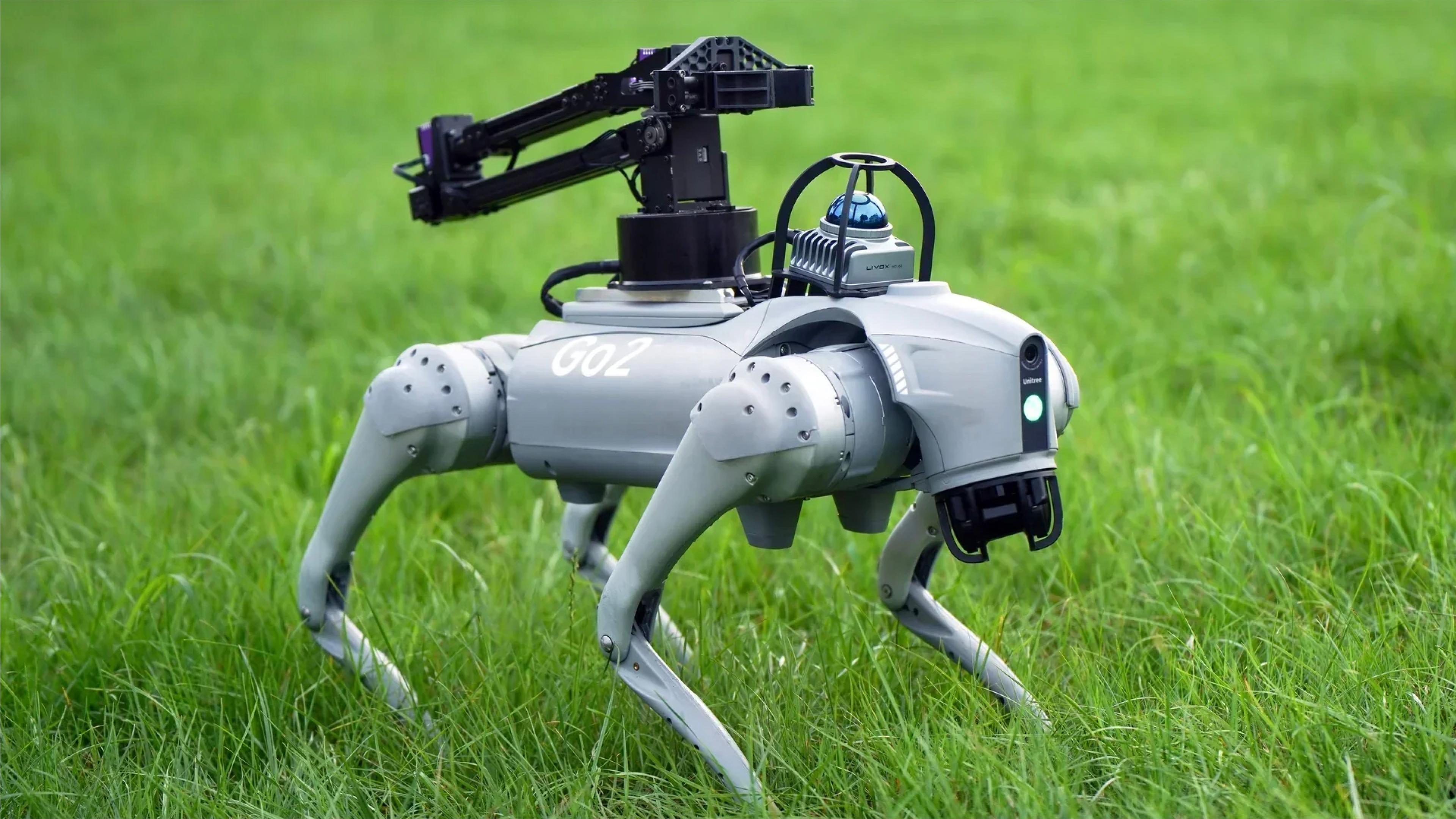
There are plenty of inexpensive toy robot dogs, but the Unitree Go2 is anything but a toy. This quadruped robot dog packs advanced technology that allows it to map your home using LiDAR, use AI to understand its surroundings, and even play music through built-in speakers. Of course, it can also behave like an obedient dog and accompany you on walks.
Robot dogs are designed to interact with and entertain humans, and the Go2 can perform tricks similar to those of a real dog. The company says it can roll over, sit, and shake hands, but it can also walk upside down, jump on one leg, and perform a stationary front flip. Now that’s impressive.
Naturally, Unitree programmed the Go2 with behaviors inspired by real-life canines, but its advanced AI gives it capabilities that go well beyond those of an ordinary dog. The LiDAR system it uses for navigation is also based on principles related to the echolocation abilities of animals such as bats and dolphins.
With the abilities of dogs, bats, and dolphins influencing one package, it’s no wonder robot dogs have become so popular. The Unitree Go2 starts at $1,600 for the base model.
Sticky Gecko Feet For Climbing
Most land-based robots operate on the ground, but some engineers and scientists are challenging themselves to design robots that can climb walls and other surfaces. Professor Robert Full at Berkeley has been working on climbing robots inspired by gecko feet since 2009. Climbing robots inspired by geckos generally rely on several approaches, including dry adhesion, claws, and vacuum adhesion.
A climbing robot design published in March 2026 uses claws to adhere to rough surfaces. In this case, the researchers described a “gecko-like, low-crawling posture” designed to keep the robot stable by keeping its center of gravity low and close to the wall.
Meanwhile, engineers at the University of Waterloo designed a soft robot called GeiwBot that uses ultraviolet light and magnetic forces to move across surfaces. The robot can climb walls and walk on ceilings without an external power supply.
Falcon Wings Inspire Better Flight
Most flying robots are drones that achieve flight using propellers, but robots with flapping wings have long been the subject of research. In September 2025, a group of Chinese engineers unveiled RoboFalcon 2.0. The new design can take off like a bird and fly slowly using a flap-sweep-fold (FSF) wing motion. In other words, the robot flies by mimicking the wing movements of birds.
While RoboFalcon 2.0 is nowhere near as efficient as a living bird, the engineers said the new robot validated their earlier research, particularly a reconfigurable mechanism called the conical rocker mechanism (CRM). Their CRM was also capable of flight.
The team behind RoboFalcon 2.0 isn’t the only group working to develop flapping-wing robots. Engineers at MIT have developed a seabird-inspired robot that can not only fly but also swim. They call it the “flapping-wing aerial-aquatic vehicle,” or FAAV for short.
Assistant Professor of Mechanical Engineering at MIT Raphael Zufferey says researchers can use the FAAV to reach areas that would otherwise be difficult to access. It could “dive into the water to take a measurement or collect a sample, and fly back to deliver the data at a fraction of the cost of traditional methods. Then it could go back out to dive for more.” The robot draws inspiration from puffins, petrels, kingfishers, and other diving birds.
Robots Inspired By Marine Life
Fish robots aren’t new, but you may not know that other forms of marine life have also inspired some unique robots. A team from the University of Science and Technology of China, headed by Nikolaos Freris, based its SpiRobs soft robotic arm on octopus tentacles and elephant trunks. SpiRobs can reel, extend, wind, and grasp objects with an almost 95 percent success rate.
SpiRobs can handle loads up to 260 times their body weight. While the system can function as a standalone robot, the researchers also combined it with a standard drone and used it to hoist a bucket into the air.
Another marine-inspired robot is named Elf. Beihang University designed and developed Elf over six years, and it can swim in areas of the Mariana Trench reaching depths of 10,000 meters. Measuring 50 centimeters long, Elf resembles a batfish in both appearance and movement.
Water pressure in the deepest regions of the Mariana Trench can reach 110 million pascals, equivalent to a 1-metric-ton weight pressing down on a thumbnail. Elf was designed to withstand those extreme conditions, and future robots capable of operating at such depths could help researchers explore the ocean’s deepest regions without the enormous costs associated with conventional exploration methods.
If stealth is the name of the game, the BG-5 Golden Dragon Fish has it in spades. This underwater robot resembles a real arowana fish, and its name refers to its golden coloring. More importantly, it moves using a multi-jointed tail like a real fish, eliminating the need for a noisy propeller.
The BG-5 measures 64 centimeters long, 20.4 centimeters wide, and nine centimeters high, while weighing three kilograms. Its dimensions are similar to those of an adult arowana, allowing it to blend into its environment. Robots like this can also be designed to resemble other species that scientists want to study, much like the Robofish. With the right programming, these robots can move autonomously while gathering data.
Would You Pick A Robot If It Were A Worm?
Scientists who need robots capable of operating in “complex and asymmetric environments” have turned to the humble earthworm for inspiration. By combining soft materials with mechanisms that emulate an earthworm’s muscles, researchers can create robots capable of exploring soil and underground environments. After all, a soft robot can be more flexible and reach areas that conventional rigid robots may struggle to access.
Worm-inspired robots could even become useful in future space missions to other planets or celestial bodies. In unfamiliar and potentially hazardous environments, sending a robot ahead of human explorers could reduce the risks to people. That could become particularly useful if humans eventually reach Mars or other celestial bodies where exploration and resource extraction are planned.
Endless Possibilities
Nature has much to offer robotics, and there are still countless animal-inspired designs to explore. Engineers continue to develop new ideas as technology advances, while new discoveries reveal more possibilities for biomimicry.
From dogs and geckos to falcons, fish, and earthworms, the animal kingdom offers engineers a vast library of solutions to problems that robots face. As researchers continue to study how animals move, sense their surroundings, adapt, and survive, we may see even more robotic designs that borrow their secrets from nature.
More articles on this topic
36 articles ReportRobots vs. Drones: What Is the Real Difference?
 ReportFrom Toys to Tools: The Coolest Robots in Schools Today
 ReportJapan Tests Robot Bins at Tokyo’s Busiest Railway Station
 ReportFive Extreme Sports Where Robots Are Competing
 ReportUnitree Adds $6,500 Dex5-S to Dexterous Hand Lineup
 ReportHow Do Robots See the World?
 ReportChina Raises Scrutiny of Humanoid Robot IPOs After Unitree Shares Fall 55%
 ReportViam Debuts Box-Opening Robot at IROS 2026
 ReportBoston Dynamics Opens New Home For Training Robots
 ReportHuman Gets in the Ring With a Six-Foot Humanoid Robot
 ReportBatteries Included: Why Staying Powered is Hard for Robots
 ReportGeek+ Opens Düsseldorf Lab for Live Warehouse Robot Demonstrations
BUSINESS NEWS WEEKLY LETTER
The Weekly Letter for Robotics Professionals, Summarizing the Most Important Industry Moves, Launches, Deals and Signals.