Humanoids Struggle With Unfamiliar Chores, New Research Finds
Humanoids may be able to master rehearsed chores, but new research shows how unfamiliar rooms and tasks still challenge their ability to adapt.
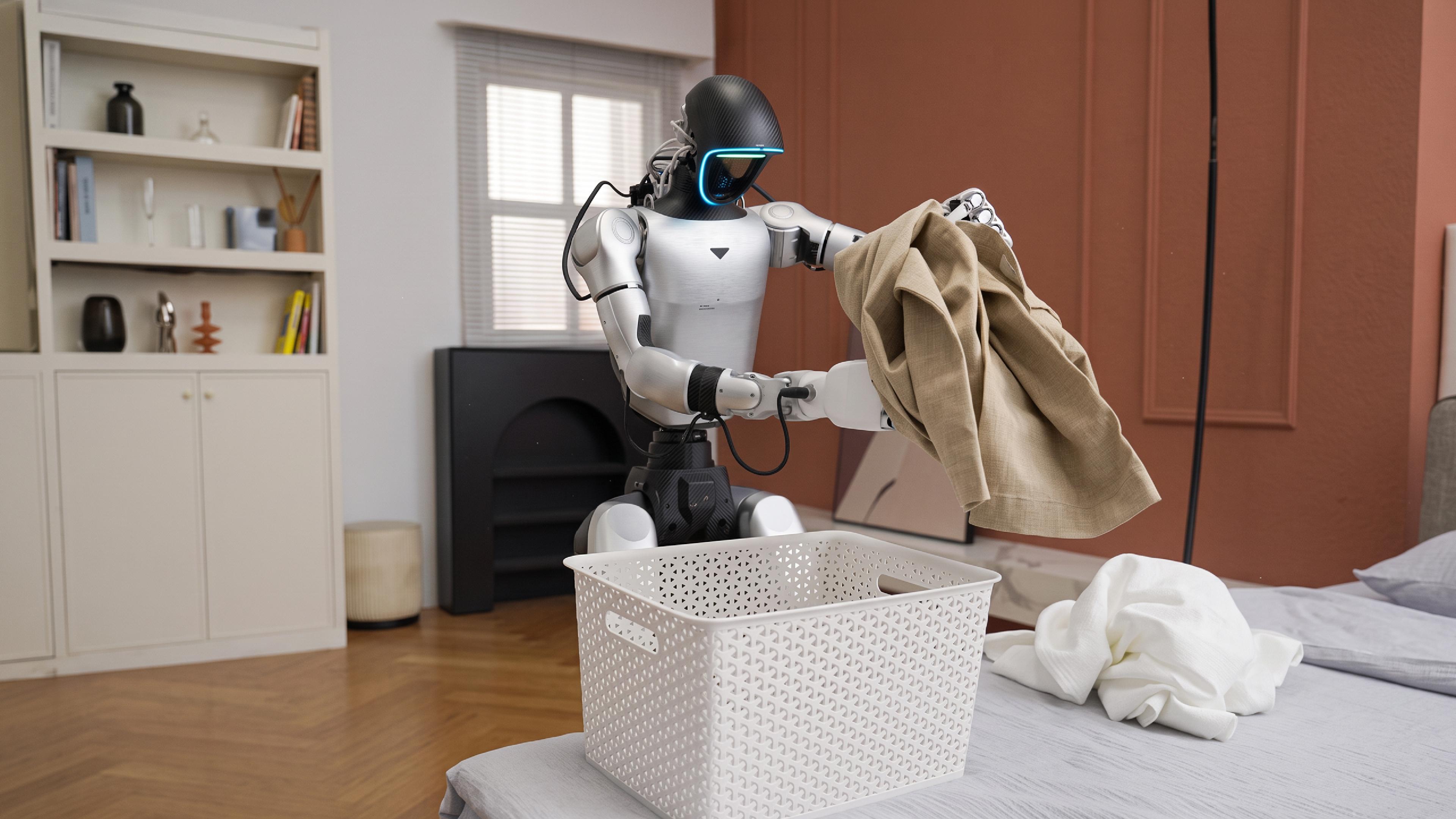
There is no denying that humanoid robots are improving in the execution of household chores, yet new research finds that they still struggle with unfamiliar tasks or work in environments they have never encountered.
What LocoManiLab Tests
To put this to the test, LocoManiLab has been introduced as a platform for gauging how effectively a robot can combine walking, object manipulation and coordinated motion in the typical indoor setting. The study behind it was published on October 22, setting out how the platform measures each of those skills.
In all, 234 tasks were assigned to the robots in five environments, from kitchens and bedrooms to offices, bathrooms, and living rooms. What the researchers found was a gap between a robot’s ability to run through a well-known routine and adapting to new situations.
Where the Robots Fell Short
The team subjected 12 AI systems to varying conditions to see what effect less familiar surroundings, visual cues and tasks would have on them. Take XR-1: where the task was one it had previously encountered, achieving an average success rate of 80.2%. But on unfamiliar ground that figure fell to 25.2%.
New environments were an even tougher test. Of the systems on trial, DM0.5 was the best in a scene not previously encountered with an average of 15.5% achieved. It is telling that present day humanoid AI is so reliant on the examples and situations of their training. A robot will have no trouble opening a drawer in a room it knows, but put it in front of one in a different position or amid strange furniture and it will have difficulty.
Such tasks require more than recognizing objects; the humanoids must come to grips with their target, keep their balance and exert the right kind of force. LocoManiLab is meant to look at these things together rather than evaluating movement and object handling separately.
Controllers, Training and Limits
The researchers also looked at the impact of movement controllers; they compared five of them on things like stability, energy use and how often the robot slips or falls. For the experiments, they made use of 51.5 hours of simulated demonstrations by humans to see how the training affects the robot’s behaviour.
While a Unitree G1 was used for some physical testing of three AI systems on three tasks, most of the work was done in simulation. While their overall performance rankings were consistent across those tests, individual results varied. One should not read too much into the findings as a complete picture of what is on offer in commercial household robots given the scope of the physical trials.
Rehearsed vs. Unfamiliar Homes
What the research offers is a tougher measure of a system’s adaptability. With robotics firms showing off machines that can fold laundry and carry things around the house, there is a distinction to be made between a rehearsed performance and dealing with an unfamiliar home. For a humanoid to be a dependable helper, it will probably need to adapt as well as it moves and handles things.
More articles on this topic
223 articles ReportWhat it Really Costs to Own a Personal Assistant Robot at Home
 ReportQuadruped Solves Giant Rubik’s Cube Using Only Its Feet
 ReportNVIDIA Uses AI Agents to Teach Tiny Walking Robot to Navigate Obstacles
 ReportScientists Develop System to Help Robots Gesture Without Losing Balance
 ReportRobotic Fish Offer New Way to Track River Pollution
 ReportHigh Torque Robotics Partners With Sharebot to Expand Humanoid Access Across China
 ReportAudi Tests Agile Robots' Mobile Humanoids for Factory Logistics
 ReportFrom Flips to Dance Moves: New AI Trains Humanoid Robots in Record Time
 ReportHow a Tiny Robot Searches for Hidden Damage Inside the Wind Turbine Blades
 ReportRadioactive Mess? Better Call Spot
 ReportJapan's LOVOT Companion Robot Makes Abu Dhabi Healthcare Debut
 ReportTesla Starts Optimus Production, Targets First Commercial Deliveries in 2027
BUSINESS NEWS WEEKLY LETTER
The Weekly Letter for Robotics Professionals, Summarizing the Most Important Industry Moves, Launches, Deals and Signals.