Robots vs. Drones: What Is the Real Difference?
By definition, flying drones can be considered robots, whether they're smart, intelligent, or conscious. The divide between robots and drones has nothing to do with intelligence.

By Naba
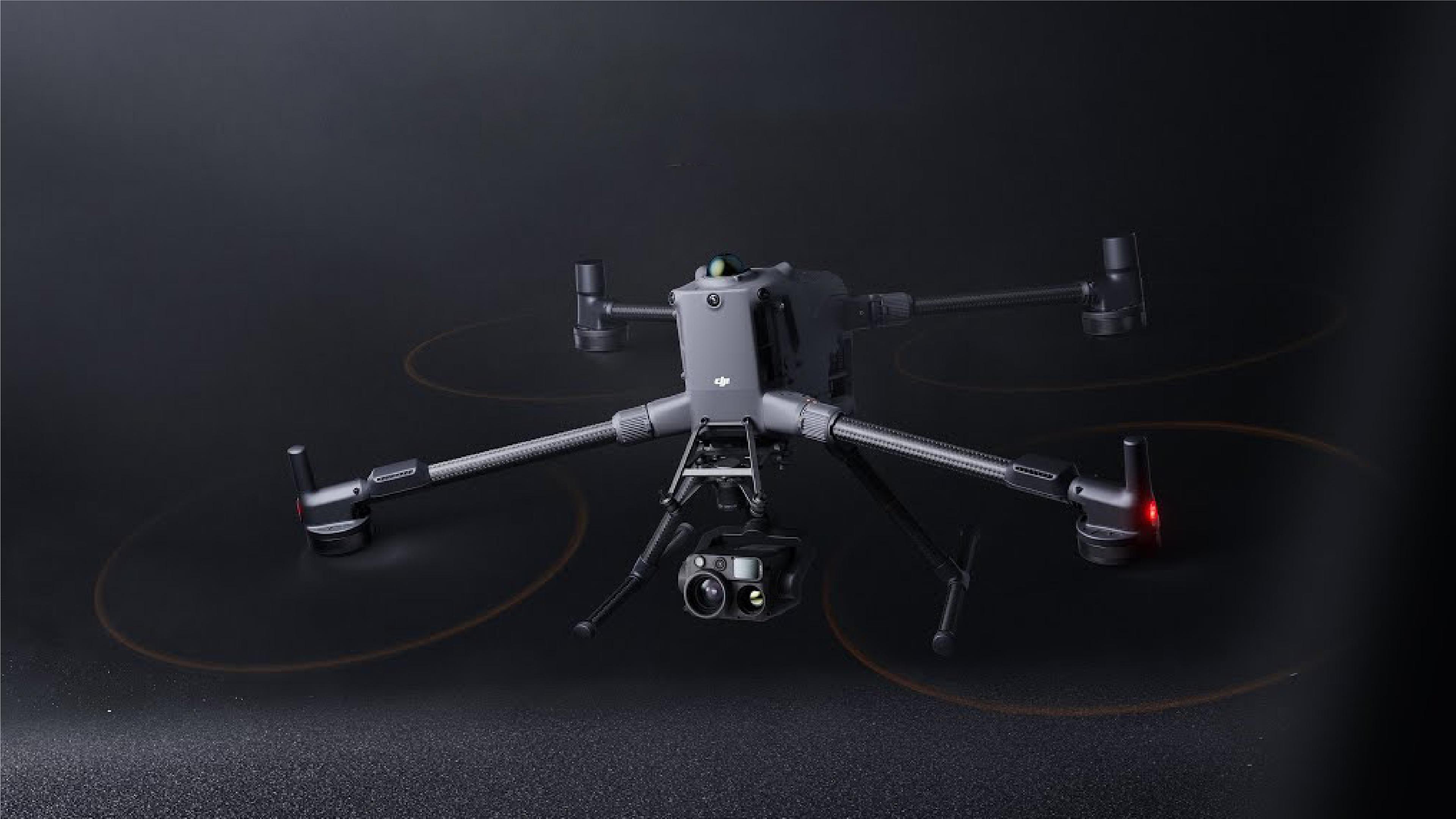
‘Robot’ refers to a machine capable of sensing, computing and acting in the physical world, while ‘drone’ generally describes an unmanned vehicle, most commonly one that operates in the air.
A robot functions, moves, and works autonomously without any physical human help or intervention, whether it's a domestic Roborock bot mopping kitchen floors, or a DJI Matrice giving a real-time view of a construction site.
For instance, the warehouse AMR (MiR), which is an autonomous mobile robot, can maneuver around people, detect obstacles and transport goods without the need for a driver. A humanoid such as Figure 02 has been designed to interact with objects in a human environment. The FANUC industrial arm can repetitively pick, place, weld and assemble parts in a manufacturing line. Although none of these robots can fly, they can all be regarded as robotic devices.
The same can be said of machines that have the ability to fly. For example, the DJI Matrice robot can collect visual data from a construction site while autonomous UAVs can be used for inspection, mapping, surveying, and even delivery purposes. This flying ability does not make them any less robotic than others.
"In many ways, drones are the robots we always imagined would occupy our future," says Andy Miah, professor of science communication and future media at the University of Salford."There has to be some way of distinguishing a robot from what is merely a machine, and it has to do with its place in our world."
When comparing robots and drones, the basic difference is that a “robot” describes a category whereas a “drone” describes a shape. This is irrelevant to their functionality, purpose, and degree of independence. The reason why it can be a misconception is that, in a stereotype, most robots do not take off the ground. But when a drone is flying in the sky and taking account of everything around, it falls under the category of a robot.
The contrast gains relevance when examining how the machine functions. For instance, the Boston Dynamics Spot has the capacity to move around manufacturing sites and check the machinery and record the data from the sensors. The autonomous delivery bot that is made by Starship Technologies uses cameras, sensors, and computing power to drive across the pavement and deliver products. The two robots have totally different designs, but both qualify as robots owing to their sensing and computation abilities.
"Robot" is the umbrella term while “drone” refers to a sub-group within unmanned vehicles which typically have an association with flying but are also used to define all types of unmanned vehicles. A drone is, therefore, a type of robot, though not all robots are drones. The difference is not based on whether the robot has wheels, legs, motors or arms. It lies in the nature of the machine itself and in the surroundings in which it performs its operation.
Different Ecosystems & Individual Limitations
A drone such as a DJI Matrice 350 or a quadcopter like the DJI Mavic 3, operates in three dimensions and adheres to aviation law. In contrast, a wheeled or land rover, such as Amazon's Proteus warehouse robot, functions in 2 dimensions (a bit primitive). Across the US, most commercial drone flights think cell-tower inspections or real estate shoots flown on a Matrice, operate in line with the FAA's Part 107 rules. This regulation caps altitude at 400 feet; in fact, it requires the aircraft to stay within the operator's visual line unless a waiver says otherwise. An unexpected cross over into a restricted air space, and the drone's own flight controller refuses to take off.
Many commercial drone activities that take place in the U.S., including tower inspections and real estate photography, fall under the Federal Aviation Administration (FAA) Part 107 regulations. The Part 107 regulations normally stipulate that the flight should be no higher than 400 feet above the ground and should maintain the visual line of sight of the pilot. Modern drones also combine these regulatory constraints with onboard flight-control systems, geofencing and navigation software that can restrict or warn against operations in certain areas.
When it comes to a wheeled bot, such as Starship Technologies' sidewalk delivery robots or Amazon's Proteus warehouse units, there is no ceiling regulation to adhere to; instead, it answers to all rules that apply to sidewalks, warehouse aisles, or the loading dock it has been assigned to patrol. A floor robot has a much denser set of obstacles instead: pedestrians, shopping carts, curbs, other people's feet. A quadcopter's biggest limitation can be wind intensity and battery life. Whereas a robot’s top obstacle tends to be crowded.
Different Movement Modes
There are no landmarks or obstacles in the sky, which makes a drone's navigation problem unusual. A drone needs to hold a position in the open air with nothing to push against. The quadcopter recenters against wind using onboard gyroscopes and GPS. However, it has a hard limit on how long it can navigate and move freely before the battery runs out. Typical battery time for a consumer quadcopter is between 20 and 30 minutes under real flight conditions. (a DJI Mavic 3, for comparison, is rated for about 46 minutes under ideal test conditions, not real-world flying)
A wheeled rover addresses a different problem. To hold a position on the ground, it has tangible support built under it. A floor bot has a strong path mapping mechanism; it uses cameras, optical vision, and LiDAR to adjust its path in real time. However, it trades the drone’s battery life issue for its traffic problem. However, they still function longer than consumer drones as they have to spend less energy fighting gravity.
Different Purpose & Functions
Both robots and drones serve different purposes, and a task each one of them performs is the product of their environment. Like quadcopters, they are exceptional at reaching remote, dangerous, or on-foot expensive places. For example, using a drone to inspect cell towers, map crop stress across a field, or fly a package in a straight line over traffic instead of through it. In January 2026, Zipline, one of the largest medical and retail drone delivery operators, passed 2 million deliveries. Later, they used this milestone to expand into Houston and Phoenix, based on their capability of flying over congestion rather than through it.
Floor bots or land rovers are good at operating on street-level and floor-level ecosystems where a flying drone would be impractical, loud, or against local aviation rules. In April 2026, Starship Technologies' sidewalk delivery robots marked 10 million deliveries complete across a fleet of 2,700 units, moving at walking pace next to pedestrians instead of over their heads. Similarly, inside buildings, the autonomous floor scrubbers and warehouse fulfillment robots share space and work with forklifts and staff instead of airspace with other aircraft.
Final Two Cents
No feature or function makes land bots better than drones. The question, “which one is more of a robot,” only comes to mind because pop culture conditioned people to picture something humanoid or dog-like when they think about a robot. Whereas people file drones under a separate category of gadget entirely. If this framing is stripped away, both robots and drones perform the identical underlying job. In conclusion, what separates the two is the terrain each one was built to survive, air versus ground, and the rules that come with it.
More articles on this topic
36 articles ReportHow Animals Inspire Better Robots
 ReportFrom Toys to Tools: The Coolest Robots in Schools Today
 ReportJapan Tests Robot Bins at Tokyo’s Busiest Railway Station
 ReportFive Extreme Sports Where Robots Are Competing
 ReportUnitree Adds $6,500 Dex5-S to Dexterous Hand Lineup
 ReportHow Do Robots See the World?
 ReportChina Raises Scrutiny of Humanoid Robot IPOs After Unitree Shares Fall 55%
 ReportViam Debuts Box-Opening Robot at IROS 2026
 ReportBoston Dynamics Opens New Home For Training Robots
 ReportHuman Gets in the Ring With a Six-Foot Humanoid Robot
 ReportBatteries Included: Why Staying Powered is Hard for Robots
 ReportGeek+ Opens Düsseldorf Lab for Live Warehouse Robot Demonstrations
BUSINESS NEWS WEEKLY LETTER
The Weekly Letter for Robotics Professionals, Summarizing the Most Important Industry Moves, Launches, Deals and Signals.