Tesla Starts Optimus Production, Targets First Commercial Deliveries in 2027
With its Fremont production line underway, Tesla faces the challenge of scaling manufacturing while refining Optimus for real-world work.
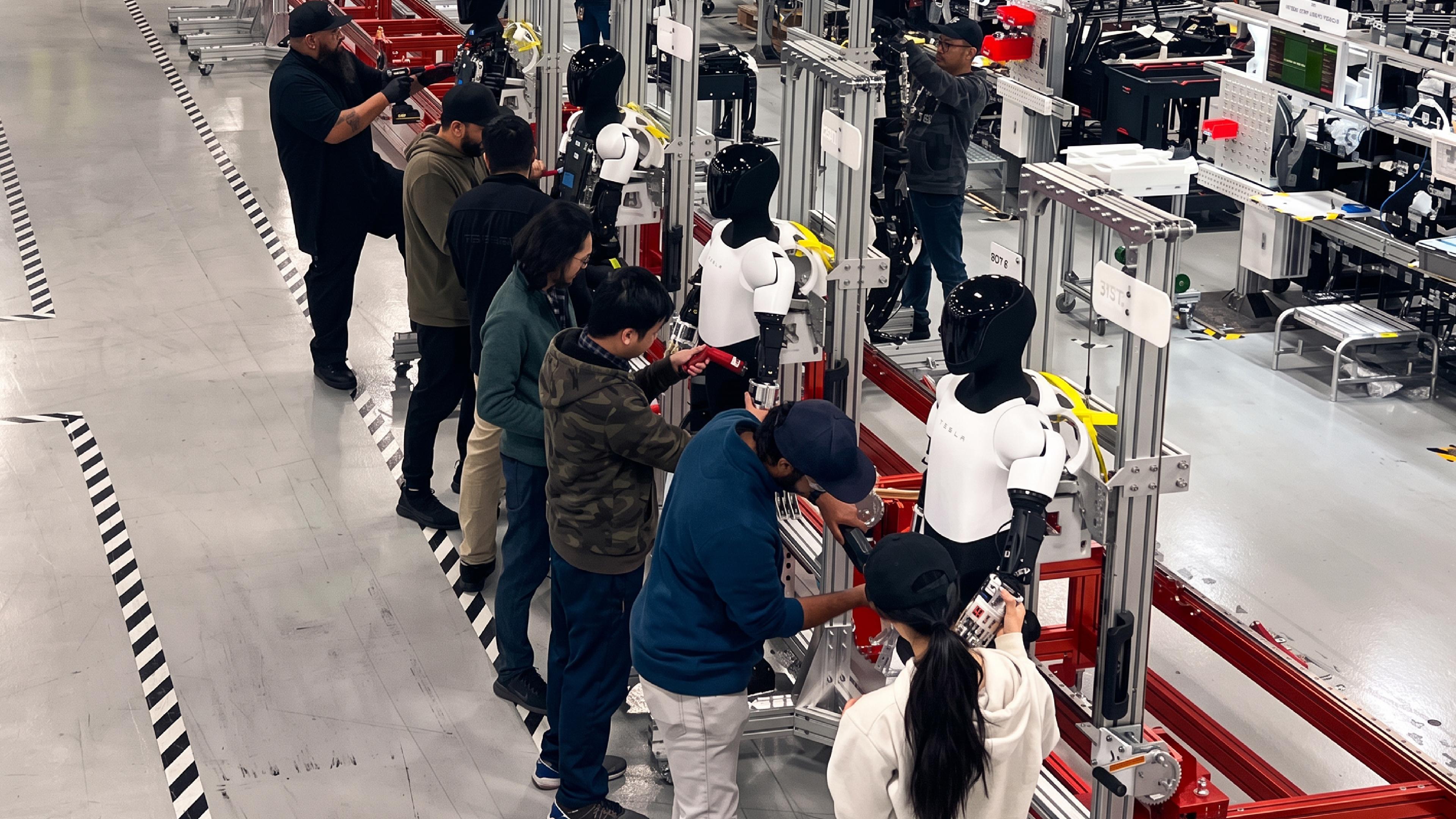
At its Fremont factory in California, Tesla has begun early production of its Optimus humanoid robot. The company is now building the first production-quality units on its lines there, although it has not disclosed how many units have been made completed.
Elon Musk, the CEO, announced a date on when external customers can expect their first deliveries: some time by the end of 2027. By making the announcement on October 21 for the third-quarter earnings call, Musk was underscoring a move to make Optimus a product one can buy rather than just an exercise in research.
Production Begins, but Scaling Will Take Time
"We've started what I call early production on our high-volume line in Fremont," Musk told investors. He noted that the bulk of the equipment for such a line is in place at the facility. Down the road, Tesla wants to be able to produce roughly 1 million of the robots each year, or 20,000 a week. But Musk was careful to point out that reaching those numbers would take a year at the very least, potentially even longer, while they see to the refinement of the design and the way it is made.
To put it in perspective, he said that manufacturing a completely new product requires thousands of components, suppliers and production processes to work together.
Unlike with cars where there is an established means of production, Tesla must build much of Optimus' supply chain while continuing to develop the robot itself.
First Commercial Deliveries Expected in 2027
The third-generation of the robot should be in the hands of external firms by late 2027, with an initial focus on industrial work that is repetitive or potentially hazardous. First though, there is an internal training program run at the request of the Optimus Academy to teach the robot its various tasks. To further its production plans, the company is also building more infrastructure in Austin, Texas.
There are no commercial prices announced by Tesla yet, nor any word on delivery volumes or orders placed.
Reliability Remains a Major Challenge
While the start of manufacturing is a milestone, Musk admits Optimus still needs more development before it can be useful in a wide range of jobs. The robot has to be safe in the vicinity of people and handle itself in unfamiliar surroundings over long periods. Work is ongoing on its AI systems as well for greater autonomy.
All of this is matters because Tesla wants to put its demonstrations and in-house testing behind it. The fact that it’s now in production is a step in the right direction for commercialization but capacity is not the whole story of Optimus’ success. What will really count is if Tesla can provide a dependable robot to a paying customer, and do so in a commercially viable fashion.
More articles on this topic
215 articles ReportWhat it Really Costs to Own a Personal Assistant Robot at Home
 ReportRadioactive Mess? Better Call Spot
 ReportJapan's LOVOT Companion Robot Makes Abu Dhabi Healthcare Debut
 ReportStrawberry-Harvesting Robots Learn to Pick Only Ripe Fruit
 ReportNVIDIA and Agile Robots Launch Humanoid Research Platform
 ReportThe Robots Giving Old Electric Vehicle Batteries a Second Life
 ReportUnderwater Robot Teams Take on the Problem of Seabed Waste
 ReportSmart Robotics to Boost Agriculture, Green Spaces, and Clean Tech
 ReportCould a Single AI Run Different Types of Robots?
 ReportAgility Robotics Co-Founder Reveals Why He Can't Love Digit 5
 ReportDetecting Gas, Braving Heat: This Robot is Built for Danger
 ReportRobots Can Do Physical Work, but Can Businesses Afford Them?
BUSINESS NEWS WEEKLY LETTER
The Weekly Letter for Robotics Professionals, Summarizing the Most Important Industry Moves, Launches, Deals and Signals.