The Robots Giving Old Electric Vehicle Batteries a Second Life
A used EV battery usually still holds about 60 percent of its capacity, and scrapping it throws most of that away. Robots now do the dangerous part of the rescue, opening the pack and testing every cell.

October 22, 2026 by Dr Maulik Vyas
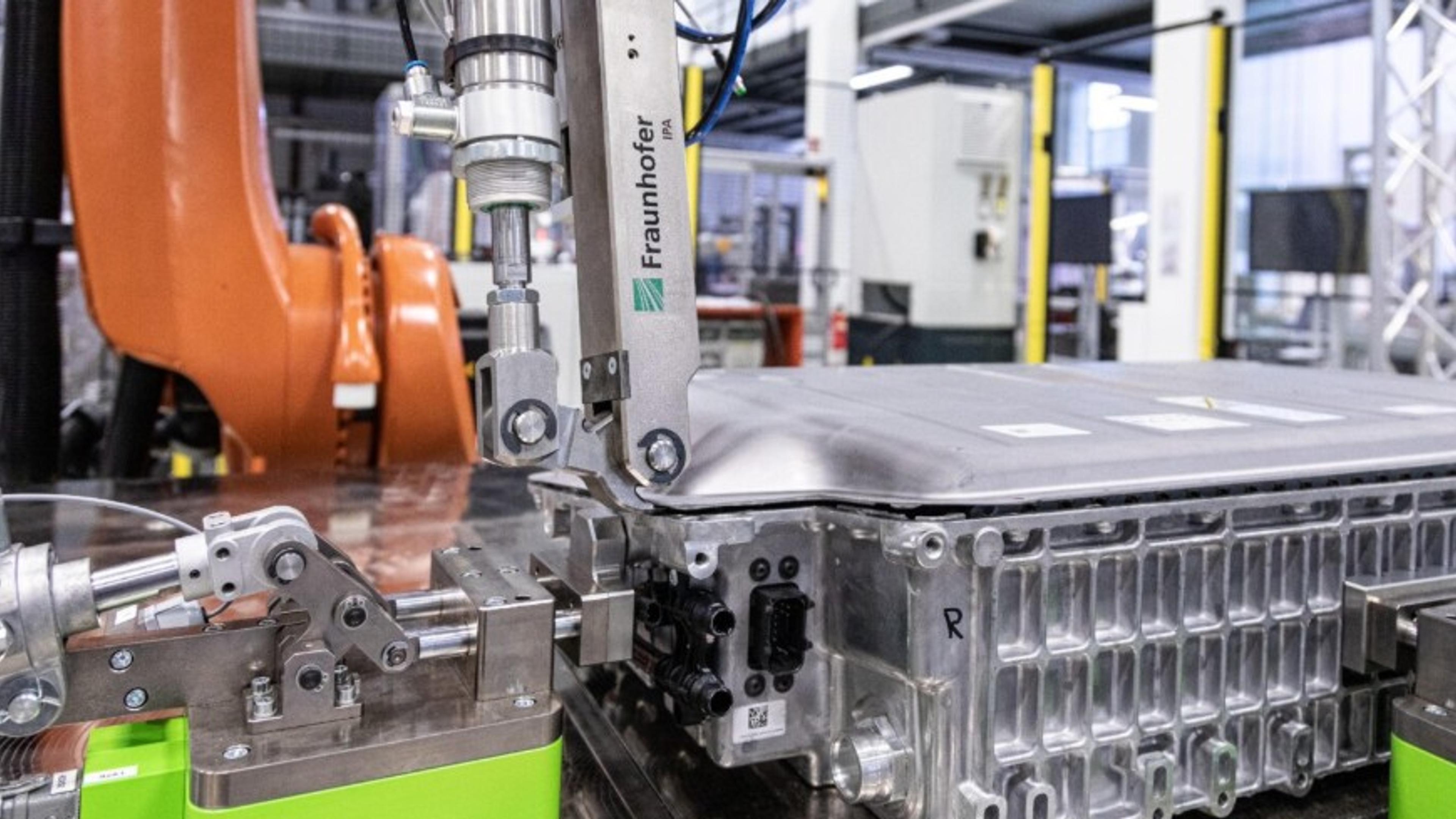
An electric car battery doesn’t die the day it leaves the car. It usually has useful life left, just not enough for the road. The trouble is knowing which cells still have it. Robots are well suited to that job. So, what happens to the leftover life?
Old EV batteries still have value
Most electric vehicles reach the end of their road life after about eight years. By then, the battery has often lost around 40 percent of its capacity. That’s too little for a car, which needs a lot of power and range, but it’s plenty for jobs that ask for less. Storing solar or wind power for a building or a grid is the classic example.
So, the battery isn’t dead. It’s just retired from driving. The real challenge is working out which parts of a pack still have good life, because a pack is a heavy, sealed box of cells and wiring, and not every cell ages the same way. Getting inside is the first problem, and it’s a risky one.
Why humans struggle with the job
A used pack doesn’t switch off just because it’s out of the car. Most still hold significant leftover voltage, which makes handling hazardous. People working by hand have to sort packs, discharge them carefully, then take them apart bolt by bolt. It’s slow, it carries real risk for the workers, and it pushes up the cost of both reuse and recycling.
Then there’s variety. Packs come in many shapes and layouts, and the people doing the dismantling are often small firms that can’t easily afford automation. Add rules that mostly focus on recycling instead of reuse, and the work stays manual. Robots can change part of that picture.
How robots take packs apart
At Oak Ridge National Laboratory in the US, engineers built a robotic system that removes bolts and housings no matter how much charge a pack still holds. A human worker would have to discharge it first. The system can be reconfigured for different pack types. It can stop at the module level, so modules can be reused in stationary storage, or go all the way down to individual cells.
Speed is the selling point. One researcher estimated that in the time it takes to take apart 12 battery stacks by hand in some processes, the robotic setup could handle 100 or more. To build it, the team first dismantles a pack manually while collecting data, then uses that data to design the robot’s tools and controls.
Companies are packaging the idea too. Germany’s R3 Robotics offers purpose-built robot cells and says its software covers more than 100 pack formats, sold either as a service or as on-site automation. Taking a pack apart is only half the job, though. The robot also has to judge what it finds.
How robots decide what gets a second life
A German research project called RoB@t2Cell, led by Fraunhofer, goes a step further. Its robotic cell breaks a pack down to individual cells, exposes the terminals and tests each cell on its own. Then it makes a call: reuse as is, remanufacture, or recycle for raw materials.
The project targets what its team calls a safety dilemma. To make dismantling safe, old batteries are often deeply discharged across the board. That can wreck the delicate structure inside the cells, including ones that were still good. So the system adjusts the discharge to each cell’s destination. Cells headed for recycling are deeply discharged, while cells meant for reuse are brought gently to a set charge level that protects their remaining capacity. Pilot testing is planned at the materials company Umicore.
A simpler version of the idea comes from JOANNEUM RESEARCH in Austria. Its concept wires a small tester to an industrial robot, which reads cell voltages through two copper cables and sorts them against preset thresholds for a first health check. It’s rough, but it’s fast. So why isn’t every old battery handled this way?
What still slows things down
Part of the answer is accuracy. A voltage reading gives only a first impression of a cell’s health, not the full story, so deeper testing still matters. Part of it is standards. Safety rules for batteries focus mainly on testing before a product reaches the market, and few cover how to take a used pack apart or rate its leftover health.
Design plays a role too. Packs that were never built to be opened make robots work harder. Researchers argue that standards and battery redesign could make automated testing and disassembly far simpler.
Then comes money. A robotic cell is a big investment, and some disassembly services mean shipping heavy, hazardous packs over long distances, which adds cost. The Oak Ridge team stressed that the value recovered has to justify the process. Even so, the direction is clear, and the payoff isn’t small.
Where the batteries go next
The battery cells that pass the test are used for stationary storage. Here, they help smooth out solar and wind power. On the other hand, the rest go to recyclers that recover cobalt, lithium and metal foils. The process of sending a battery through both routes results in more value out of the same materials and cuts the need for brand-new cells.
Robots make that routing possible at volume. Without them, sorting thousands of packs would stay slow, risky and costly. Giving old EV batteries a second life depends on knowing what’s inside them. Robots make that safer and faster, one pack at a time. The harder part is usually standards and economics, not the machines.
More articles on this topic
211 articles ReportWhat it Really Costs to Own a Personal Assistant Robot at Home
 ReportNVIDIA and Agile Robots Launch Humanoid Research Platform
 ReportUnderwater Robot Teams Take on the Problem of Seabed Waste
 ReportSmart Robotics to Boost Agriculture, Green Spaces, and Clean Tech
 ReportCould a Single AI Run Different Types of Robots?
 ReportAgility Robotics Co-Founder Reveals Why He Can't Love Digit 5
 ReportDetecting Gas, Braving Heat: This Robot is Built for Danger
 ReportRobots Can Do Physical Work, but Can Businesses Afford Them?
 ReportHumanoid Walks 560km in Nine-Day Durability Test
 ReportChina Targets Retail and Logistics in New Embodied AI Plan
 ReportWhat Happens When Robots Lose Their Internet Connection?
 ReportChina's Industrial Robot Output Surges 29% in Nine Months
BUSINESS NEWS WEEKLY LETTER
The Weekly Letter for Robotics Professionals, Summarizing the Most Important Industry Moves, Launches, Deals and Signals.