Could a Single AI Run Different Types of Robots?
Google DeepMind and Skild AI say one AI model can already control very different robots. Here's how it works, and what could still go wrong.

October 21, 2026 by Dr Maulik Vyas
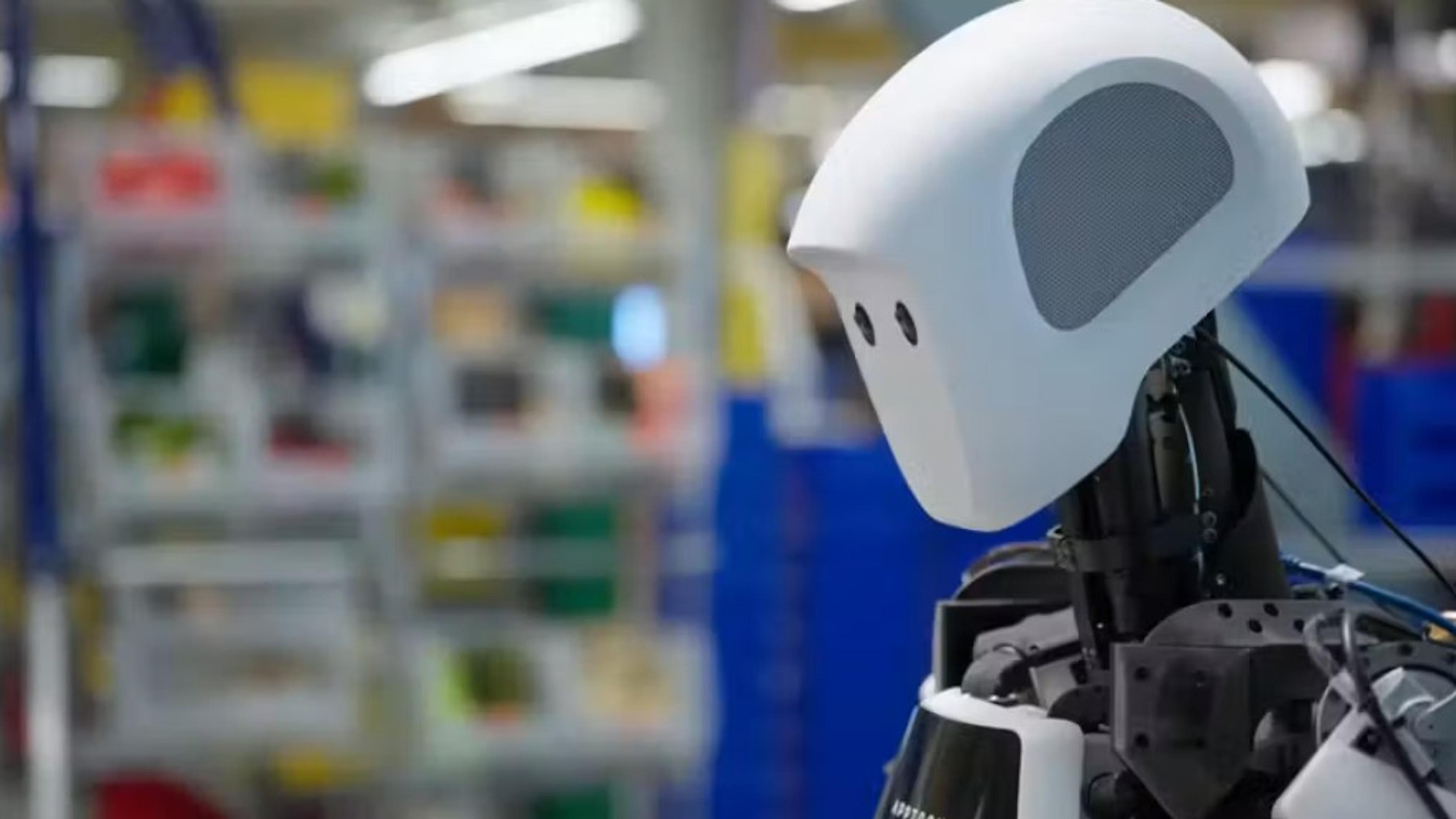
Today, most robots come with their own custom software. A warehouse arm, a humanoid and a robot vacuum each need a different program written for their own bodies. That's slow and expensive, which is why researchers want one AI that can drive them all. Why is that so hard?
Why every robot needs its own brain today
Robots and humanoids come in all shapes and sizes, and they have different cameras, different joints and a number of ways to move. Such movement engineers call DoF (degrees of freedom). However, a skill learned on one machine rarely works on another as the commands that move one arm make no sense for a different body. Hence, companies usually train a new model for every robot. As a result, it takes a lot of data, and robot data is slow to collect. Nobody has an internet-sized pile of it, the way language models have text.
The idea behind a shared brain is to train once, on many bodies, and let skills carry over. Google DeepMind has tested that idea on real hardware.
Google DeepMind's cross-embodiment test
In late 2025, DeepMind introduced Gemini Robotics 1.5, a pair of models. One, Gemini Robotics-ER 1.5, acts as a planner that reasons about a task. The other, Gemini Robotics 1.5, turns those plans into motor commands. DeepMind tested the second one on three different machines: a two-armed ALOHA 2, a bi-arm Franka robot and Apptronik's Apollo humanoid.
The result was striking. Skills collected on one robot worked on another without retraining. A task learned on ALOHA 2 could run on the Apollo humanoid, which is much harder to control. A technique called Motion Transfer helps the model line up the different bodies.
There's a catch. Models trained on a single robot did poorly on the same test, and the benefit depended on how much data each machine already had. The planning model is available to developers through Google AI Studio, while the action model went to select partners first.
That's a research lab. Startups are making a bigger claim.
Skild AI's omni-bodied brain
Skild AI, a Pittsburgh startup, has a name for its robot model: the Skild Brain. The company calls it omni-bodied, which is a fancy way of saying it isn’t tied to one machine. Investors liked the pitch. On January 14, 2026, Skild announced a $1.4 billion round that put its valuation above $14 billion. SoftBank led it, and NVIDIA’s venture arm and Jeff Bezos joined in.
The claims are big. Skild says one model can run quadrupeds, humanoids, tabletop arms and mobile manipulators, even ones it never trained on. The trick, it says, is in-context learning. Instead of following a fixed script, the model adjusts as it learns from what’s happening in front of it. The training mix is unusual too. Some of it comes from simulation at huge scale, and some from internet videos. The rest comes from people teleoperating robots and from machines already working in the field.
The company also says it was profitable in 2025, with revenue of about $30 million. Rivals are circling too. Physical Intelligence has raised $400 million to build its own general robot model. Still, a big funding round isn't a proven product. If the approach does work, the effects reach well beyond the lab.
What a shared brain could change
If one model really can run many robots, three things shift. Robot makers could license a ready-made brain instead of writing control software from scratch. Every deployment could feed data back, so the model improves with each new robot in the field. And skills learned on an expensive lab machine might reach cheaper hardware.
Some analysts compare it to the PC, where operating systems separated software from hardware. Intelligence becomes a layer you buy. That could shift power from robot manufacturers toward software firms.
For you as a buyer, the payoff may be simple: a home robot that learns new chores faster, and perhaps at a lower price. That's the optimistic version. The risks deserve equal time.
What could still go wrong
Valuations aren't proof. Analysts covering Skild's round said as much: investor confidence doesn't show the technology works in the real world. Most demos happen in labs and controlled setups.
Hardware gaps are another limit. DeepMind's own paper says the benefit of mixing data depends on how much each robot already has, and it calls the humanoid harder to control. A brain that handles a robot arm well may still struggle with a walking robot on uneven ground.
Then there's safety. A shared model can share its mistakes across every robot that runs it. Now, that is a fair concern for any system built this way, and that is why a proper QA/QC check before release matters a lot.
So, what does all of this mean for the robots you might actually buy?
What it means for everyday robots
Don't expect one AI running your vacuum, lawn mower and humanoid next year. Today's home robots still use separate software. But the direction is clear. Makers that can share learning across machines will improve them faster.
When you shop, ask how a robot gets new skills, and how long the company promises to support it. A shared brain only helps if the company behind it sticks around.
A single AI running every robot isn't here yet. But early tests show skills can move between bodies, and investors are betting heavily on it. The real question now is how well that shared brain performs outside the lab.
More articles on this topic
211 articles ReportWhat it Really Costs to Own a Personal Assistant Robot at Home
 ReportNVIDIA and Agile Robots Launch Humanoid Research Platform
 ReportThe Robots Giving Old Electric Vehicle Batteries a Second Life
 ReportUnderwater Robot Teams Take on the Problem of Seabed Waste
 ReportSmart Robotics to Boost Agriculture, Green Spaces, and Clean Tech
 ReportAgility Robotics Co-Founder Reveals Why He Can't Love Digit 5
 ReportDetecting Gas, Braving Heat: This Robot is Built for Danger
 ReportRobots Can Do Physical Work, but Can Businesses Afford Them?
 ReportHumanoid Walks 560km in Nine-Day Durability Test
 ReportChina Targets Retail and Logistics in New Embodied AI Plan
 ReportWhat Happens When Robots Lose Their Internet Connection?
 ReportChina's Industrial Robot Output Surges 29% in Nine Months
BUSINESS NEWS WEEKLY LETTER
The Weekly Letter for Robotics Professionals, Summarizing the Most Important Industry Moves, Launches, Deals and Signals.