Housekeepers Could Become the Training Data for Robots in Singapore
YYForce intends to investigate the behaviors of hotel workers to create humanoid robots that can perform future housekeeping and banquet tasks.

October 14, 2026 by Nisha
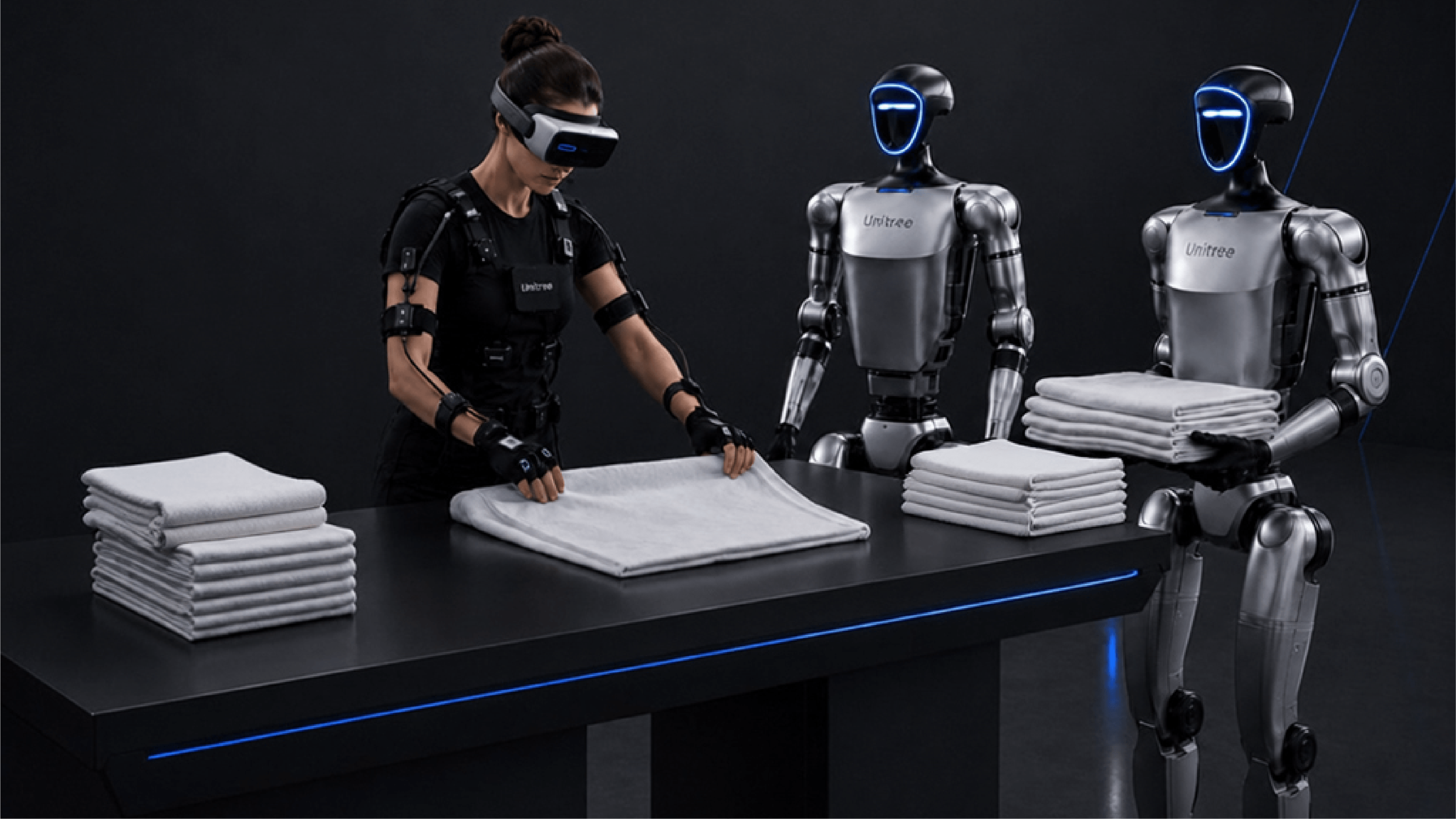
A housekeeper's expertise is put to the test in every hotel room. Attendants manoeuvre around confined corners, deal with dozens of items, and perform hours of tasks, in rapid-fire succession, in correct order. Very little of this expertise is documented. However, YYForce, based in Singapore, is aiming to document and translate it to humanoid robots.
As part of the collaboration, YYForce will study the cleaning operations at both Novotel Singapore on Stevens and Mercure Singapore on Stevens, which has a total of 772 rooms.
This will contribute to the knowledge required to enhance the humanoid development, the company said. Its knowledge will then serve as an essential resource for machine learning.
"YYForce will track the locations of room attendants, the physical space they work in, and the room they are required to move to and operate in. It will also cover the flow of operations of banquet departments. The goal is to build the results into future robotic capacity and to develop these robot attendants to co-operate with human employees in specific areas."
This raises an improtant question, especially for the hospitality and service industry. Can the people who have mastered a job also become essential to teaching its robotic counterpart? If so, frontline hotel staff could have a role in automation that goes beyond simply being replaced by it.
A wider industry trend
YYForce is not alone. Laundry, one of the most repetitive back-of-house tasks, has become an early proving ground.
Taku, a wheeled semi-humanoid robot from US firm Dyna Robotics, has been taught a hotel laundry cycle that takes an hour. The robot loads and operates washers and dryers, folds towels, then puts them away. Dyna says it has programmed Taku using human demonstrations of the task itself and the movements needed to do it. Dyna describes this as a demonstration and does not claim Taku is currently doing laundry for a real hotel.
Dyna is also exploring a commercial rollout with Monster Laundry in Sacramento, California. That installation not only addresses a narrower task, but it demonstrates that robots can be integrated with existing service operators rather than forced to take over their work.
Outside of hospitality, Humanoid developer 1X has been experimenting in the most intimate environment of all: the home. Robots have been installed in staff's homes, and in March 2025 the company announced a week of collaboration with NVIDIA's GEAR Lab to help their NEO Gamma robot learn how to do the dishes.
Crowdsourcing the craft
Figure AI, which makes the Figure 03 humanoid, has now gone a step further with that concept. Founder Brett Adcock launched Index on August 25, 2026, converting Figure's four-month-old crowdsourced data company into a free app that pays people to film household and work activities for its humanoids. The clips are cleaned up and fed into Helix, the company's vision-language-action AI model that is used to steer its Figure 03 robots.
Index can also be used by homes and businesses to find and reserve a contributor to do chores and other work for you, and Figure's longer-term vision is a network that dispatches people to do that work today and robots to do it someday.
While YYForce is looking at a specific set of hotel employees in their own workplace, Figure is surveying thousands of people across the globe on their daily chores. Both are counting on the same hunch: The quickest way to teach a robot the physical task is to observe the humans already doing it.
More articles on this topic
215 articles ReportWhat it Really Costs to Own a Personal Assistant Robot at Home
 ReportRadioactive Mess? Better Call Spot
 ReportJapan's LOVOT Companion Robot Makes Abu Dhabi Healthcare Debut
 ReportTesla Starts Optimus Production, Targets First Commercial Deliveries in 2027
 ReportStrawberry-Harvesting Robots Learn to Pick Only Ripe Fruit
 ReportNVIDIA and Agile Robots Launch Humanoid Research Platform
 ReportThe Robots Giving Old Electric Vehicle Batteries a Second Life
 ReportUnderwater Robot Teams Take on the Problem of Seabed Waste
 ReportSmart Robotics to Boost Agriculture, Green Spaces, and Clean Tech
 ReportCould a Single AI Run Different Types of Robots?
 ReportAgility Robotics Co-Founder Reveals Why He Can't Love Digit 5
 ReportDetecting Gas, Braving Heat: This Robot is Built for Danger
BUSINESS NEWS WEEKLY LETTER
The Weekly Letter for Robotics Professionals, Summarizing the Most Important Industry Moves, Launches, Deals and Signals.