Education, Research And Developer Robots: What Are The Platforms Training the Next Robotics Generation?
Aldebaran and Franka Emika, two of robotics education's most widely used platform makers, both went through insolvency within two years of each other. The developer robots replacing them, Unitree's G1 EDU and ROBOTIS's TurtleBot3 are backed by companies with a separate, larger business behind them.

September 1, 2026 by Business Desk Team
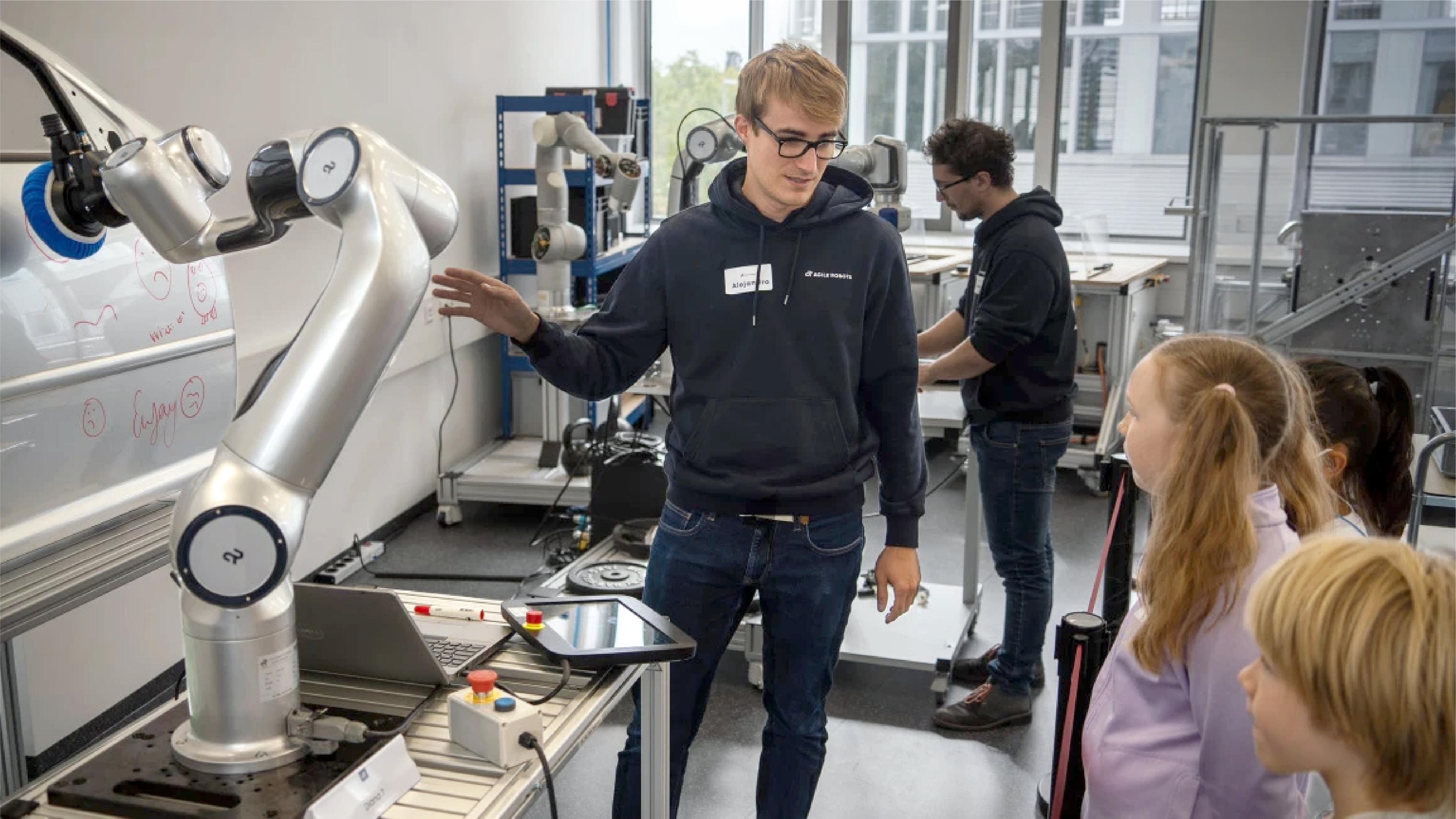
A small number of robots have become the shared language of robotics classrooms, research labs, and developer kits, NAO in education, Franka's arm in manipulation research, TurtleBot across both, and a new generation of cheap developer humanoids. Their business models look nothing alike.
Which platforms train students?
NAO is about as close as robotics education gets to a common language. Roughly 20,000 units have sold across 70 countries, and the humanoid has anchored RoboCup competitions and undergraduate courses for two decades.
Aldebaran entered French receivership in June 2025, after United Robotics Group pulled its funding in 2024 and the company posted an operating loss of roughly $29 million the year before.
Chinese manufacturer Maxvision Technology Corporation picked up Aldebaran's core assets at auction that July for €900,000, against a €500,000 opening bid, then set up a French subsidiary, Maxtronics Robotics SAS, on 28 August 2025 to keep NAO going with much of the original team.
The Robot Report's receivership coverage points to Pepper, Aldebaran's service-robot sibling, as part of what dragged the company down: Pepper depended on subscription contracts that customers kept declining to renew, a weakness stretching back a full decade.
Even the cheapest end of the market is pulling away from hardware. Lego Education is retiring Spike Prime from sale by 30 June 2026 in favor of software- and AI-focused curriculum products.
Which platforms train researchers?
Franka's Research 3 arm is the default reference platform for manipulation research described on its own product page as the "reference world-class, force-sensitive robot system" for the field.
Being the default didn't keep the company solvent, either. Franka Emika filed for insolvency in August 2023 and was rescued that November by Agile Robots, for a sum German outlet Handelsblatt put above €30 million. The rebranded Franka Robotics kept the product line running.
TurtleBot tells a steadier story, mostly because it split into two lineages under two different owners. South Korea's ROBOTIS developed TurtleBot3 back in 2017 with Open Robotics and still builds and sells it; the same company also makes OP3, a small humanoid built specifically for research and teaching. Rockwell Automation took the other branch when it bought Clearpath Robotics and its OTTO Motors unit in 2023 for more than $600 million picking up OTTO's warehouse-automation business along with Clearpath's own TurtleBot 4, a separate model built on an iRobot Create 3 base.
TurtleBot 4 launched through a decade-long partnership with Open Robotics at $1,850 for the standard model and had already shipped more than 16,000 units at launch, according to co-creator Tully Foote. Students learning ROS 2 on TurtleBot in labs like the University of Waterloo's RoboHub are, not coincidentally, potential future customers for Rockwell's much larger industrial automation business.
Which platforms train developers?
Unitree splits its G1 humanoid into two tiers aimed at two different buyers. The base model runs $13,500 before tax and shipping, but it ships with no SDK at all "demo only," in the company's own words. Unlock the full Python/C++/ROS 2 stack and optional Nvidia Orin compute, and the price through authorized distributors climbs to roughly $24,500.
Even at that higher price, it's a fraction of what research-grade humanoids used to cost. Boston Dynamics didn't open commercial sales of its Spot quadruped until 2020, and even then at $74,500, a figure aimed squarely at enterprise and research budgets, not volume adoption.
Sitting underneath nearly all of this hardware is Nvidia. Its Jetson Thor developer kit launched in 2025 at $3,499 and is already showing up inside humanoid stacks from Boston Dynamics, Figure, Agility Robotics, and others. Nvidia doesn't sell a complete robot itself, its compute and simulation tools, Isaac Sim and Jetson, are licensed out to whoever is building the hardware.
Put the three categories side by side, and a pattern shows up. NAO's ubiquity and Franka's status as the manipulation-research standard didn't stop either company from going through formal insolvency both sold hardware into one-time university purchases with nothing recurring behind it, and both filed within roughly two years of each other. ROBOTIS has kept TurtleBot3 and OP3 running as part of a wider actuator and robotics business rather than leaning on either platform alone. TurtleBot 4 and Unitree's EDU line have something similar going for them: each sits behind a parent company, Rockwell Automation and Unitree itself whose main business doesn't depend on classroom or lab sales at all.
More articles on this topic
215 articles ReportWhat it Really Costs to Own a Personal Assistant Robot at Home
 ReportRadioactive Mess? Better Call Spot
 ReportJapan's LOVOT Companion Robot Makes Abu Dhabi Healthcare Debut
 ReportTesla Starts Optimus Production, Targets First Commercial Deliveries in 2027
 ReportStrawberry-Harvesting Robots Learn to Pick Only Ripe Fruit
 ReportNVIDIA and Agile Robots Launch Humanoid Research Platform
 ReportThe Robots Giving Old Electric Vehicle Batteries a Second Life
 ReportUnderwater Robot Teams Take on the Problem of Seabed Waste
 ReportSmart Robotics to Boost Agriculture, Green Spaces, and Clean Tech
 ReportCould a Single AI Run Different Types of Robots?
 ReportAgility Robotics Co-Founder Reveals Why He Can't Love Digit 5
 ReportDetecting Gas, Braving Heat: This Robot is Built for Danger
BUSINESS NEWS WEEKLY LETTER
The Weekly Letter for Robotics Professionals, Summarizing the Most Important Industry Moves, Launches, Deals and Signals.