Why Humanoid Robot Hands are More Important than Legs
Robot legs help humanoids move, but advanced hands may determine how well they can interact with objects, perform tasks, and become genuinely useful.

August 18, 2026 by Carl
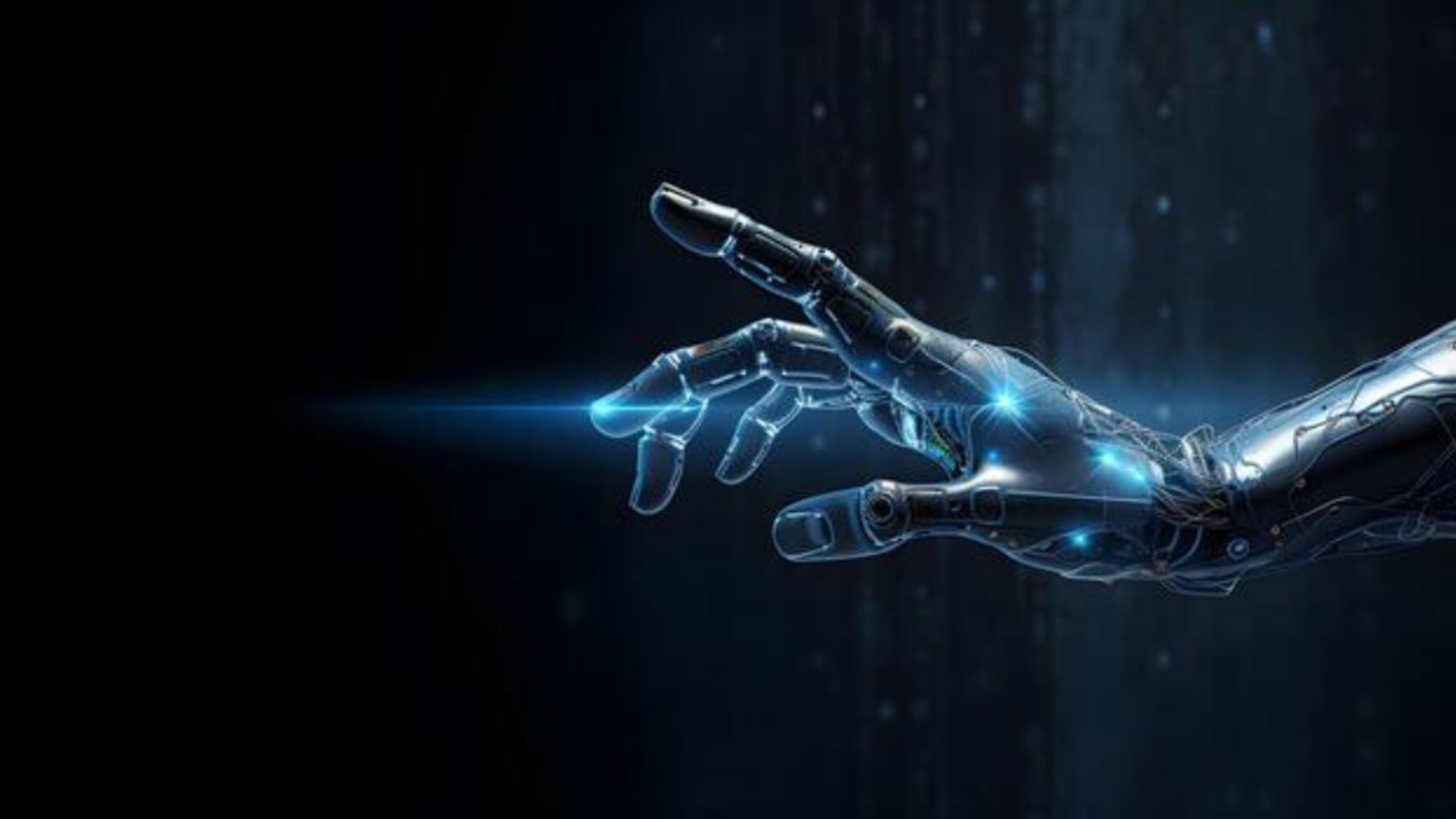
There was a time when humanoid robots were judged on the basis of how they walk. A robot that could balance itself, climb stairs, run or save itself from falling was considered an impressive one. A robot moving and performing tasks just like a human made it look more intelligent and capable. However, in today’s world, there’s another very important part of a humanoid’s body. And that is its pair of hands. Walking allows a robot to move from one place to another. Hands allow it to actually do something when it gets there.
A robot can walk into a kitchen, but that does not necessarily make it useful. Just simply walking to the kitchen isn’t enough. Once it enters there, it must perform a variety of tasks like unloading a dishwasher, for example. And to do so, it needs to recognize a cup, reach for it, grip it without breaking it, lift it, rotate it, carry it and place it in its designated spot. The same is true for folding clothes, opening doors, using tools, sorting products, handling food or working on a factory line.
This is why the next major breakthrough in humanoid robotics may not come from better legs. It may come from better hands.
Getting There vs. Getting Things Done
The difference between locomotion and manipulation is simple. Legs provide mobility. Hands provide interaction. A robot with human-like legs can move around an environment. But a robot with highly capable hands can interact with the objects inside that environment. This distinction is becoming increasingly important as humanoid robots move from demonstrations toward real-world work.
Consider a warehouse. A humanoid robot might need to walk several meters to a shelf. That part may be relatively straightforward. The difficult part can begin when it reaches the shelf. The robot has to identify the correct object, determine how to grasp it, position its fingers around it, apply the right amount of force and move it without dropping or damaging it.
A similar problem appears in a home. Picking up a rigid box is one thing. Picking up a thin plastic bag, a slippery glass, a soft piece of clothing or a small electronic cable is much harder.
Building a Human-Like Hand
The human hand looks simple, but mechanically it is not. It has multiple fingers, an opposing thumb, many joints, muscles and tendons, and a huge amount of sensory information coming from the skin and joints.
More importantly, the hand does not simply move. It feels. When you pick up a glass, your fingers can sense whether the glass is slipping. You can increase your grip without consciously calculating how much force is required. When you pick up an egg, you automatically use less force. When you touch a table, you can feel its surface. Robots need artificial versions of these abilities.
This is where tactile sensing becomes important. Research in robotic manipulation has increasingly focused on giving robots the ability to sense contact, pressure, force and surface characteristics. Stanford’s ARMLab, for example, describes tactile sensing and dexterous manipulation as important areas for making robots useful across applications including manufacturing, agriculture and elderly care.
Why Vision isn’t Enough
Modern robots can see surprisingly well. Computer vision systems can identify objects, estimate their positions and recognize scenes. But seeing an object is not the same as manipulating it.
Imagine a robot looking at a strawberry. The camera can tell the robot that the strawberry is there. But the camera does not automatically tell the robot exactly how much force it should use. Too little force and the strawberry may fall. Too much force and the robot may crush it. The same problem exists with hundreds of everyday objects.
A towel changes shape when touched. A plastic bag moves unpredictably. A glass can slip. A small screw can disappear between fingers. A cable can bend and twist. This is why tactile sensing is becoming a major area of robotics development.
1X’s New NEO Hands
One of the clearest examples of this shift comes from 1X. In July 2026, the company introduced new 25-degree-of-freedom tendon-driven hands for its NEO humanoid robot. The company says the hands combine independently controlled movements with force sensing and tactile sensing. The important point is not simply the number of degrees of freedom. It is how the hand uses them.
According to 1X, the NEO hands use tendon-driven mechanisms and force-controlled joints that are backdrivable. This allows the hand to respond to external forces rather than simply moving to a commanded position.
The company also says the hands include tactile sensing across the fingertips and other surfaces, allowing the robot to detect contact and slipping. 1X has demonstrated NEO performing tasks such as handling small objects, using a screwdriver, rotating objects in its hand, plugging in a USB-C connector, pouring tea and handling fragile objects.
Figure Connects Hands and Body
In January 2026, Figure introduced Helix 02, a system designed to control the entire humanoid body rather than treating walking and manipulation as completely separate problems.
The company demonstrated a humanoid robot carrying out a continuous four-minute dishwasher task involving walking, reaching, grasping, carrying and placing objects.
What makes this interesting is the role of the hands. Figure says its system combines vision, touch and proprioception, while tactile sensors in the fingertips can detect very small forces. Palm cameras also provide additional visual information when objects are hidden from the robot’s main cameras.
This combination matters because manipulation is rarely just a visual problem. A robot may see a cup, but once its fingers close around the cup, the visual information may no longer be enough. Parts of the object can become hidden by the hand. This is where tactile sensing becomes useful. By sensing contact and pressure through its fingers, the robot can gather information that its cameras can no longer see.
The robot can then use this information to determine whether the object is where it expects it to be, whether its grip is secure and whether it needs to adjust the amount of force it is applying.
The Challenge of Dexterity
There is a big difference between grasping and dexterous manipulation. A basic robot gripper may be able to grab a box. But a human hand can grab the box, rotate it, change its grip, open a lid, remove something from inside and use the same hand to manipulate another object. This is called dexterity.
Dexterity requires coordination between many small movements. A robot hand must decide what each finger should do, where the thumb should move, how much force to apply and how the wrist and arm should move at the same time. This creates an enormous control problem.
Figure’s earlier Helix system, introduced in 2025, controlled a 35-degree-of-freedom action space at 200 Hz, including individual fingers, wrists, torso and head movements. The company demonstrated the system performing manipulation tasks involving unfamiliar objects.
This illustrates why robot hands are not simply mechanical components. They are part of the robot’s intelligence.
How Hands Help Robots Learn
The importance of robot hands goes beyond what they can physically do. Every interaction with an object can also give the robot valuable information that helps it learn. Humanoid robots need huge amounts of real-world experience to become useful.
A robot can learn from demonstrations, teleoperation, simulation and autonomous practice. But manipulation produces particularly valuable information because every interaction creates feedback.
The robot reaches for an object. It touches it. It applies force. The object moves. The robot adjusts. That sequence creates data that can help.
Legs Still Matter
Saying hands may be more important does not mean legs are unimportant. In fact, legs are critical for general-purpose humanoids.
A robot that cannot move around its environment has limited usefulness. It may need to work in spaces designed for humans, navigate uneven floors, climb stairs and maintain balance while carrying objects.
The bigger challenge is that walking and manipulation cannot always be separated. If a robot picks up a heavy box, its balance changes. If it reaches forward, its center of mass moves. If it carries a fragile object while walking, its hands need to maintain a stable grip while its legs deal with movement.
Figure’s Helix 02 shows why movement and manipulation need to work together. The company describes this as “loco-manipulation,” where a robot must move, balance, and handle objects at the same time.
So the future is not really about hands versus legs. It is about hands and legs working together. But the hands may determine how useful the entire system becomes.
What Better Robot Hands Could Unlock
If robotic hands become significantly more capable, the applications could expand quickly.
- In manufacturing, robots could handle more irregular parts and use a wider range of tools.
- In warehouses, they could manipulate products that are currently difficult for fixed grippers.
- In healthcare and elderly care, dexterous hands could eventually help with everyday objects and household activities.
- In agriculture, robots could handle delicate fruits and vegetables without damaging them.
- At home, better hands could make tasks such as folding laundry, loading dishwashers, preparing simple food and organizing objects more realistic.
Research and industry are already exploring these directions. Stanford’s robotics research specifically connects dexterous manipulation and tactile sensing with future applications across multiple real-world fields. But there is still a long road ahead.
The Future of Humanoid Hands
Humanoid robotics is often presented as a race to build the most impressive full-body machine. But the most important breakthrough may happen in a much smaller part of the robot. Its fingertips.
Legs determine where a humanoid can go. Hands determine what it can do when it gets there. That distinction could become increasingly important as the industry moves from flashy demonstrations toward practical deployment.
The future humanoid may not be judged by how fast it can run or how impressive its balance looks. Instead, the real test could be much simpler:
- Can it pick up a fragile object without breaking it?
- Can it use a screwdriver?
- Can it fold a shirt?
- Can it open a package?
- Can it recognize that something is slipping from its hand and correct the grip before the object falls?
- Can it learn a new task without engineers rebuilding the robot’s entire control system?
If the answer to those questions becomes “yes,” humanoid robots will become far more useful. That is why robot hands may turn out to be more important than robot legs. The legs make a humanoid mobile. The hands could make it genuinely useful.
More articles on this topic
59 articles ReportCounterpoint Expects Work Applications to Drive 90% of Humanoid Shipments by 2030
 ReportUnitree’s 'Superman' Robot Claims to Outrun Usain Bolt
 ReportForeign Investors And Tech Executives Pay Up To $15,000 To Tour China’s Factories
 ReportCan Certified Robots Compete With China's Cheap Patrol Bots?
 ReportQuadruped Robots Are Becoming Big Business: Here’s Why The US Is Targeting Chinese Makers
 ReportHumanoid Robots Hit Mass Production
 ReportHow Robots Are Learning to Read Minds?
 ReportAre Humanoid Robot Videos Misleading Us?
 ReportHow Do Collaborative Robots Increase Workplace Safety?
 ReportHow to Train a Humanoid Robot for Hard Work
 ReportCollaborative Robots in Hospitals
 ReportHow Humanoid Robots Can Transform Disaster Response
BUSINESS NEWS WEEKLY LETTER
The Weekly Letter for Robotics Professionals, Summarizing the Most Important Industry Moves, Launches, Deals and Signals.