Can Certified Robots Compete With China's Cheap Patrol Bots?
Certified robots promise safety and access; China's patrol bots promise price. Which one actually wins the security market, and why?

September 4, 2026 by Business Desk Team
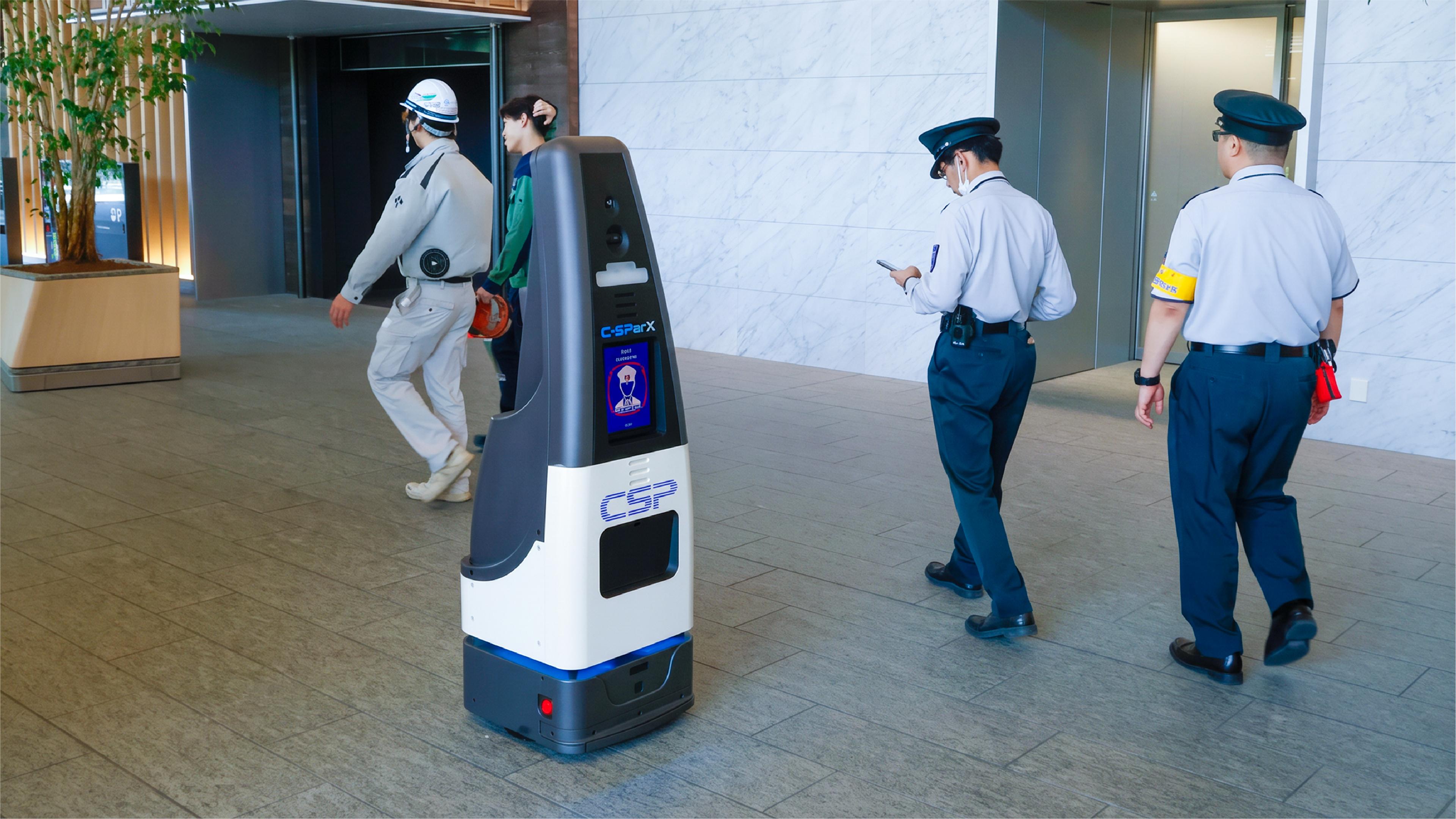
The honest answer is: they're mostly not trying to. Despite headlines pitting "certified" robots against China's low-cost quadrupeds, the companies on each side aren't really chasing the same contracts. One group is selling access — certification, hazard ratings, government relationships — to customers who can't legally deploy anything cheaper. The other is selling volume, at price points Western manufacturers can't approach. What determines who wins isn't a head-to-head price war, but rather how far regulators let each side reach into the other's territory.
Certification as the Business Model
Switzerland's ANYbotics has raised more than €127 million to bring its four-legged ANYmal X to market this year. The robot is rated for explosive atmospheres, a certification few competitors hold, and it's already patrolling alongside human inspectors at oil, gas, and carbon-capture sites run by Equinor, ENI, and Petrobras. For ANYbotics, the moat isn't price — it's the paperwork that gets a robot into a refinery a cheaper machine legally cannot enter.
Canada's Eddyfi Technologies occupies the same logic from a different angle, building VersaTrax crawler robots that inspect pipelines and storage tanks. Both companies are effectively selling regulatory clearance as a product feature, which only works as a moat for as long as the certification requirement itself holds.
China Is Competing on a Different Axis Entirely
Unitree's Go2 quadruped launched at roughly $1,600, a fraction of the cost of anything hazard-certified, and has driven the company to dominate global unit sales ahead of a heavily subscribed Shanghai listing. Anhui-based AiMOGA Robotics says it delivered roughly 300 humanoids and 1,000 quadrupeds in 2025 across more than 30 countries, including a traffic-enforcement robot now working intersections in Wuhu alongside human police. Deep Robotics, Genisom, and Direct Drive Tech all sell quadrupeds marketed explicitly for security patrol, generally at price points well below ANYbotics' hazard-certified platform.
None of these companies are chasing refinery-inspection contracts. They're chasing every customer for whom certification isn't the point — open-ground patrol, perimeter monitoring, general security presence — where price and unit volume decide the sale.
Geopolitics Is Now Doing the Segmenting
This is where the "compete" question stops being about engineering and starts being about policy. In July 2026, the FCC banned imports of new Chinese-made humanoid and quadruped robots, citing cybersecurity risk to critical infrastructure, and Congress separately advanced a defense-bill provision barring the Pentagon from operating humanoid robots linked to China. Supply-chain exposure has become a procurement question, not just a cost one — which means for a growing slice of the market, the cheaper Chinese robot may simply not be a legal option, regardless of price.
The industry's own attempt to self-regulate is fraying at the same time. In 2022, Boston Dynamics, Agility Robotics, ANYbotics, Clearpath Robotics, Open Robotics, and Unitree signed an open letter pledging not to weaponize general-purpose robots or support others doing so. That pledge is being tested: Reuters reported in August 2026 that a Unitree robot appeared armed alongside People's Liberation Army troops on Chinese state television, a demonstration rather than a commercial sale, but one that sits uneasily next to the company's own name on that letter, and one more reason government buyers may treat Chinese hardware as a security question first and a price question second.
A Third Path: Don't Sell Hardware at All
Knightscope's own numbers suggest a way around the price war altogether. The Nasdaq-listed firm, better known for a robot that fell into a fountain, told investors its second-quarter revenue nearly tripled to about $9 million, a record, on a pivot toward bundling robots, software, and human guards into a single contract it calls an "Autonomous Security Force." It now serves 434 clients across 42 states.
The catch: net loss widened to $14.1 million in the same quarter, as operating expenses outran the revenue jump. Knightscope isn't trying to out-price Unitree on hardware. It's betting that a newer robot, the K7, and a services layer called Signals turn patrol into a subscription business where the robot is incidental to the contract. Whether that model can outrun its own losses is a separate question from whether it can compete with a $1,600 quadruped, and that's arguably the more honest framing than a price comparison.
Deployments elsewhere show how localized, and how far from a single global price war, this market still is. Micropolis Robotics' M-Patrol runs security rounds for Dubai Police, with a follow-on model developed with input from the UAE National Guard. Denmark's Capra Robotics sells its Scout platform into European perimeter security. France's Running Brains Robotics, backed by the France 2030 programme, builds a dedicated GR100 security robot rather than adapting a general-purpose platform, itself a bet that sovereign-backed, purpose-built hardware beats both the certified premium players and Chinese volume players on its home turf. Malaysia's Robopreneur has deployed an AI security robot for Petronas, and China's UBTECH markets its wheeled Cruzr for indoor security patrolling as one use case among several.
So, Can They Compete?
Not in the way the question implies. Certified robots aren't losing a price war to Chinese quadrupeds, as they were never in one. They're selling into environments where certification is the entry ticket, and cheap hardware is disqualified by regulation before price even enters the conversation. The real contest to watch is how far the FCC import ban and the Pentagon's procurement bar extend beyond humanoids into the quadruped and wheeled patrol robots now working ordinary commercial sites. If that perimeter widens, certification and geopolitics merge into the same moat. If it doesn't, price still wins everywhere the paperwork doesn't matter.
More articles on this topic
59 articles ReportAMD to Buy World Labs for $8.2B in Push Beyond AI Chips
 ReportHanson Urges Clearer Disclosure as Social Humanoid Market Expands
 ReportCounterpoint Expects Work Applications to Drive 90% of Humanoid Shipments by 2030
 ReportChina Raises Scrutiny of Humanoid Robot IPOs, Reports Say
 ReportTwo Global Deals Put Surgical Robotics Platforms and Distribution in Focus
 ReportUS Department of War Awards its Innovation Unit $90 Million to Modernize Manufacturing
 ReportOTSAW O-R3 vs Robotnik RB-WATCHER: Robot Comparison
 ReportUnitree’s 'Superman' Robot Claims to Outrun Usain Bolt
 ReportAitan Raises $41 Million to Expand AI-Enabled Robotic Warfare Systems
 ReportForeign Investors And Tech Executives Pay Up To $15,000 To Tour China’s Factories
 ReportKnightscope K5 vs SMP Robotics Argus S5.2: Robot Comparison
 ReportYour Cleaning Robot May Not Be Made By The Company On The Badge
BUSINESS NEWS WEEKLY LETTER
The Weekly Letter for Robotics Professionals, Summarizing the Most Important Industry Moves, Launches, Deals and Signals.