Are Humanoid Robot Videos Misleading Us?
You have probably seen a sleek robot walk into a kitchen, pick up dishes, and start washing them. Another one serves drinks at a bar and chats with customers. Is it all real?

August 27, 2026 by Carl
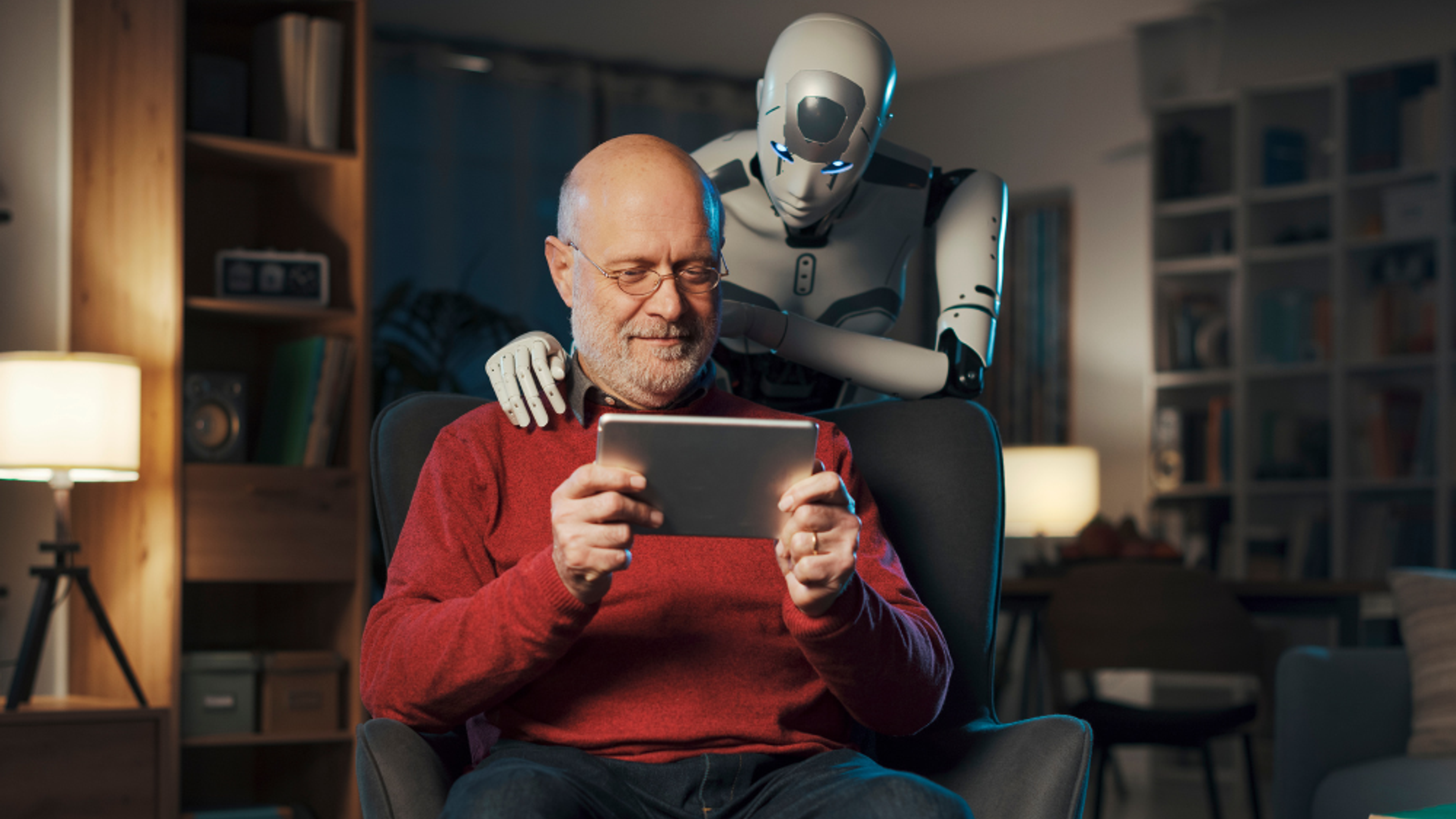
You have probably seen them. A sleek robot walks into a kitchen, picks up dishes and starts washing them. Another one serves drinks at a bar and chats with customers. One folds a shirt. One does backflips. The videos rack up millions of views and comments go wild.
But here is a question: Is what you are seeing real? Not always. And sometimes, not even close.
The Robot That Removed its Headphones
Let’s start with a story that says everything.
In late 2025, Tesla set up a row of Optimus robots at a Hollywood diner to act as bartenders. They served drinks and looked incredibly capable. People were amazed. Then one of the robots reached up to its ears and pulled off what appeared to be invisible headphones. Then it tipped over.
That moment accidentally revealed something that Tesla did not want people to see. The robots were almost certainly being controlled by human operators sitting nearby and wearing headsets. This made everything they did look more like a show rather than an independent performance.
A “teleoperator” is basically a person who remotely controls a robot, just like controlling a character in a video game. In other words, a human moves their arm and the robot moves its arm as well. This means the robot is not moving its arms independently on its own. Rather, a human operator is controlling its movements.
This wasn’t a secret, but it wasn’t advertised either. One Optimus bartender even admitted it out loud during the event, telling a customer it was assisted by a human. That detail got buried under the excitement of the videos.
A Company Posted a Fake Robot Video and Bragged About It
In June 2026, the robotics software company Qualia shared a video on social media. Qualia had recently been selected as a partner in Google DeepMind’s Robotics Program.
In the video, a robot entered a kitchen and washed dishes. Its movements looked extremely natural. The movements were so perfect that it seemed like the robot was advanced and working almost like a human. That is why people started thinking that maybe it was too good to be true. It means that what was being shown might not be as simple as it appeared.
Later, the company’s own founder, Fabian Kerj, admitted that the robot shown in the video was not a real robot at all. He said, “We build training infrastructure, not hardware.” In other words, his company does not build robots or physical hardware itself. Instead, it develops technology and systems for training robots.
After that, he also said, “Got your attention tho” with a laughing emoji. It meant that at least the video managed to grab people’s attention.
But people’s reaction was immediately negative. Reddit users called the video misleading. They felt the company had deliberately given people the impression that the robot was real. And their frustration is understandable. Because when a Google-linked startup posts a fake video just to get attention, it raises the question of how honestly the robotics industry is informing the public about its technology.
What is Teleoperation and Why it Matters?
To understand why so many robot videos can be misleading, you need to understand teleoperation.
Teleoperation means a human is remotely controlling the robot in real time. It is not the robot thinking on its own. It is not artificial intelligence making decisions. It is a person at a control station, moving the robot’s arms, legs and hands. It is kind of like wearing a motion-capture suit while the robot copies your every move.
Across the robotics industry, this is extremely common. Figure AI, 1X Technologies and Agility Robotics all use human operators to train their bots. Even Boston Dynamics has used remote control in demos at various points.
Now, is teleoperation a bad thing? Not necessarily. Robots need to learn from humans before they can act on their own. It is a legitimate way to gather training data and fill gaps that full autonomy cannot yet handle. The problem is not the technique itself. It is when companies show you a teleoperated robot and let you believe it is thinking for itself.
In one widely shared case, a promotional video for the 1X Neo home robot showed it doing laundry, loading a dishwasher and vacuuming on its own. But every single task in that video was being controlled by a human behind the scenes. The company was taking orders and collecting subscription fees at the time. That is not a small footnote.
The Promise vs. the Reality
Here is a pattern worth noticing. A company announces a robot. They drop a stunning video. Investors pour in money. Then deadlines get pushed. Then mass production timelines slide. Then a quieter update reveals the robots mostly do one repetitive task with human help.
Tesla is the most famous example. On its Q4 2025 earnings call, Elon Musk himself acknowledged that the Optimus units inside Tesla’s own factories are primarily for learning and data collection, not productive tasks. Tesla had promised roughly 5,000 Gen 2 units by the end of 2025. Independent reporting put actual builds at just a few hundred. Mass production of Gen 3 has since been pushed to summer 2026, with first external customers penciled in for late 2026.
If we also look at Tesla’s past promises such as completing Full Self-Driving by 2019, launching Robotaxi by 2020 and bringing the Cybertruck by 2021, a clear pattern emerges. Tesla often announces future technology targets much earlier. But it takes considerably longer than expected.
The Expert Who Called it Humanoid Theater
Not everyone in robotics is swept up in the excitement. Some of the most experienced people in the field are sounding the alarm.
Rodney Brooks co-founded iRobot, the company behind the Roomba. He has worked in robotics since the 1970s. What is his take on the current wave of humanoid demos? He calls them humanoid theater. “These humanoids can’t do anything remotely at the level you’d need for them to be worthwhile,” he said. “It’s a classic bubble.” He compared the current moment to the early days of self-driving cars full of hype, short on delivery.
When someone with that resume says we are in a bubble, it is worth taking seriously.
IEEE Spectrum is one of the most respected engineering publications. It has also warned about this issue. According to them, polished robot demos can easily mislead the public. These demos often show robots performing tasks in an extremely perfect way. This can make people believe that robots are much more capable, even though their capabilities may not be nearly as advanced.
What Robots Can’t Do
What looks easy to us is often incredibly hard for machines. Opening a door. Picking up an egg without crushing it. Walking across gravel. Recognizing an object they have never seen before in a different lighting condition.
Just because you see a robot do a backflip does not mean it can tie a tie. These are completely different types of ability. Most robots that excel at one have no ability to do the other.
Behind the flashy demo reels, you still find teleoperation, tightly controlled pilot projects, strict safety limits and a lot of unanswered questions. Robots that look flawless in a 60-second clip often struggle for hours in real-world settings.
See a good example. Russia’s AIDOL robot was introduced in November 2025 as the country’s first AI-powered humanoid. It was capable of walking, manipulating objects and communicating in natural language. At its public debut in Moscow, it walked onto the stage to the Rocky theme. It attempted a small wave, then fell face-first and shed parts in front of dozens of journalists. Staff rushed out and dragged it offstage behind black curtains. The video went viral within hours.
So Why Do Companies Keep Posting These Videos?
Of course, for money, atttention and investor confidence.
Humanoid developer Figure has raised more than $1 billion in funding and its valuation has reached $39 billion. It is among the 20 most valuable startups in the world. But these numbers are not based on the actual capabilities of robots today. Instead, they are based on the promise of what robots will be able to do in the future.
Exciting robot videos keep this hype alive and the hype keeps investment and money flowing in. After the Optimus bartender incident became embarrassing, other robotics companies started adding disclaimers. This reaction also reveals the industry knows that transparency matters.
But they seemed to realize the importance of transparency more clearly only after one company got caught.
Are There Any Robots Doing Work?
Yes, and it is worth being fair about this.
Atlas is an electric humanoid by Boston Dynamics. It is no longer limited to lab testing. It is now moving into commercial use. Its entire 2026 production run has already been committed to Hyundai and Google DeepMind. That means it is going to be used by companies in real-world environments.
Similarly, Apptronik’s Apollo robot is also undergoing active trials in Mercedes-Benz factories. This is not just about videos. We are talking about real factories and work.
In July 2026, Google DeepMind released Gemini Robotics 2. This model can control the entire body of a humanoid. This includes walking, maintaining balance and controlling five-fingered hands.
Apollo 2 has also demonstrated autonomous tasks using this technology. For example, the robot can tie trash bags and screw in lightbulbs. It was trained through real demonstrations.
So, the progress is absolutely real. Robotics technology is improving rapidly.
But there is one important difference. A robot that works successfully in a lab and a product that you can buy and use in your daily life are not the same thing.
How to Watch Robot Videos Smarter
You do not need an engineering degree to understand the difference between a breakthrough and just marketing. Asking a few simple questions is enough.
Is the robot autonomous or teleoperated? Honest companies clearly state this. If the video does not mention it, that is something worth noting. Look for information on screen such as “no teleoperation” or “fully autonomous.”
Where is this robot working? Giving a demonstration in a perfectly lit studio and working an entire shift in a warehouse are different things. Ask: Is the robot commercially deployed or is it still a prototype?
What it can or cannot do? A robot’s real value comes from being able to work consistently in different conditions without failing. Viral videos usually do not show this part.
What are independent journalists saying? Company press releases and YouTube videos are part of marketing. That is why you should also look at the opinions of robotics reporters and engineers outside the company.
How many times has the robot successfully performed this task? Seeing one perfect attempt in a video and having the robot perform the same task 10,000 times in different environments are different things. The real test is reliability. And that is something highlight videos often leave out.
So What’s the Bottom Line
Humanoids are genuinely exciting. Real progress is happening in labs and factories that would have seemed impossible a decade ago. That is worth acknowledging.
But the way these robots are presented to the public often creates a picture that is years ahead of the technology. The hype has become so strong that if you do not look closely, even the idea of a capable home robot can start to feel believable.
This gap between the video and reality is not always deliberate deception. Sometimes companies themselves set expectations too early about what their technology can achieve. But when billions of dollars and consumer trust are involved, that difference becomes important.
So the next time a robot video makes you say “wow,” enjoy it and be impressed. But then ask yourself one simple question: Can this robot perform this task on its own every day consistently?
And often, the answer is still “no.”
More articles on this topic
59 articles ReportCounterpoint Expects Work Applications to Drive 90% of Humanoid Shipments by 2030
 ReportUnitree’s 'Superman' Robot Claims to Outrun Usain Bolt
 ReportForeign Investors And Tech Executives Pay Up To $15,000 To Tour China’s Factories
 ReportCan Certified Robots Compete With China's Cheap Patrol Bots?
 ReportQuadruped Robots Are Becoming Big Business: Here’s Why The US Is Targeting Chinese Makers
 ReportHumanoid Robots Hit Mass Production
 ReportHow Robots Are Learning to Read Minds?
 ReportHow Do Collaborative Robots Increase Workplace Safety?
 ReportHow to Train a Humanoid Robot for Hard Work
 ReportCollaborative Robots in Hospitals
 ReportHow Humanoid Robots Can Transform Disaster Response
 ReportCan Humanoid Robots Replace Industrial Robots?
BUSINESS NEWS WEEKLY LETTER
The Weekly Letter for Robotics Professionals, Summarizing the Most Important Industry Moves, Launches, Deals and Signals.