How Robots Are Learning to Read Minds?
A machine reading your thoughts seemed unreal. It was the kind of thing you would see in movies, not something happening in a lab. But now, this gap is getting smaller.

August 28, 2026 by Carl
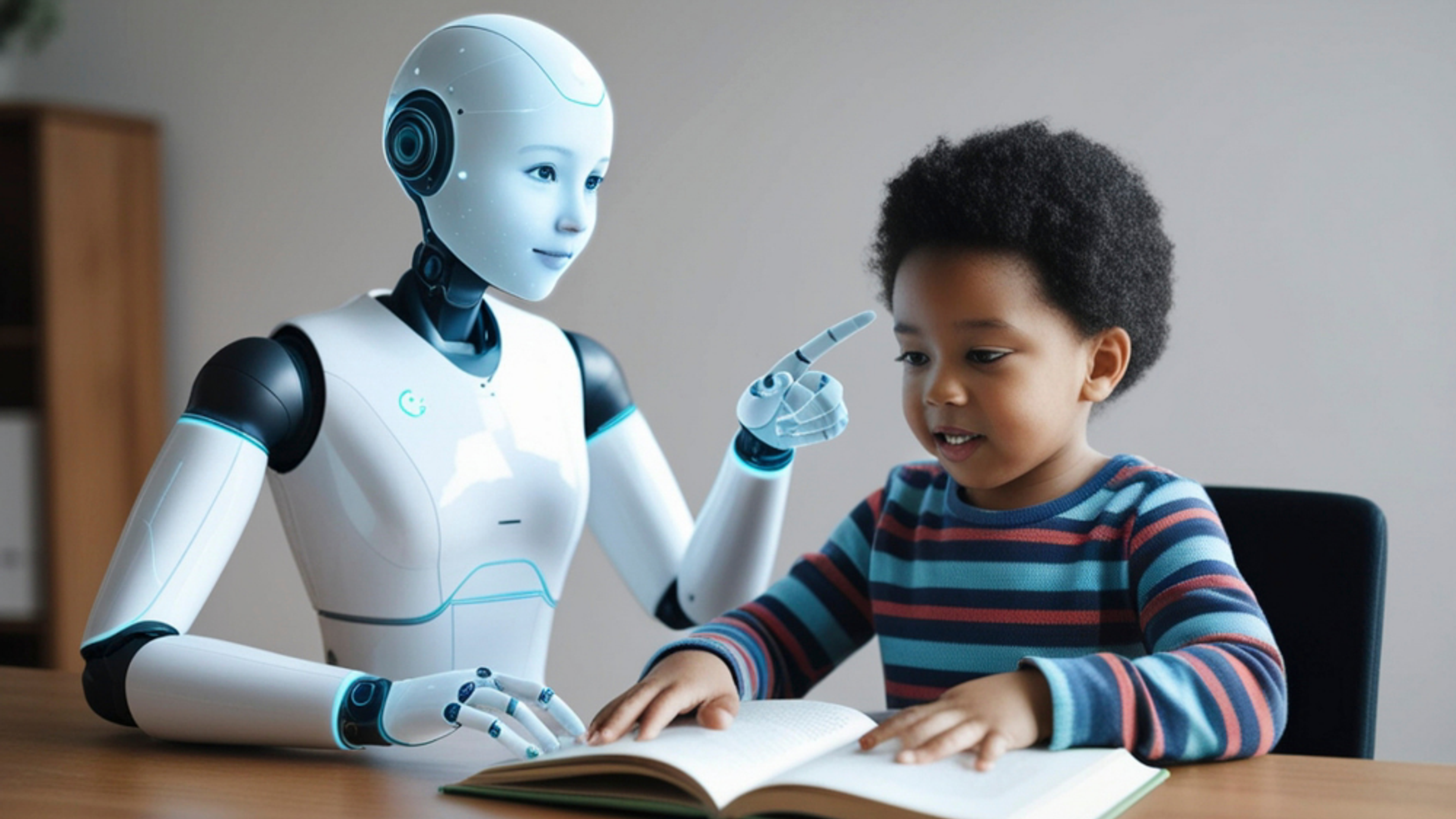
A machine reading your thoughts seemed unreal. It was the kind of thing you would see in movies, not something happening in a laboratory. But now, this gap is getting smaller. And the developments taking place are truly surprising.
Robots are now picking up cups simply because a person thought about picking up a cup. Patients with paralysis are able to move robotic arms just by imagining the movement. AI systems are also converting brain signals into words, without the person saying a single word.
This is not magic. Behind it is a technology known as a Brain-Computer Interface (BCI). And the interesting thing is that BCI technology is developing far more rapidly than people expected.
What is a Brain-Computer Interface?
A brain-computer interface is exactly what it sounds like. This is a bridge between the human brain and a machine. It picks up the electrical signals that your brain produces, sends them to a computer and the computer figures out what those signals mean. This then tells a robot or device what to do.
Your brain is always producing electrical activity. Every time you think about moving your hand, a specific pattern of electricity fires through specific neurons. Scientists have spent decades trying to learn the language of those patterns. Now, with the help of AI, they are getting pretty good at it.
There are two main ways BCIs work:
- The first one is non-invasive. A wearable cap sits on the outside of your head and picks up brain signals through your skin. It is easy to use and safe. But the signals it picks up are fuzzier. It is like listening to a radio with weak reception.
- The second one is invasive. A tiny chip or set of electrode threads gets placed inside the skull. These are placed closer to the neurons. The signal is much cleaner and more detailed. The tradeoff is that it requires surgery. Both types are being used in research and trials.
Which Moment Changed Everything
Researchers at UC San Francisco published results that stopped the neuroscience world in its tracks in 2025.
A man who had been paralyzed by a stroke was given a brain-computer interface. That means small sensors were placed on the surface of his brain. The researchers then trained an AI model to understand his brain’s activity. For two weeks, the man simply imagined moving different parts of his body while the AI watched and learned. Then they connected him to a robotic arm.
He moved it with his thoughts. He could grasp objects, reposition them and drop them, all by imagining himself doing so. The earlier versions of this technology only worked for a day or two before losing accuracy, but this system kept working for seven months.
Earlier systems used to fail because the brain does not produce the same signals every day. Movement patterns also change over time. The UCSF team solved this problem. They developed an AI that can understand these daily changes and recalibrate itself. This means the system does not have to be retrained from scratch on a regular basis.
Dr. Karunesh Ganguly, who led the research, said this kind of learning between humans and AI represents the next phase of brain-computer interfaces.
And for someone who cannot even feed themselves or pick up a glass, this is more than just impressive technology. This technology could take their entire life in a completely new direction.
Neuralink
You have probably heard of Neuralink. It is Elon Musk’s company that makes a tiny implantable chip designed to sit inside the brain and communicate with computers. It has been in the news a lot, partly because of the hype but also because the results have been remarkable.
As of early 2026, more than 20 people have received Neuralink implants in the US, UK, Canada, and UAE. The first patient reported using his device for around 10 hours every day by mid-2025. He used it to control a computer, play video games, browse the internet, and schedule his day. All of it was done through thought alone.
A surgical robot by Neuralink can now place electrode threads into the brain with an insertion time of 1.5 seconds/thread. It is faster and more precise than any human surgeon could manage. The company says it is moving toward high-volume production to make this technology available to more people.
In May 2026, Neuralink announced that its next-generation robot can now place threads into almost any region of the brain, not just the motor cortex. That opens the door to treating conditions like Parkinson’s disease, epilepsy and depression, not just paralysis.
Robots That Know When You Have Made a Mistake
Researchers at Oklahoma State University have developed a system that allows robots to read a specific signal from the brain. This signal is called the Error-Related Potential (ErrP).
When you instantly realize that “oh no, something went wrong,” your brain produces a small electrical signal. Interestingly, this signal is generated before you consciously think about it. The OSU team trained an AI to identify this signal in real time. For this, a non-invasive EEG cap is placed on the head.
When the cap detects this “oh no” signal, the system immediately sends a command to the robot. The robot can stop, slow down or hand control back to the human. And all of this can happen within just milliseconds.
Think about what that means. Someone is remotely controlling a robot in a dangerous environment like a nuclear plant or handling space debris. They are tired, maybe distracted and they send the robot in the wrong direction. Before the mistake can cause damage, the robot detects the error signal and corrects itself.
The whole thing runs in real time on an NVIDIA platform. And the AI fine-tunes itself for each user within seconds. It is just like the way your phone learns to recognize your face.
At the World AI Conference
In July 2026, the World Artificial Intelligence Conference was held in Shanghai. There, BrainCo demonstrated a technology that attracted a lot of attention.
A person put on a lightweight EEG headset. There was no need for surgery or any implant in the brain. The person simply thought about picking up the baseball cap sitting on the table. Immediately afterward, the robotic arm moved toward the cap and picked it up.
The most interesting part was that the entire process took less than 200 milliseconds. That is faster than a normal blink.
BrainCO system works in three steps. The headset picks up the electrical signals. AI understands which movement the person wants to make. And then that intention is converted into a command for the bot.
The system is not perfect yet. Non-invasive EEG systems have more noise compared with brain implants. But even so, being able to demonstrate thought-controlled robot movement through a consumer-level wearable shows how far BCI technology has come.
AI is Learning to Turn Brain Signals Into Words
It is not just movement. Scientists are also working on translating thoughts into text.
In March 2025, researchers published a model called BrainLLM. It is a large language model trained on brain recordings instead of normal text. When a person reads or listens to words, specific patterns are created in the brain. BrainLLM learned to identify these patterns.
The system can convert these brain signals into written language, without the person speaking or typing. The system was tested on multiple datasets. When the AI had access to more brain data to learn from, its accuracy also improved. However, this technology is still in its early stages. For now, it is not going to replace the keyboard.
But the direction is clear. Scientists are developing systems that can decode activity inside the brain and convert it into information that computers can understand. Meta has also worked in this direction. But its system uses a brain-scanning technology called magnetoencephalography (MEG).
MEG can capture brain activity at very high speeds. The system can decode what kind of visual representation is forming in a brain when they look at an image. In simple words, the system can see how the brain is processing an image.
What Are the Privacy Risks?
All of this progress raises an important question. What happens if someone can read your brain signals without your permission? Your thoughts are among your most private forms of information. But neural data collected by BCI devices could reveal your emotions, intentions and reactions that you may not want to share with anyone.
That is why researchers have started talking about a new category of rights called neurorights. Put simply, neurorights mean legal protection for your brain data. It is much like how GDPR protects your personal data.
Colorado and Minnesota have passed laws covering neural data. Other states and countries are also monitoring this issue.
Then there is the concern of cybersecurity. If a BCI device can be hacked, the risk would not be limited to someone gaining access to your email/account.
In theory, a hacked neural device can allow someone to see your brain activity or even interfere with it. These concerns are no longer hypothetical. As BCI devices become more common, they can also become attractive targets for hackers. However, experts say that this technology cannot completely decode private thoughts.
The signals researchers can detect are mainly related to specific sensory responses.
In other words, BCI technology cannot read your personal opinions or thoughts, at least for now. But the technology is improving, while ethical and legal rules are struggling to keep up with that development.
So Where Does This Leave Us?
The honest answer is that BCI technology is impressive but incomplete.
The progress being made in communication between the brain and robots is meaningful. And this development is happening faster than expected.
A paralyzed person controlled a robotic arm for seven months. With the help of a brain chip, another person was able to scroll through the internet just by thinking. A robot detected a mistake signal from a brain and immediately stopped itself.
These are not just fancy demonstrations. These are research results.
But the full meaning of “reading minds” is still a long way off. The technology cannot yet determine what you are thinking, what you believe or what you are planning.
For now, it can mainly decode movement intentions, emotional signals and imagined movements and convert them into real-world actions.
This capability is far more limited than the mind reading portrayed in headlines. But for the people whose lives this technology is improving, it is an extraordinary achievement.
We are at the very beginning of this technology. It could become one of the most important technological changes of the next 50 years.
Machines are not reading your mind yet. But they are learning to listen and they are getting better at it with every passing month.
More articles on this topic
59 articles ReportCounterpoint Expects Work Applications to Drive 90% of Humanoid Shipments by 2030
 ReportUnitree’s 'Superman' Robot Claims to Outrun Usain Bolt
 ReportForeign Investors And Tech Executives Pay Up To $15,000 To Tour China’s Factories
 ReportCan Certified Robots Compete With China's Cheap Patrol Bots?
 ReportQuadruped Robots Are Becoming Big Business: Here’s Why The US Is Targeting Chinese Makers
 ReportHumanoid Robots Hit Mass Production
 ReportAre Humanoid Robot Videos Misleading Us?
 ReportHow Do Collaborative Robots Increase Workplace Safety?
 ReportHow to Train a Humanoid Robot for Hard Work
 ReportCollaborative Robots in Hospitals
 ReportHow Humanoid Robots Can Transform Disaster Response
 ReportCan Humanoid Robots Replace Industrial Robots?
BUSINESS NEWS WEEKLY LETTER
The Weekly Letter for Robotics Professionals, Summarizing the Most Important Industry Moves, Launches, Deals and Signals.