Collaborative Robots in Hospitals
Hospitals are adopting cobots not to replace nurses, but to handle repetitive logistics, allowing staff to spend more time on patient care.

August 24, 2026 by Carl
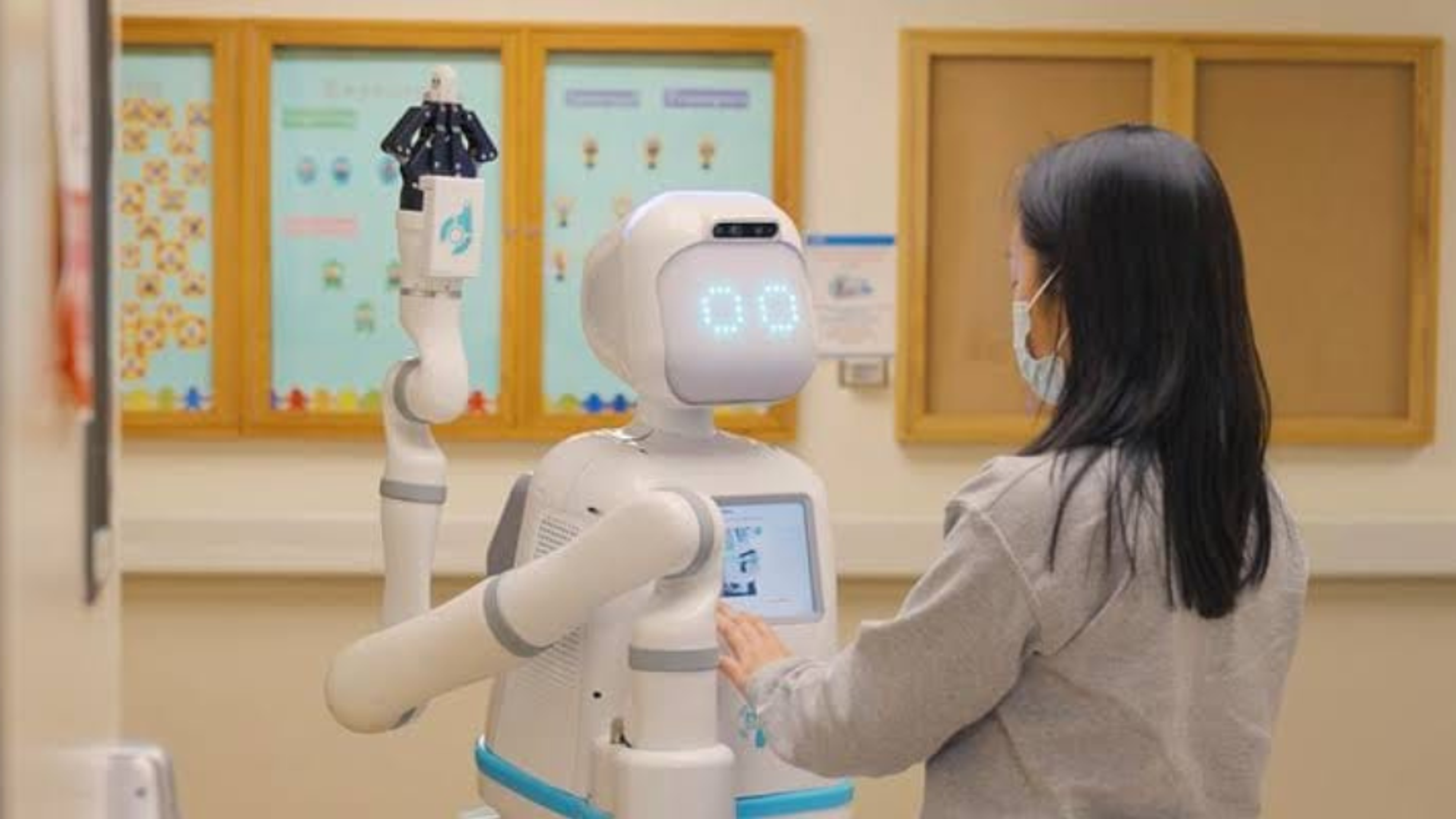
Hospitals are among the most demanding environments for automation. Unlike factories, where robots often work in carefully controlled areas, hospitals are busy and have unpredictable spaces filled with patients, nurses, doctors, visitors, beds, equipment and constantly changing workflows. That makes hospital robotics a very different challenge from traditional industrial automation.
Yet robots are increasingly finding a place in these environments. One of the most interesting developments is the rise of collaborative robots, or cobots, designed to work alongside people rather than operate behind safety barriers.
The transition is still in its early stages. Hospitals are not replacing nurses and doctors with robots. Instead, the first practical applications are focused on repetitive, time-consuming and physically demanding tasks, such as transporting medications, laboratory samples, equipment and supplies.
Logistics Comes First
The most practical hospital robot today may not be performing surgery or diagnosing disease. It may simply be moving something from one place to another. Hospitals move enormous amounts of material every day. Medications must travel from pharmacies to wards. Laboratory specimens need to reach diagnostic departments. Personal protective equipment, medical supplies and equipment must be transported between floors and departments.
Traditionally, these jobs require nurses, pharmacy technicians, porters or other staff to leave their primary work areas. Robots can take over portions of this logistical workload.
One of the best-known examples is Moxi, developed by Diligent Robotics. Moxi is designed to work alongside healthcare teams and perform logistical tasks such as delivering medications, laboratory materials and supplies. Diligent says its robots have already returned thousands of hours to hospital staff.
In 2025, the company reported that Moxi had surpassed 1 million hospital deliveries across its fleet. These numbers do not mean that robots are replacing nurses. In fact, the underlying idea is almost the opposite.
If a nurse spends 15 or 20 minutes walking to collect supplies, delivering equipment or waiting for an item to be transported, that means less time for the nurse to care for patients directly. But if these tasks are performed by a robot then the nurse gets enough time to stay with patients.
How Moxi Works with Staff
Moxi provides an interesting example because it has been designed around hospital workflows rather than simply being a general-purpose robot placed inside a hospital. The robot can navigate hospital corridors, use elevators and interact with doors, including doors requiring badge access. It also uses visual and audio signals to communicate with people around it.
Moxi has also been used for pharmacy deliveries. In July 2025, Diligent reported more than 300,000 pharmacy deliveries by its fleet and described applications including medication delivery, Meds-to-Beds programs and restricted deliveries through secure workflows.
Cobots across Hospital Departments
Logistics is only one part of the picture. A 2026 review of robotics in clinical diagnostics shows that hospitals are using different types of robots, including lab automation systems, cobots, mobile robots and service robots. However, some tasks, such as moving samples, handling instruments and other manual work, still require human involvement.
This creates an opportunity for collaborative robotics. A robot might transport specimens between laboratory areas, move pathology carts or perform repetitive manipulation tasks while laboratory professionals remain responsible for analysis, quality control and decision-making.
Another 2026 study from Shaanxi Provincial People’s Hospital in China examined a fleet of 10 autonomous mobile robots used across 22 wards for medication and specimen delivery. Over six months, the researchers reported that robot deliveries were 32% to 36% faster than manual delivery and that the fleet completed 7.3 times as many delivery trips as 19 manual workers. The study also reported 100% verification accuracy and item integrity within the evaluated system.
These results are promising, but they should not be interpreted as proof that every hospital will achieve the same performance. Hospital layouts, staffing models, technology infrastructure and workloads differ considerably.
Cobots Supporting Nurses
The main benefit of collaborative robots in hospitals is not simply automation. It is helping healthcare workers spend more time on tasks that need empathy, judgment and medical skills. A nurse can assess a patient’s condition, communicate with a worried family and respond to an emergency. A robot is much better suited to repeatedly carrying supplies through a corridor.
This distinction appeared clearly in a three-year collaborative-robot pilot at ChristianaCare. The project was designed to determine whether robots could offload repetitive, non-clinical work from healthcare workers. A 2026 report on the completed program found that the technology provided operational value in selected high-volume workflows, particularly non-urgent medication and equipment deliveries. However, the researchers found that current cobots could not effectively help nurses with complex and time-sensitive patient care.
That is an important finding. The future of hospital robotics is unlikely to involve a robot doing everything a nurse does. Instead, it may involve carefully dividing work between humans and machines. The robot handles predictable physical tasks. The healthcare professional handles situations requiring clinical reasoning and human interaction.
Why Hospitals are Hard to Automate
Building a robot that can move through a hospital is only part of the problem. Hospitals are dynamic environments. People suddenly step into corridors. Beds block pathways. Doors may be closed. Elevators may be busy. Emergency situations can change priorities within seconds. A robot therefore needs to understand its environment and respond safely.
A 2024 study of cobots in a 900-bed acute-care hospital in Delaware examined 89 end-to-end deliveries across 23 observation sessions. They identified four major themes: how people humanised the robots, usability, robot autonomy and functionality within a dynamic hospital environment. The researchers concluded that the robots still required human support to operate effectively in such a complicated and unpredictable setting.
This is one of the biggest differences between a hospital and a factory. A factory can be designed around the robot. A hospital has to continue operating around patients.
Safety, Privacy and Reliability
Hospital robots also face safety questions that extend beyond navigation. A robot carrying medication must deliver the correct package to the correct destination. A robot transporting laboratory specimens needs secure handling procedures. A system connected to hospital networks creates cybersecurity considerations. Robots equipped with cameras and sensors may also encounter sensitive patient information.
Then there is the question of reliability. A robot that stops working in a warehouse may delay a shipment. A robot that fails during a hospital workflow could delay something much more important.
This is why hospitals need more than demonstrations before deploying robots at scale. They need risk assessments, maintenance procedures, staff training, cybersecurity controls, clear escalation pathways and evidence that the system works reliably within the specific hospital environment.
Will Hospital Staff Accept Cobots?
Technology can only succeed in a hospital if healthcare workers are willing and able to use it. That is why some hospitals are involving nurses directly in robot development and evaluation.
ChristianaCare, for example, started a nursing fellowship focused on robotics and innovation. Nurses in the program studied how robots could support their work. This approach could become increasingly important. Engineers understand robotics. Hospital administrators understand operations. But nurses and other frontline workers understand the reality of clinical workflows.
A robot may look impressive during a demonstration yet create additional work if staff have to repeatedly intervene, reload supplies or solve navigation problems. The best hospital robots will therefore not simply be technologically advanced. They will fit naturally into existing workflows.
What Comes Next for Hospital Cobots?
The next stage of hospital robotics is likely to be less about spectacular humanoid demonstrations and more about practical automation. Robots could gradually become better at transporting supplies, handling laboratory workflows, managing inventory and performing repetitive physical tasks. More capable mobile manipulators could eventually interact with hospital equipment and objects rather than simply carrying them. Artificial intelligence could also make these systems more adaptable.
Recent research is exploring ways for robots to interpret natural-language instructions and generate task plans, although transparency, validation and safety remain major concerns before such systems can be trusted with critical real-world tasks. The long-term goal is not necessarily a hospital staffed by robots. It may instead be a hospital where robots quietly handle hundreds of small tasks in the background.
A robot delivers medication while a nurse remains with a patient. Another transports a laboratory specimen. A different system moves equipment between departments. Laboratory cobots handle repetitive manipulation while technicians focus on higher-level work. Individually, these tasks may seem insignificant. Collectively, they could change how hospital staff spend their working day.
Collaboration over Replacement
Collaborative robots are entering hospitals because they solve a very specific problem: healthcare workers spend considerable amounts of time doing tasks that do not require their full professional expertise.
The technology is not yet ready to take over complex nursing or clinical work. Current evidence actually suggests that robots perform best when assigned clearly defined, repetitive and relatively predictable tasks. That limitation may ultimately shape the most successful model for hospital robotics.
Rather than asking whether robots can replace healthcare workers, hospitals are increasingly asking a more practical question: Which parts of the job should a robot handle so that a human can spend more time doing what only a human can do?
For now, that means deliveries, transportation, laboratory support and other routine workflows. But as navigation, manipulation, AI and human-robot interaction improve, the boundary between what robots can do and what they can assist humans with will continue to move.
The hospital of the future may not look like a science-fiction facility filled with humanoids. It may look surprisingly familiar with nurses, doctors and technicians still at the centre, while a growing fleet of collaborative machines works quietly alongside them.
More articles on this topic
59 articles ReportCounterpoint Expects Work Applications to Drive 90% of Humanoid Shipments by 2030
 ReportHealthcare And Care Robots: Which Companies Are Building Robots For Hospitals, Clinics, Elderly Care?
 ReportTiny Robots Can Soon Dissolve Kidney Stones In A Jiffy
 ReportUnitree’s 'Superman' Robot Claims to Outrun Usain Bolt
 ReportForeign Investors And Tech Executives Pay Up To $15,000 To Tour China’s Factories
 ReportCan Certified Robots Compete With China's Cheap Patrol Bots?
 ReportQuadruped Robots Are Becoming Big Business: Here’s Why The US Is Targeting Chinese Makers
 ReportHumanoid Robots Hit Mass Production
 ReportHow Robots Are Learning to Read Minds?
 ReportAre Humanoid Robot Videos Misleading Us?
 ReportHow Do Collaborative Robots Increase Workplace Safety?
 ReportHow to Train a Humanoid Robot for Hard Work
BUSINESS NEWS WEEKLY LETTER
The Weekly Letter for Robotics Professionals, Summarizing the Most Important Industry Moves, Launches, Deals and Signals.