How Do Collaborative Robots Increase Workplace Safety?
Collaborative robots can improve workplace safety by reducing physical strain, limiting hazard exposure, detecting collisions and supporting safer human-robot collaboration across industrial environments.

August 25, 2026 by Carl
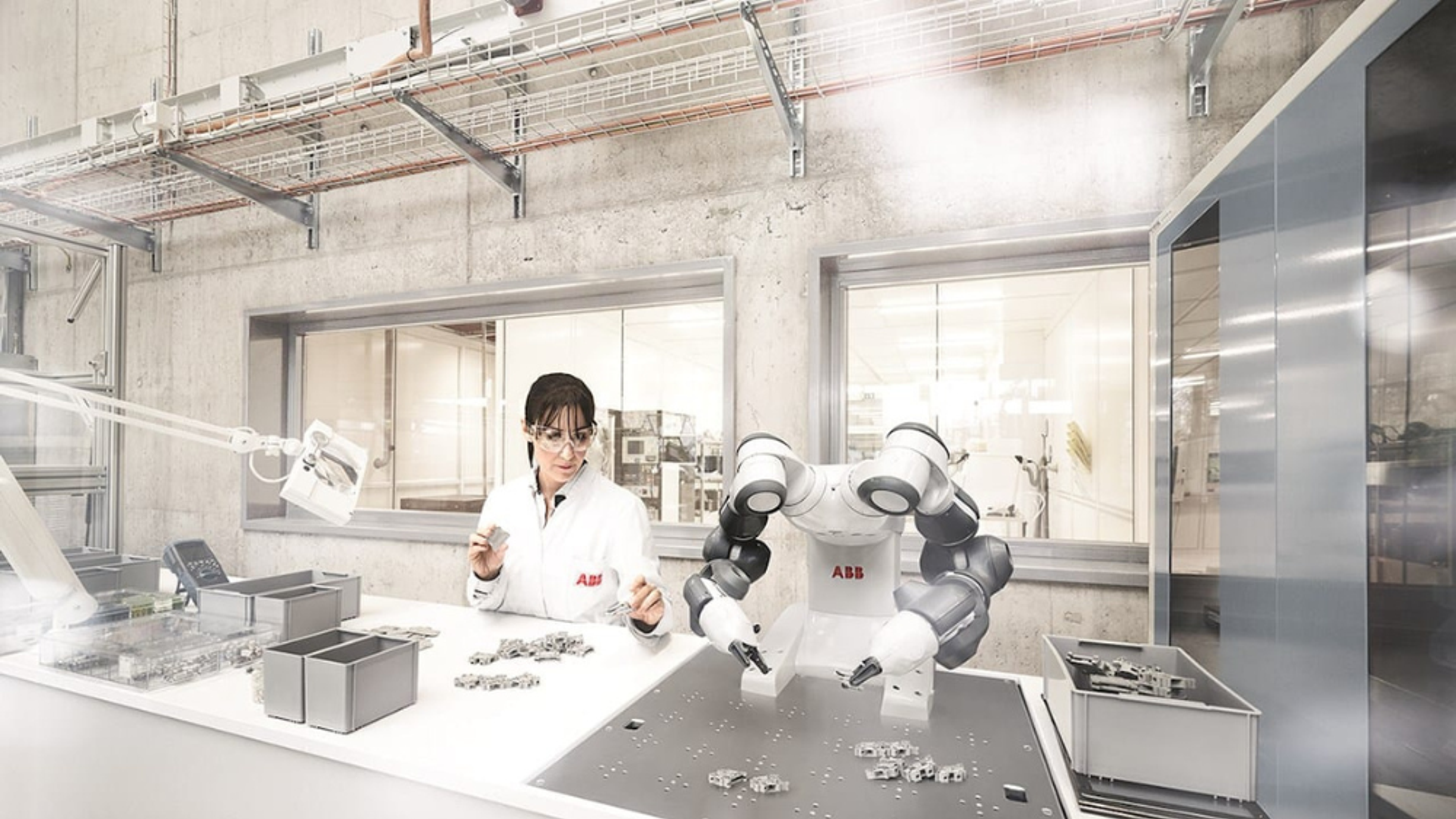
Collaborative robots, or cobots, are changing how people and machines work together in factories, warehouses and other industrial environments. Unlike traditional industrial robots that are often separated from workers by safety barriers, cobots are designed for applications in which humans and robots can share a workspace.
That does not mean cobots are automatically safe. Their main safety advantage comes from a combination of force and speed limitations, monitoring systems, collision detection, careful workspace design and application-specific risk assessment.
Recent research is also showing that safety is about more than preventing physical contact. Ergonomics, workload, worker awareness and training all influence whether human-robot collaboration is genuinely safe. A 2025 review in the International Journal of Industrial Ergonomics, for example, found that safety and ergonomics in human-cobot systems remain complex because different applications create different risks.
So, how do collaborative robots actually improve workplace safety? Let’s have a look.
Key Ways Cobots Improve Workplace Safety
Cobots can improve workplace safety through a combination of smart technologies, careful design and safer human-robot interaction.
Cobots Reduce Physical Strain
One of the most direct ways cobots can improve safety is by taking over repetitive physical work. Manufacturing workers may spend entire shifts picking components, loading machines, moving parts, packaging products or performing the same assembly movement hundreds or thousands of times. These activities may not appear dangerous individually, but repeated lifting, reaching and awkward movements can contribute to fatigue and musculoskeletal strain.
A cobot can handle the repetitive part of the process while a worker focuses on inspection, decision-making or more varied tasks.
Recent research supports this potential. A 2024 study published in Applied Ergonomics compared human-human and human-cobot assembly teams involving 120 participants. The researchers found that working with a cobot reduced the effect of task complexity on human workload and output quality.
The finding does not mean that every cobot application reduces workload. Instead, it shows why task design matters. A cobot can be useful when it takes over the repetitive or physically demanding portion of a job rather than simply adding another machine for workers to manage.
Safer Physical Interaction
A major difference between many cobots and conventional industrial robots is their ability to operate under collaborative safety functions. For example, Universal Robots’ UR10e includes configurable safety functions designed for collaborative applications. Its safety configuration can limit factors such as speed, force, power and momentum, helping control the amount of energy that could be transferred during contact. Universal Robots stresses, however, that these settings must be selected according to a risk assessment of the complete application.
This distinction is important. The robot arm is only one part of the system. A sharp gripper, cutting tool or heavy workpiece attached to a relatively safe robot can still create a serious hazard. For that reason, collaborative safety has to consider the robot, end effector, workpiece, surrounding equipment and human movements together.
The international standards reinforce this approach. ISO 10218-1:2025 covers safety requirements for industrial robots, while ISO 10218-2:2025 focuses on the integration, commissioning, operation and maintenance of complete robot applications and cells.
Detecting Collisions
Another important safety feature is collision detection. If a cobot detects an unexpected force or abnormal interaction, it can be configured to stop its movement. This can reduce the likelihood that a collision continues with the same force and speed.
FANUC’s CRX collaborative robot series, for example, includes an immediate contact-stop function. FANUC also uses a smooth, rounded design intended to make the robot more suitable for interaction with people. The technology is particularly useful when workers and robots operate in close proximity.
But collision detection should not be treated as the first or only layer of protection. The goal of a safe system is to prevent hazardous contact whenever reasonably possible, rather than simply allowing a collision and relying on the robot to stop afterward.
Monitoring Worker Distance
Cobots can also use monitoring systems to keep track of the relationship between workers and the robot. In some applications, safety-rated scanners or other sensors monitor the workspace. If a person moves into a defined area, the robot can slow down or stop depending on the safety strategy. This is known as speed and separation monitoring.
The principle is straightforward: the closer a person gets to a moving robot, the more restrictive the robot’s operating conditions can become.
ABB provides an example through its collaborative robotics portfolio. Its YuMi systems can be combined with ABB’s SafeMove technology to monitor robot speed and position, while external safety sensors can detect human presence and trigger the appropriate response.
Managing Robot Boundaries
Modern cobots can also use software-defined safety zones. Doosan Robotics, for example, provides safety functions that can limit force, power, speed and momentum. Its systems can also restrict robot positions and tool movements. Doosan documentation specifically notes that these settings should be established according to the risk assessment for the individual application.
This can be useful when a robot works near a person but should not enter certain areas. A system might, for example, restrict the robot from moving toward a worker’s head or entering a designated human workspace. The exact restrictions depend on the application and the hazards identified during the assessment.
Doosan also uses safety-rated stop and monitoring functions in its collaborative robots. Its documentation states that these functions are designed to protect operators and machines and can interface with additional safety equipment.
Reducing Hazard Exposure
Collaborative robots can also improve safety by reducing direct human exposure to certain industrial hazards. A good recent example is FANUC’s CRX-10iA/L Paint. Introduced in 2025, the collaborative robot was designed for industrial painting and coating applications and is ATEX-rated for potentially explosive environments. FANUC says it can help improve worker safety by reducing exposure to paint fumes, while its sensitive contact-stop function supports human-robot collaboration.
This demonstrates an important benefit of automation: the safest interaction with a hazardous process may sometimes be less human exposure, rather than more physical interaction.
A company therefore should not choose a collaborative robot simply because it can operate without a fence. If the tool, material or process creates a significant hazard, additional protection or a different automation strategy may be necessary.
Supporting Safer Human-Robot Collaboration
Safety is also influenced by the physical design of the robot. ABB’s YuMi, for example, was developed specifically for small-parts assembly and human-robot collaboration. The robot uses lightweight arms and rounded external surfaces, while its design limits the amount of force and energy involved in potential contact. This is an important concept in collaborative robotics.
A robot does not need to be physically separated from people simply because it is powerful enough to perform a task. Instead, the system can be engineered so that its operating conditions, movements and physical characteristics are appropriate for the task. However, “fence-free” does not mean “risk-free.” Some applications still require physical barriers, scanners, interlocks or other protective measures.
Keeping Workers Aware
Workers also need to understand how the robot behaves. A person who does not know the robot’s operating zones, stopping behavior or limitations may unintentionally enter a hazardous area or interfere with the system.
Recent research has therefore begun looking at worker awareness as part of collaborative safety. A 2024 study published in Sustainability examined how workers could maintain greater awareness of their own safety while working with collaborative robots. The researchers noted that conventional approaches often slow or stop the robot when workers enter safety thresholds, and explored alternative ways of communicating and managing safety during collaboration.
This reinforces the idea that safety is not purely a hardware problem. The human operator remains an important part of the safety system.
Risk Assessment Still Matters
Perhaps the most important point about collaborative robots is that no cobot is automatically safe in every application. Safety depends on the complete system, including the robot, tools, workpiece, surrounding equipment and how people interact with it.
Before deployment, companies need to identify potential hazards, assess the risks and put appropriate safety measures in place. This may include limiting speed and force, controlling the robot’s workspace, using safety sensors and providing clear procedures and training for workers.
Modern safety standards also take this system-wide approach, covering everything from integration and commissioning to operation, maintenance and decommissioning.
In other words, a cobot’s built-in safety features are only one part of the equation. Proper integration, workplace design, risk assessment and worker training are equally important.
Final Thoughts
The future of collaborative robot safety will depend on making robots more aware of the people and environments around them. Advances in sensing, computer vision and intelligent control could allow robots to better understand human movement, adjust their speed and behavior, and respond to potential risks before a dangerous interaction occurs.
At the same time, safety will increasingly involve more than simply stopping a robot when a person gets too close. Systems may use dynamic safety zones, improved human detection and adaptive controls to respond to changing workplace conditions while allowing production to continue efficiently.
However, better technology alone will not guarantee safer workplaces. Human factors will remain equally important. Worker training, clear procedures, ergonomic workstation design and regular risk assessments will all play a role in successful human-robot collaboration.
Ultimately, collaborative robots can make workplaces safer when they are used to reduce exposure to hazardous, repetitive or physically demanding tasks. Their safety benefits come from combining protective technologies with thoughtful workplace design.
The goal should not be to create robots that are simply considered “safe,” but to build human-robot systems in which safety is part of the entire process. As these systems become more capable, successful workplaces will be those that balance automation with human judgment, ensuring that safety remains a priority from initial planning through everyday operation.
More articles on this topic
59 articles ReportShanghai Targets 8,000 Humanoid Robots in Factories by 2028
 ReportKUKA Taps TD SYNNEX to Expand Mobile Robot Sales in Europe
 ReportGeek+ Opens Düsseldorf Lab for Live Warehouse Robot Demonstrations
 ReportDriverless Tractors Driving Force for Farming Industry
 ReportCounterpoint Expects Work Applications to Drive 90% of Humanoid Shipments by 2030
 ReportThis Robot Can Knock Ice Off From Power Lines
 ReportUnitree’s 'Superman' Robot Claims to Outrun Usain Bolt
 ReportForeign Investors And Tech Executives Pay Up To $15,000 To Tour China’s Factories
 ReportNscale Commits at Least $3.5 Billion in Compute to Power Figure's Humanoids
 ReportJ-HRTI opens Japan's first commercial humanoid data farm in Chiba
 ReportCan Certified Robots Compete With China's Cheap Patrol Bots?
 ReportMinth Opens AgiBot Humanoid Assembly Line in Serbia
BUSINESS NEWS WEEKLY LETTER
The Weekly Letter for Robotics Professionals, Summarizing the Most Important Industry Moves, Launches, Deals and Signals.