How to Train a Humanoid Robot for Hard Work
Robots are no longer part of movies only. Now we can see them doing plenty of tasks. They are working in factories, and above all, they are becoming part of routine tasks.

August 25, 2026 by Carl
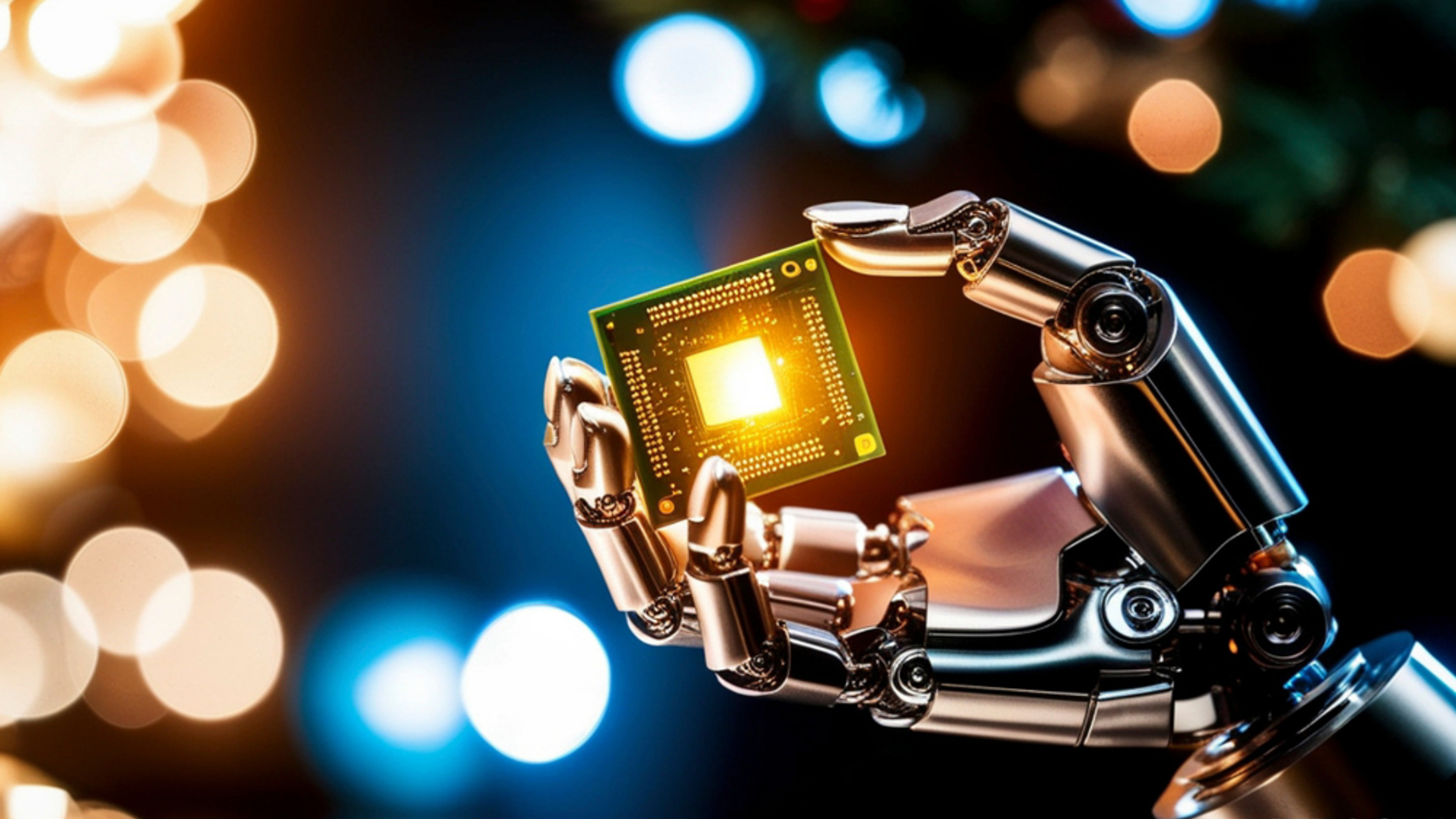
Robots that look just like humans are no longer part of movies. Now we can see them doing plenty of tasks. They are real. They are working in factories, and above all, they are quickly becoming part of various routine tasks. But the question is, how are these robots trained to perform all those jobs? Well, this is not as simple as it sounds. Training a robot involves a lot of steps and smart technology. And in some cases, even humans show them how to perform a job exactly. Sounds interesting? Read on to learn all about this.
Why Training a Humanoid is So Hard
Think about a robotic arm. It only needs to repeat one task, so it is programmed accordingly. It does not need to learn much because its environment is not going to change.
But on the other hand, we have humanoids. They are completely different. They have two legs and two arms, with a camera on their head. They walk, pick up things and deal with unexpected situations. Put simply, they don’t have to perform one simple task. They need to understand their surroundings that keep changing. This is what makes the training of humanoids much more difficult.
What is the main problem? Of course, the Real-world data. Virtual simulations can train robots to do acrobatics and balance tricks. But they struggle to teach robots how to properly grab and move objects. The physics inside a simulation is never the same as in the physical world. That is why training data is so important. But at the same time, it is expensive too.
Investors know this challenge. In 2025 alone, over $6 billion was poured into robotics to solve this problem.
1. Simulation Training
Before a robot touches an object, it trains inside a simulation. Think of it like a video game. The robot can try things, fail and try again without breaking anything or damaging itself.
This method is called reinforcement learning. The robot tries an action, gets a reward if it does well and gets a penalty if it fails. The robot then repeats this process millions of times. Slowly, it learns which actions work and which ones do not.
Tools like NVIDIA Isaac Sim are widely used for this purpose. They create 3D virtual environments where robots can practice walking on different surfaces and moving objects without any risk. The best thing about simulation is that it is fast and cheap. A robot can practice the same task many times without damaging hardware.
But the problem comes when the robot moves from the virtual world to the real one. Sometimes, it faces problems because the environment behaves differently. This is called the sim-to-real gap. Researchers try to solve this by adding random changes to the simulation. For example, they keep changing the lighting, friction, textures and weight of objects.
This helps the robot get used to different situations. So when it enters the real world, it can better handle unexpected situations.
2. Imitation Learning
One of the best ways to teach a robot is to simply have it watch a human do the task. This is called imitation learning or behavior cloning.
A human performs a task. It can be anything like folding a shirt or picking up a tool. The robot records every move. It then tries to copy those moves. Over time, the robot gets pretty good at the task.
The tricky part is collecting enough good examples. Researchers have found that one well-recorded demonstration is worth more than 100 messy ones. Quality matters here. The robot needs detailed data like camera angles, hand positions, force applied and speed.
Some companies have even turned data collection into a job. For example, Scale AI is hiring people to record themselves performing various tasks. This can include opening the fridge, wiping counters, stacking items and other simple household tasks.
These videos are then used or sold as training data for robots. In simple words, humans are showing robots how everyday tasks are performed by recording their movements.
3. Teleoperation
Another important training method is teleoperation. In this method, a human operator wears special equipment like VR goggles or motion-tracking gloves. They then remotely control a robot.
The operator moves their hands and arms. The robot copies those movements. Every movement is continuously recorded. Later, this recorded data is used to train the robot so that it can perform the same task on its own.
In China, workers at state-run robot training centers wear VR headsets and exoskeletons to teach robots. For example, they may teach a robot to open a microwave or wipe a table. These human demonstrations are then converted into training data.
Some advanced systems, such as TWIST (Teleoperated Whole-Body Imitation System), do not just record arm movements. They can capture whole-body movements. This means a robot can learn to walk, crouch, reach and grab objects at the same time.
4. Train With Workers
Virtual worlds and remote demos are great starting points. But at some point, the robot has to work in the actual place. It can be a factory floor, a warehouse or a kitchen.
The Fraunhofer IFAM center in Germany has built an entire training facility for this purpose. Skilled tradespeople work side by side with robots. They teach them the kind of hands-on knowledge that is hard to put into a computer. The robot observes, records and learns. The knowledge gets turned into AI models that can be shared across different robot systems.
This process is like the old apprenticeship system. This is just like a young worker learns a skill by working alongside an experienced person. Here, the robot is the apprentice and the skilled worker is its mentor. The only difference is that whatever the robot learns can be permanently stored as data.
Tesla is also using a similar approach. Its Optimus robots are being placed on factory floors. But their main purpose right now is not productive work. Instead, the robots are collecting training data from industrial environments. Sensor readings, camera feeds and robot movements are being used to teach AI how to better understand factory conditions.
5. Use AI Foundation Models
You do not always have to start training a robot from scratch. In recent years, companies have built foundation models for robots. They are pre-trained AI systems that give robots a head start.
GR00T is a big example of this. It has been trained on data from more than 100 different types of robots. This means that when a new robot uses this model, it already has some basic knowledge of how to move and interact with objects.
You can think of it like giving a student a general education first. After that, they receive training according to their specific job. Similarly, companies then give the robot task-specific training. This teaches the robot the exact movements and skills it needs for its particular job. For example, a robot working in a car factory will need different skills compared to a robot working in a hospital.
Here, the foundation model handles the basic knowledge, while task-specific training teaches the robot the details of its particular job.
6. Keep Improving With Feedback
Training does not stop once the robot starts working. The best robots keep learning.
Every time a robot completes a task or fails at one, that experience gets fed back into its AI system. Over time, the robot gets better. This is called continuous learning.
Boston Dynamics has shared details about how their Atlas robot learns new behaviors. Their team uses reference trajectories as a starting point. And then the robot refines those movements through practice. What used to take months now takes just a few weeks.
A Few Examples
Training methods have improved. Because of that, humanoids can now perform much more difficult tasks as well. Let’s see a few examples.
Figure 02 has completed a 10-month pilot at a BMW factory. It helped assemble more than 30,000 BMW X3 vehicles. It moved more than 90,000 sheet metal parts and worked 10 hours a day, 5 days a week.
Optimus is also deployed in Tesla factories. For now, the main purpose is to collect data. But Tesla’s plan is to eventually use thousands of robots for production work.
Digit has also completed more than 10,000 hours of box-moving tests in Amazon warehouses. It achieved around 70% of a human worker’s speed. One important advantage is that the robot can work 24 hours a day and 7 days a week.
And Atlas is being tested at Hyundai plants. There, its focus is on repetitive factory tasks like handling and sorting parts.
The Challenges
Despite all this progress, training robots for hard work is not a completely solved problem yet. Some major challenges remain.
The first challenge is collecting enough good-quality data. Training data is expensive and slow to collect. A robot may need thousands of examples to reliably perform a task. Collecting that much data takes both time and money.
The second challenge is handling unexpected situations. Even if we train a robot for a specific task, it can still struggle when the situation changes. For example, if an object is in a slightly different position, the robot may get confused. Teaching robots to handle this is an ongoing challenge right now.
Then there is the sim-to-real gap. Despite better simulations, there is a difference between how a robot performs in a virtual environment and how it performs in the actual world. Closing this gap remains an important area of research.
And finally, cost is another major problem. Training robots at large scale is expensive. Building the robot itself can cost tens of thousands of dollars. On top of that, there is the cost of collecting training data, while the computing power required for AI training can cost even more.
Companies like Tesla are working to bring the cost of robots below $20,000 per unit. However, it may take years to achieve this target.
What the Future Looks Like
The robot training field is developing rapidly. And now, some important patterns are becoming clear.
First, layered training is becoming an effective strategy. Robots are initially trained using simulation to learn the basics. Then teleoperation is used for fine motor skills and complex movements. Finally, the robot is refined using data. Most companies are now moving toward combining all three methods.
The second important development is shared AI models. With foundation models, robots won’t have to learn everything from scratch. They will already have basic knowledge. This will dramatically reduce training time.
And third, data collection is becoming an entire industry of its own. Just as people rate images or transcribe audio to train language AI, workers are now recording human movements to help train robots.
What’s Take On That
Training a humanoid is not simple. It is a long training pipeline. First, engineers build a capable robot. They teach it basic movements and collect human demonstrations. After that, the robot is trained inside simulations. With the help of AI models, the robot’s vision and human language are connected to physical actions.
Then comes the most important thing: real-world testing. The robot has to work in environments where situations are not predictable. And most importantly, the robot needs to learn from its failures. If it fails in a particular situation, that experience should be used to improve its future performance.
The future of robots will not depend only on how impressive their demonstrations look. The real test will be whether they can perform work reliably and at a reasonable cost.
More articles on this topic
59 articles ReportCounterpoint Expects Work Applications to Drive 90% of Humanoid Shipments by 2030
 ReportUnitree’s 'Superman' Robot Claims to Outrun Usain Bolt
 ReportForeign Investors And Tech Executives Pay Up To $15,000 To Tour China’s Factories
 ReportCan Certified Robots Compete With China's Cheap Patrol Bots?
 ReportQuadruped Robots Are Becoming Big Business: Here’s Why The US Is Targeting Chinese Makers
 ReportHumanoid Robots Hit Mass Production
 ReportHow Robots Are Learning to Read Minds?
 ReportAre Humanoid Robot Videos Misleading Us?
 ReportHow Do Collaborative Robots Increase Workplace Safety?
 ReportCollaborative Robots in Hospitals
 ReportHow Humanoid Robots Can Transform Disaster Response
 ReportCan Humanoid Robots Replace Industrial Robots?
BUSINESS NEWS WEEKLY LETTER
The Weekly Letter for Robotics Professionals, Summarizing the Most Important Industry Moves, Launches, Deals and Signals.