What Separates a Humanoid Robot Demo From a Real Deployment?
Moving from a successful demo to real deployment requires humanoid robots to perform useful tasks consistently, safely and efficiently across unpredictable working environments.

August 19, 2026 by Carl
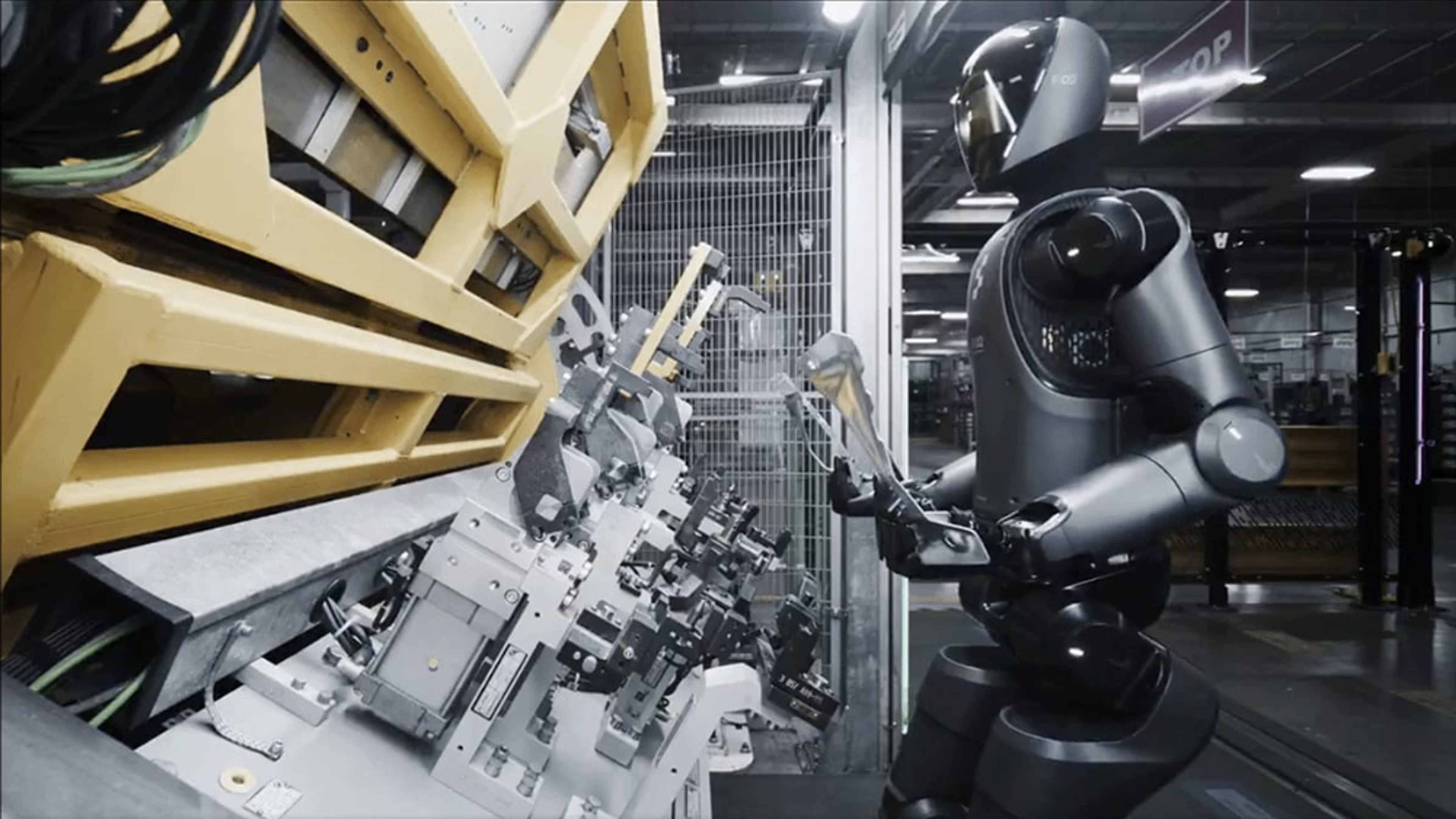
Humanoid robots are getting very good at demonstrations. They can walk across factories, pick up objects, climb stairs, fold clothes, load parts and even perform complex whole-body movements. The reason why these demos are useful is that they show what a robot can do. However, it is not necessary that these demos show whether the robots can perform a task repeatedly as well as reliably in the real world.
In today’s world, this difference is becoming increasingly important. And that’s because now, humanoid robots aren’t just limited to factories and labs. In fact, they’ve entered restaurants, hotels and even our homes.
Now the question is not only whether these robots can perform a task once. The real question is whether they can complete that task thousands of times and deal with unexpected situations. Moreover, can it integrate with existing systems, and does deploying it actually make economic sense?
Recent deployments from companies such as Figure AI and Agility Robotics show what this transition actually requires. Figure’s Figure 02, for example, spent months operating at BMW’s Spartanburg plant rather than simply appearing in a short demonstration. Agility’s Digit has similarly progressed from demonstrations to sustained logistics work at GXO.
So what separates a humanoid robot demo from a real deployment? Let’s have a look!
A Demo Proves Capability. Deployment Proves Repeatability
The first major difference is repetition. A demonstration might show a humanoid robot picking up a box, placing an object on a shelf or performing a particular assembly step. If the robot succeeds several times, the demonstration can look convincing.
A commercial customer needs much more. The robot may need to perform the same action for hours every day, while dealing with small differences in object position, lighting, floor conditions, human movement and equipment around it. This is why throughput and reliability matter more than a single successful attempt.
Agility Robotics has highlighted this distinction with Digit. The company reported that Digit moved more than 100,000 totes during its commercial deployment at GXO’s Flowery Branch facility. The milestone matters because it represents repeated operation over a long period rather than a short controlled demonstration.
The same principle applies across robotics. A robot that succeeds 99 times out of 100 may look excellent in a demonstration. But if the remaining failures require an engineer to intervene, the economics can change dramatically when the robot is expected to work continuously.
This is why real deployments generate different metrics: cycles completed, uptime, intervention rate, recovery time, throughput and failure frequency.
Uncontrolled Environment
Demonstrations are often designed around conditions that make success more likely. The robot may know the location of objects. The workspace may be clean. Lighting may be consistent. The task may follow a predictable sequence. A real workplace is different.
A warehouse worker might leave a box slightly outside its expected position. A pallet may arrive late. Another robot may block a route. A human worker may suddenly walk through the robot’s path.
Manufacturing environments have their own problems. Parts can arrive in different orientations. Equipment can change. Production lines can stop. Tools can wear out.
The National Institute of Standards and Technology (NIST) has spent years developing ways to measure robotic performance under changing conditions because robot performance depends on multiple interacting capabilities, including perception, mobility, dexterity and safety. NIST specifically notes that unexpected events, obstacles and failures need to be part of robot performance assessment.
For humanoids, this problem becomes particularly important because they are expected to operate in spaces designed for people. The robot therefore cannot simply repeat a perfectly scripted sequence. It has to perceive what is happening, decide what to do and recover when something goes wrong.
Recovery Over Perfection
One of the biggest differences between a demo and deployment is how the robot behaves when things go wrong. A demonstration usually highlights successful behavior. A deployment has to account for failure.
- What happens when a robot drops an object?
- Can it recognize the mistake?
- Can it pick the object up again?
- What happens if its hand misses the intended grasp?
- Can it safely stop if a person enters its path?
- Can it recover without requiring a technician?
These questions are critical because real environments contain uncertainty. A useful deployed robot does not have to be perfect. It needs to be predictable and recoverable.
This changes how developers evaluate humanoids. Instead of simply asking, “Can the robot perform this task?”, engineers need to ask, “What happens when the task does not go according to plan?” That is a much harder engineering problem.
Battery Life and Downtime
Battery life is another example of the difference between capability and deployment. A humanoid might perform an impressive sequence for several minutes. But a customer is interested in whether it can contribute during an actual working shift.
That requires considering battery duration, charging, battery swapping, thermal management and downtime. Even if a robot can physically perform a task, its effective productivity can fall if it spends too much time charging or waiting for human assistance.
The same applies to mechanical wear. Humanoid robots contain many actuators, sensors, joints and other components. Repeated walking and manipulation place physical demands on these systems.
A robot intended for commercial use therefore needs maintenance procedures, spare parts and diagnostics. In other words, deployment turns a robot from a research machine into an operational asset.
Safety at Deployment
Safety is another major dividing line. A demonstration can take place in a controlled area with engineers nearby. A production environment may contain dozens or hundreds of people working around the robot. That changes everything. The robot needs to detect people and obstacles, manage its movements and respond appropriately to unexpected events.
There is also a special challenge for humanoids: they are mobile machines that can walk and potentially fall. Traditional industrial robot safety frameworks were largely developed around industrial robotic systems and applications. The International Organization for Standardization (ISO) has established safety standards, ISO 10218-1:2025 and ISO 10218-2:2025, for industrial robots and robotic systems. and cells.
However, humanoids introduce additional questions because a walking robot does not behave like a fixed robotic arm. Recent research has specifically examined the difficulty of applying conventional functional-safety concepts to industrial humanoids, including the problem that removing power from a balancing humanoid can itself create a hazard because the robot may fall.
This illustrates why safety cannot simply be added at the end of development. The robot, software, sensors, workspace and emergency systems all have to work together.
Fitting into Existing Systems
A humanoid does not operate in isolation. A factory may already have conveyors, manufacturing execution systems, warehouse management systems, autonomous mobile robots, safety systems and human workflows.
The humanoid has to fit into that environment. This can require networking, software integration, new safety barriers, charging infrastructure and changes to existing processes.
BMW’s experience with Figure 02 is a useful example. At its Spartanburg plant, Figure 02 operated for around 1,250 hours, moved more than 90,000 components and contributed to the production of more than 30,000 BMW X3 vehicles. BMW says the project also produced lessons about safety concepts and infrastructure, including additional barriers and improved 5G coverage in the production hall.
That is an important lesson. The deployment was not simply about putting a robot on the factory floor. The surrounding environment had to adapt as well.
From Capability to ROI
Perhaps the biggest difference between a demonstration and deployment is economics. A demo asks: Can the robot do it? A customer asks: Is it worth paying for? Those are completely different questions.
A company considering a humanoid robot needs to compare its total cost with the value it provides. That includes the robot itself, maintenance, charging, software, integration, training, supervision and downtime. It also includes the value of the work being performed.
For example, a robot that moves boxes may need to achieve a certain number of cycles per hour. A manufacturing robot may need to maintain a specific takt time. If it works too slowly, requires frequent intervention or creates production bottlenecks, its physical capabilities may not translate into business value.
This is why the industry is increasingly talking about return on investment (ROI) rather than demonstrations.
A recent Reuters report from China’s humanoid robotics sector highlighted the same shift. Companies are increasingly being judged on productivity, human supervision requirements and whether the robots can generate an economic return. The report also noted that large-scale adoption remains limited despite the industry’s rapid growth.
The implication is simple: a humanoid robot is not commercially useful just because it works. It has to work well enough to justify its cost.
Building at Scale
Building one impressive humanoid is very different from building hundreds or thousands of reliable ones. A prototype can be assembled and adjusted by engineers. Commercial fleets need consistent manufacturing, quality control, software updates, diagnostics and replacement parts.
Figure AI’s BotQ facility illustrates this transition. The company says the facility has delivered more than 350 Figure 03 robots and increased its production rate from one robot per day to one per hour.
Scale is important for another reason: data. More deployed robots generate more information about real-world failures and successes. That data can help improve perception, manipulation and control systems.
But scaling also exposes weaknesses. If 10 robots have a problem, engineers might fix them manually. If 10,000 robots have the same problem, the company needs a reliable fleet-management and software-update system. Commercial deployment therefore requires an entirely different level of operational maturity.
General-Purpose Does Not Mean Ready for Everything
Humanoid robots are often promoted as general-purpose machines. Their human-like bodies are valuable because they can potentially operate in spaces already designed for people. But being physically capable of performing many tasks does not mean a robot is immediately ready for every task.
A robot may be excellent at moving totes but unreliable at handling fragile objects. It may be good at picking up standardized parts but struggle with clutter. It may perform well in one factory but require substantial adaptation in another. This is why successful early deployments are likely to focus on clearly defined tasks.
Figure’s BMW deployment started with sheet-metal loading, a relatively specific pick-and-place application. Figure’s newer Figure 03 deployment at BMW has moved toward a more complex logistics workflow involving whole-body movement and pulling a cart. This progression is significant.
Companies are not necessarily jumping directly from a lab prototype to a robot that can do everything. They are gradually increasing task complexity as the underlying system becomes more reliable.
Human Supervision
Another important question is how often humans need to intervene. A robot that completes a task autonomously but requires an operator every few minutes may not actually be autonomous in the way a customer needs.
Supervision can take several forms. A human may need to restart the robot, correct its grasp, clear an obstacle or remotely guide it through an unfamiliar situation. Some supervision is normal during early deployments. The problem comes when the amount of supervision becomes too high. This is why intervention rate should be considered alongside task success rate.
A robot completing 95% of tasks independently could be much more useful than one completing 99% of tasks but requiring frequent human intervention for the remaining 1%. The real metric is not simply success. It is useful autonomous work per unit of human support.
Beyond the Demo
Humanoid robots have proved themselves when it comes to walking, handling objects and performing complex tasks. However, a successful demo is just a starting point. For a real-world successful deployment, it is important for robots to maintain a consistent throughput and recover themselves in case of any kind of unexpected circumstances. Moreover, they must be capable of operating safely around humans and work tirelessly for longer periods of time, along with integrating with the existing systems of a workplace. And another very important aspect is that these robots just provide enough value in terms of ROI so that their cost feels justified.
That’s why the next major milestones in humanoid robotics may therefore be less about spectacular demonstrations and more about robots quietly working for months in factories, warehouses and other real-world environments. The real test is whether they can perform useful work consistently, safely and economically with limited human support. That is what separates a promising demo from a real deployment.
More articles on this topic
59 articles ReportCounterpoint Expects Work Applications to Drive 90% of Humanoid Shipments by 2030
 ReportUnitree’s 'Superman' Robot Claims to Outrun Usain Bolt
 ReportForeign Investors And Tech Executives Pay Up To $15,000 To Tour China’s Factories
 ReportCan Certified Robots Compete With China's Cheap Patrol Bots?
 ReportQuadruped Robots Are Becoming Big Business: Here’s Why The US Is Targeting Chinese Makers
 ReportHumanoid Robots Hit Mass Production
 ReportHow Robots Are Learning to Read Minds?
 ReportAre Humanoid Robot Videos Misleading Us?
 ReportHow Do Collaborative Robots Increase Workplace Safety?
 ReportHow to Train a Humanoid Robot for Hard Work
 ReportCollaborative Robots in Hospitals
 ReportHow Humanoid Robots Can Transform Disaster Response
BUSINESS NEWS WEEKLY LETTER
The Weekly Letter for Robotics Professionals, Summarizing the Most Important Industry Moves, Launches, Deals and Signals.