Unitree G1 vs. EngineAI PM01
Unitree G1 and EngineAI PM01 are both bipedal humanoid robots compared here on locomotion, walking speed, physical configuration, perception systems, battery endurance, connectivity and research-oriented deployment.

November 12, 2026 by Business Desk Team
Introduction
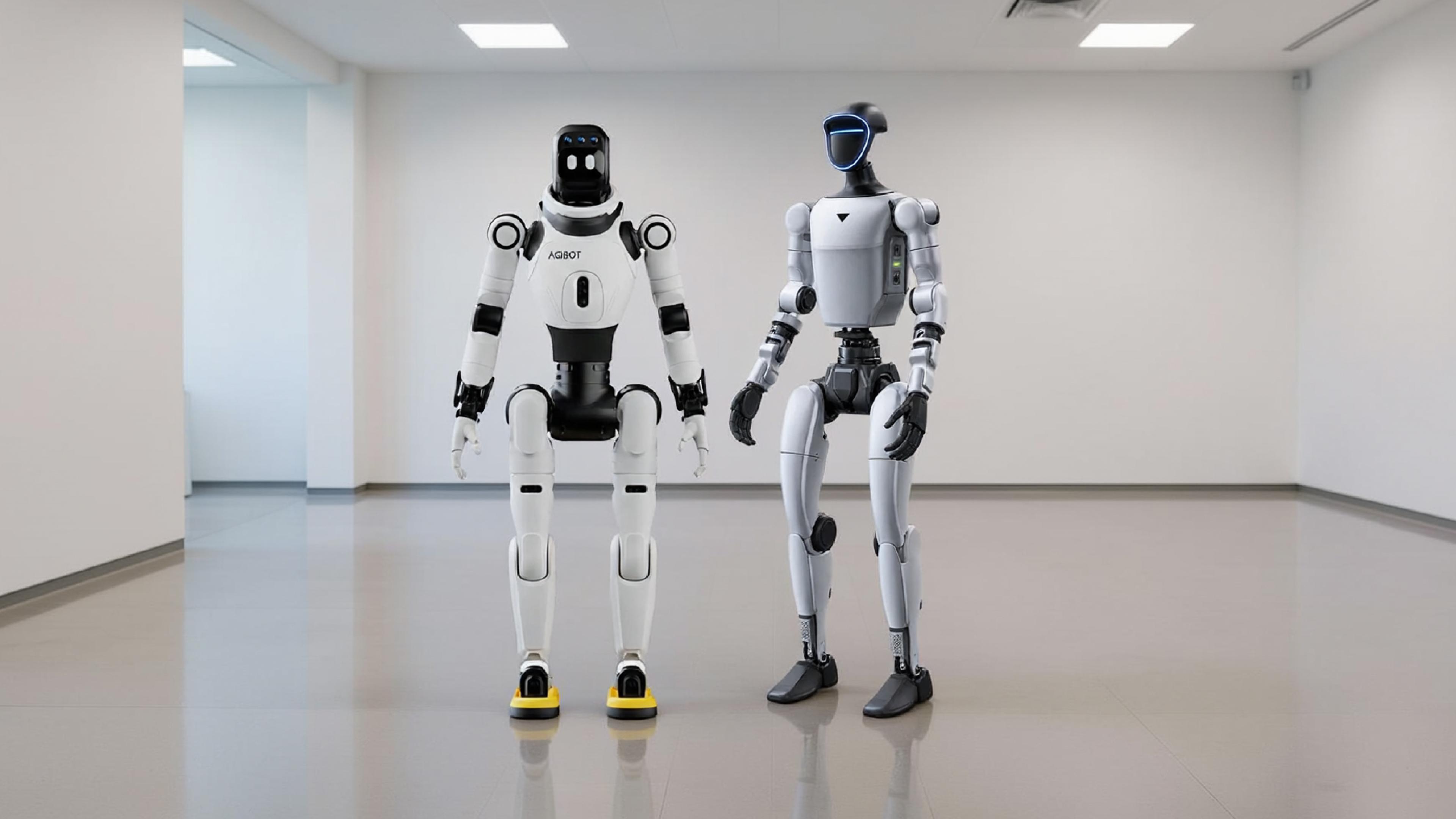
Unitree G1 and EngineAI PM01 are industrial and research humanoids with bipedal walking, available to purchase. Both pack IMU-based sensing, microphone arrays and terrain adaptation and list two hours of battery life but come in two configurations each (space-saving or full-size models), each with different claims of outdoor usability and a different navigation sensor.
The G1 is a small-sized humanoid robot with a 9,000 mAh battery, Wi-Fi 6 & Bluetooth 5.2 radios and a maximum listed walking speed of 2 m/s. PM01 is taller, heavier, has a quick-swap battery, 3D-LiDAR and is listed for outdoor use. The comparison focuses on mobility and perception for faster, deeper operation as well as endurance and commercial usage.
At a Glance
| Metric | Unitree G1 | EngineAI PM01 |
|---|---|---|
| Robot type | Bipedal humanoid | Bipedal humanoid |
| Best-fit use cases | Research, education, training, industrial and AI development | Education, research, training, industrial and AI development |
| Height | 127 cm | 138 cm |
| Weight | 35 kg | 40 kg |
| Battery | 9,000 mAh | Quick-swap battery |
| Runtime | Approximately 2 h | Approximately 2 h |
| Walking speed | Up to 2 m/s | Not specified in supplied record |
| Locomotion | Bipedal | Walking and running |
| Navigation / sensing | IMU; Livox MID-360 3D LiDAR listed | IMU and LiDAR listed |
| Outdoor operation | Limited | Supported |
| Terrain adaptation | Yes | Yes |
| Connectivity | Wi-Fi 6, Bluetooth 5.2 | Not specified |
| Microphone array | Yes, on EDU versions | Yes |
| Software updates | OTA supported in supplied record | Not specified |
| Availability | Commercially available | Commercially available |
| Key limitation / caveat | Outdoor operation is limited; microphone availability varies by version | Walking speed and connectivity are not specified in the supplied record |
How They Compare
Physical configuration: G1 is somewhat shorter and lighter than PM01. The manufacturer states the PM01 height at approx. 140 cm and weight 43-44.5 kg (depending on edition), while Unitree lists the G1 at approx. 132 cm and 35 kg (battery). The official Robot24 record states G1 at 127 cm and PM01 at 138 cm, so it makes sense to defer to the manufacturer specifications when publishing these figures.
Locomotion and mobility: Unitree G1 has a top walking speed of 2 m/s. EngineAI's 2026 PM01 specs state its hardware runs at speeds above 2 m/s. This doesn't imply we expect both to run at those speeds in regular use. The PM01 is further described as supporting walking and running; G1 is simply classed under bipedal locomotion, with both referenced as in need of real-world testing for balance recovery, turning, rough terrain and pedestrian movement.
Navigation and perception: Both units are equipped with inertial sensing and 3D perception, but the sensor configuration varies by variant. Unitree lists a depth camera and 3D LiDAR (notably the Livox MID-360) while EngineAI's PM01 Education Edition lists two depth cameras, with the Navigation Edition adding 3D LiDAR. The key point here: PM01 doesn't automatically come with LiDAR on all editions.
Battery and operating endurance: Both robots list approximately two hours of runtime. The Unitree G1 said that it was a quick-release 9,000 mAh battery. EngineAI PM01's manufacturer documentation lists a quick-release 10,000 mAh smart battery. Both batteries can be removed, but operating time varies by activity level, processing workload and task. Also, EngineAI listing about 2 hours of full-charge time.
Connectivity and development: Unitree G1 is listed as Wi-Fi 6 and Bluetooth 5.2. The EngineAI product record supplied does not specify wireless connectivity, so confirm with the manufacturer what connectivity will be available. Both platforms are for growth and research, but check out SDKs, APIs, compute modules and software access to align to the specific edition bought.
Important Qualification
Unitree G1: listed at 132 cm tall, not 127 cm in supplied record. Verify its microphone array and development features to the chosen G1 or G1 EDU.
EngineAI PM01: The manufacturer's 2026 specifications list approximately 140 cm in height and around 43-44.5 kg, depending on edition. The 10,000 mAh quick-release battery and approximately two-hour runtime are documented. LiDAR availability differs between Education and Navigation editions.
Both models: Manufacturer supported max speed is not comparable to operating speed on a specific robot. When comparing outdoor use, terrain adaptability and sensor options with actual hardware and software configuration. A certified collaborative operation cannot be determined by specifications alone for either robot.
Summary
Choose Unitree G1 if a more lightweight humanoid platform, desired Wi-Fi 6 and Bluetooth communication, 9000 mAh quick-release battery, and a published 2 m/s walk speed are appropriate for the research or dev work. Go with EngineAI PM01 if a taller platform, quick-swap battery, run and walk mode features, and edition specific sensing hardware is more suitable for the application.
G1 is lighter, with arguably more detailed wireless connectivity information, while PM01 is physically taller, with a 10000 mAh Quick-Release battery. Both claim about 2 hours run-time. This is a suitability of task assessment and not a controlled performance ranking. Ascertain the edition, LiDAR type, development port info, battery lifespan & mobility constraints and try before you buy to make use of the claim of excellence.
This comparison is based on ROBOT24.com market-research data records and manufacturer-reported specifications rather than controlled performance testing.
More articles on this topic
144 articles ReportRichtech DUST-E S vs. Gausium Phantas
 ReportEngineAI SE01 vs. AGIBOT RAISE A1ReportRichtech DUST-E S vs. KEENON KLEENBOT C20
 ReportPUDU PuduBot 2 vs. OrionStar LuckiBot Pro
 ReportKEENON DINERBOT T11 vs. PUDU KettyBot Pro
 ReportAGIBOT D1 Pro vs. Unitree Go2 Pro
 ReportKEYi Tech Loona vs. WEILAN BabyAlpha A2
 ReportPUDU BellaBot Pro vs. KEENON DINERBOT T11
 ReportBear Robotics Servi Plus vs PUDU BellaBot Pro
 ReportUnitree G1 vs. AGIBOT X2
 ReportPUDU KettyBot Pro vs. Bear Robotics Servi Q
 ReportUnitree GO2-W vs. MagicLab MagicDog-W
BUSINESS NEWS WEEKLY LETTER
The Weekly Letter for Robotics Professionals, Summarizing the Most Important Industry Moves, Launches, Deals and Signals.