PUDU BellaBot Pro vs. KEENON DINERBOT T11
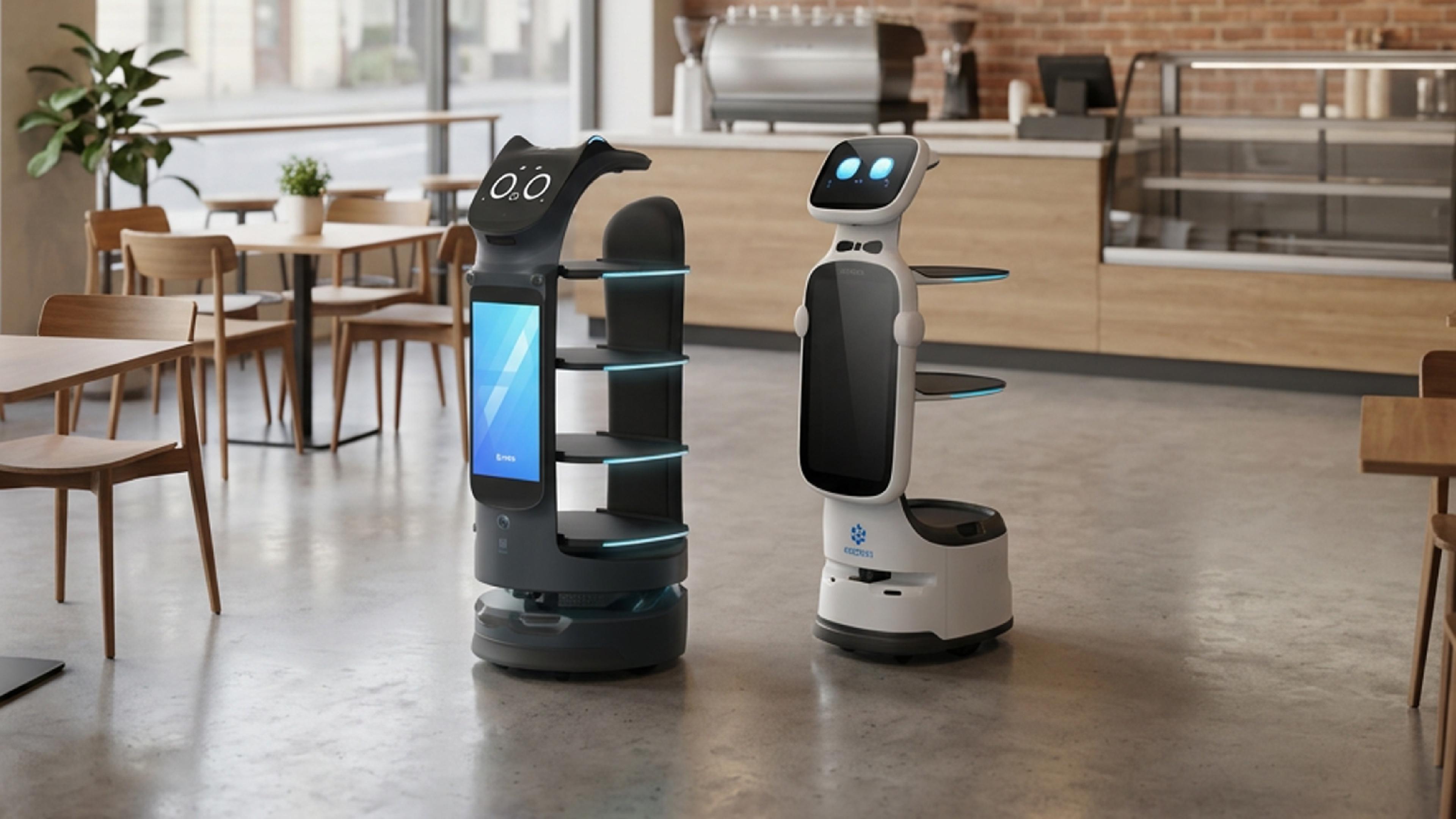
PUDU BellaBot Pro and KEENON DINERBOT T11 are commercially available autonomous service robots designed for hospitality, retail and other indoor operations. We compare their navigation systems, passage requirements, movement speeds, charging times, operating endurance and connectivity to examine their suitability for different commercial environments.

November 11, 2026 by Business Desk Team
Introduction
Autonomous service robots have been increasingly adopted within hospitality, health care and retail facilities to perform transportation tasks and customer interaction operations.
They may move from one point to another, provide deliveries, and help employees in performing repetitive actions. The efficiency of autonomous service robots is determined by the facility layout, the set of tasks, and the degree of robot navigation.
PUDU BellaBot Pro and KEENON DINERBOT T11 are the two Chinese autonomous service robots designed for indoor commercial facilities. The BellaBot Pro robot has a unique design that unites autonomous delivery, customer interaction and promotion. It is relevant to the needs of business entities who want to combine item delivery with customer interaction.
The DINERBOT T11 robot pays special attention to small dimensions and service delivery that are especially important in the cases of the narrow space where autonomous robots are applied. Both robots are characterized by LiDAR technology, Wi-Fi and OTA updates according to the provided comparison records.
Nevertheless, they have different specifications concerning the speed of movement, charging time, operating time and minimal passage width. This article their navigation capabilities and operating requirements based on ROBOT24.com market research records.
At A Glance
| Availability | Commercially available | Commercially Available |
|---|---|---|
| Charging Time | Approx. 4.5 Hours | Approximately 5.5 hours |
| LiDAR | Yes | Yes |
| Maximum Speed | 1.2 m/s | 1.0 m/s |
| Minimum Passage Width | 70 cm | 49 cm |
| Nationality | Chinese | Chinese |
| OTA Updates | Supported | Supported |
| Runtime | Up to 20 Hours | Approximately 10–13.5 hours |
| Wi-Fi | Yes | Yes |
| Typical use | Hospitality, Healthcare, Retail & Showroom Operations | Hospitality, Retail & Showroom Operations, Healthcare |
| Status | Commercial | Commercial |
How They Compare
Hospitality and commercial services applications
The PUDU BellaBot Pro and KEENON DINERBOT T11 robots have been engineered for use in commercial service applications. The BellaBot Pro has both transportation features and customer-facing service capabilities. The manufacturer of BellaBot Pro provides information about various operation modes such as delivery, recycling, cruising, guiding and birthday service modes.
The above capabilities can be useful in hotels, restaurants and other hospitality establishments that involve moving objects from one service point to another. The DINERBOT T11 has been developed with compactness of navigation and object delivery in mind. Both robots have potential uses in repetitive service procedures, yet the applicability depends on facility characteristics.
Navigation and Obstacle Avoidance
Both BellaBot Pro and DINERBOT T11 feature LiDAR in their navigation system. BellaBot Pro integrates LiDAR mapping together with visual navigation and environmental perception. These solutions allow the robot to understand its environment and navigate between specified points.
Similar features are incorporated into DINERBOT T11; this product incorporates visual navigation and obstacle detection technology, as highlighted by KEENON's capacity to work in confined spaces. Navigational skills are especially critical in the hospitality and retail environments because people and moving objects might get in the way.
Nevertheless, having a LiDAR sensor does not mean that both robots will have identical navigational skills. Sensor configuration, software, route planning and obstacles detection might play a crucial role in this regard.Businesses need to assess both systems under realistic conditions.
Minimum passage width
One of the most significant differences between the robots is their recorded minimum passage width. BellaBot Pro is listed with a minimum passage width of 70 cm in the supplied comparison records.
DINERBOT T11 has a recorded minimum passage width of 49 cm. Based on these figures, T11 can navigate narrower passages. This may be relevant to hospitality venues with closely positioned tables, retail stores with compact aisles and healthcare facilities with restricted circulation areas.
A narrower passage requirement can potentially allow a robot to access more locations within a building. However, minimum passage width does not determine whether a robot can navigate every confined area. Turning requirements, obstacle clearance and the placement of furniture also influence accessibility. The BellaBot Pro figure should be verified before publication because its manufacturer's current product specifications list a different minimum clearance.
Maximum speed and movement efficiency
BellaBot Pro has a recorded maximum speed of 1.2 m/s. DINERBOT T11 has a recorded maximum speed of 1.0 m/s. Based on these figures, BellaBot Pro has the higher stated maximum speed. This may be relevant to facilities where robots travel longer distances between service locations.
However, maximum speed does not directly determine how quickly a robot completes a task. In busy hospitality or retail environments, robots may need to reduce speed or stop when encountering customers, staff and obstacles.
Route planning, loading procedures and the number of stops can also influence task completion time. DINERBOT T11's narrower passage requirements may offer a different practical advantage in compact environments.
Operating endurance and runtime
The supplied comparison records list BellaBot Pro with a runtime of up to 20 hours. DINERBOT T11 has a recorded operating duration of approximately 10–13.5 hours.
These figures suggest different maximum operating periods, although the BellaBot Pro figure requires confirmation against current manufacturer documentation. Operating endurance can influence how businesses schedule robotic assistance across long service periods.
For hospitality venues, robots may be needed throughout multiple meal services or across extended operating hours. Healthcare and retail facilities may also require transport assistance at different times of day. However, runtime depends on workload, movement speed, travel distance, payload and periods of inactivity. Published maximum figures should not be interpreted as guarantees of continuous active operation.
Charging time and operational planning
BellaBot Pro has a recorded charging time of approximately 4.5 hours. DINERBOT T11 has a recorded charging time of approximately 5.5 hours.
Based on the supplied figures, BellaBot Pro has the shorter charging duration. This may influence charging schedules in facilities where robots operate across several service periods. However, charging time alone does not establish overall operational availability.
Battery endurance, charging procedures and the frequency of use also influence how much time a robot can spend performing tasks. Businesses should confirm charging requirements for the exact product configurations being considered.
Hospitality operations
Both BellaBot Pro and DINERBOT T11 have hospitality among their listed applications. In hospitality environments, autonomous service robots may assist with moving food, drinks and other suitable items between designated locations.
BellaBot Pro also offers interactive and promotional features that may be relevant to guest-facing operations. Its manufacturer describes display and interaction functions intended to support customer engagement. DINERBOT T11 emphasizes compact delivery and navigation, making its physical design particularly relevant to venues with narrow service routes.
However, the more suitable robot depends on the tasks involved. A hospitality venue prioritizing customer interaction may have different requirements from one primarily seeking to reduce repetitive transport trips.
Retail and showroom operations
Both robots are associated with retail and showroom applications. Autonomous service robots can support customer-facing activities and structured indoor transport workflows.
BellaBot Pro includes promotional display functions that may be relevant to stores and showrooms seeking to communicate information to visitors.DINERBOT T11 also offers promotional and interactive capabilities.
However, these features should be evaluated separately from navigation and transport performance. Display configuration, content-management functions and compatibility with existing systems may influence how effectively each robot supports retail operations.
Healthcare applications
Healthcare is included among the recorded application categories for both robots.
In healthcare environments, autonomous robots may be considered for suitable nonclinical transport tasks.
However, commercial service capabilities do not automatically establish suitability for medical or clinical operations.
Healthcare facilities may require additional safeguards involving hygiene, access control, patient safety and integration with existing procedures.
The supplied records do not establish whether either robot meets specific clinical transport requirements.
Organizations should therefore confirm application-specific capabilities and compliance requirements before deployment.
Wi-Fi connectivity and OTA updates
Both BellaBot Pro and DINERBOT T11 support Wi-Fi connectivity and over-the-air updates according to the supplied records. Wi-Fi can support communication with compatible management systems and connected applications. OTA updates allow supported software changes to be distributed remotely. These capabilities may be useful for businesses operating robots across multiple service areas.
However, Wi-Fi and OTA support do not establish identical fleet-management capabilities. The supplied records do not provide directly comparable information about software interfaces, integration options or update policies. Businesses should verify compatibility with their existing systems.
Commercial availability and implementation
BellaBot Pro and DINERBOT T11 both have commercial availability based on the information provided. As they are commercially available, they are pertinent to companies that consider implementing automated services.
Nevertheless, availability could be different depending on the region, distribution, and specifications of robots. Deployment will entail mapping of facilities, employee training, maintenance, and technical support.
Before implementation, one must assess the desired paths, the minimum requirements for passageway, charging method and process workflow. Site-specific demo can help to determine the suitability of the robot to the facility.
Summary
PUDU BellaBot Pro and KEENON DINERBOT T11 are commercially available autonomous service robots designed for hospitality, healthcare and retail applications.
BellaBot Pro may appeal to businesses seeking a combination of autonomous transport, customer interaction and promotional functions. Its recorded maximum speed of 1.2 m/s and approximately 4.5-hour charging time are relevant considerations for commercial operations.
DINERBOT T11 is particularly relevant to facilities where narrow passages influence robot deployment. Its manufacturer-documented minimum passage width of 49 cm makes it worth considering for compact hospitality and retail environments.
Both robots support LiDAR, Wi-Fi connectivity and OTA updates. The choice depends on the facility's layout, intended tasks, operating endurance, customer-interaction requirements and integration needs.
This comparison is based on ROBOT24.com market-research data records and manufacturer product information rather than controlled performance testing. Runtime, passage width, charging requirements and navigation performance should be verified against current manufacturer specifications before drawing conclusions about overall performance.
More articles on this topic
144 articles ReportRichtech DUST-E S vs. Gausium Phantas
 ReportEngineAI SE01 vs. AGIBOT RAISE A1ReportRichtech DUST-E S vs. KEENON KLEENBOT C20
 ReportPUDU PuduBot 2 vs. OrionStar LuckiBot Pro
 ReportUnitree G1 vs. EngineAI PM01
 ReportKEENON DINERBOT T11 vs. PUDU KettyBot Pro
 ReportAGIBOT D1 Pro vs. Unitree Go2 Pro
 ReportKEYi Tech Loona vs. WEILAN BabyAlpha A2
 ReportBear Robotics Servi Plus vs PUDU BellaBot Pro
 ReportUnitree G1 vs. AGIBOT X2
 ReportPUDU KettyBot Pro vs. Bear Robotics Servi Q
 ReportUnitree GO2-W vs. MagicLab MagicDog-W
BUSINESS NEWS WEEKLY LETTER
The Weekly Letter for Robotics Professionals, Summarizing the Most Important Industry Moves, Launches, Deals and Signals.