What Happens When Robots Lose Their Internet Connection?
Robots that rely on the cloud can freeze, ignore commands or stall traffic when the connection drops. Let’s look at the real cases, from robot vacuums to robotaxis, and what they teach.
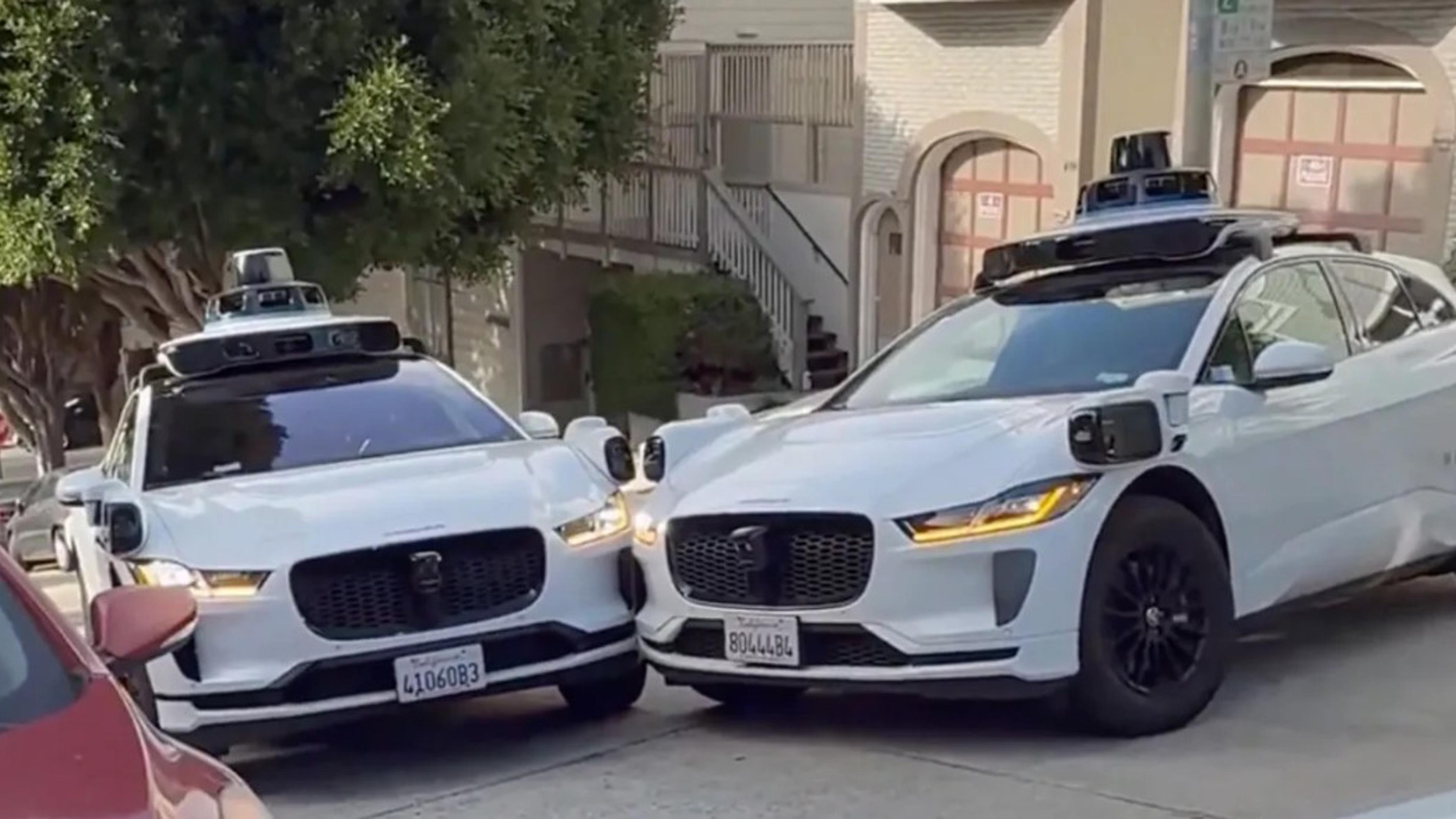
Most people picture a robot as a self-contained machine. Many aren’t. Maps, updates and even decisions often travel to a server and back. So when robots lose their internet connection, results range from a vacuum ignoring your phone to taxis stopped in traffic.
Why do they depend on the cloud?
A robot has two type of brains: the onboard one executes split-second jobs (such as stopping before it hits a wall), and the cloud handles heavier or less urgent work like storing maps, running the phone app, pushing software updates or, in some cases even replying a call for human help.
Now, cut the link and you have the first brain still working. But, the second goes quiet. How much you notice depends on how heavily the maker leaned on the cloud. A well-built robot loses a few features. A badly built one loses most of its usefulness. Real outages have shown both outcomes, and the robot vacuum is the easiest place to start.
The vacuum that stopped taking orders
When an AWS (Amazon Web Services) outage hit, iRobot cautioned customers that its application was affected. Roombas were still running if you pressed the ‘Clean’ button on top. However, owners couldn't pick rooms. Nor did they set schedules or tell the robot to skip certain areas. Additionally, a few people with child lock switched on couldn't even send the vacuum back to its dock, so it kept roaming floors of a house.
Neato's story was blunter. When the company ended its cloud services, its robot vacuums were left stuck in manual mode. Nothing broke physically. The app simply had nothing to talk to anymore.
Studying these examples, the takeaway is quite simple: connected features should improve a robot, not decide whether it works at all. Of course, a vacuum is a low-risk place to learn that lesson. Now, move the same dependency onto a public road and the stakes change.
When robotaxis wait for remote help
On December 20, 2025, a substation fire cut power to roughly a third of San Francisco, affecting about 130,000 customers. Traffic lights went dark. Waymo's driverless cars are built to treat a dead signal as a four-way stop, and they crossed more than 7,000 of them that day. But in uncertain moments the cars can also send a confirmation request to a remote support team, and the volume of requests created a backlog.
Videos showed Waymo cars stopped at intersections with their hazard lights flashing. The company paused service that night and resumed it the next day.
Here, the fact was that it was a power cut, and not a dropped internet link. Still, the weak point was the same: a robot waited for a reply from somewhere else. Waymo has since rolled out specific updates that offer its cars explicit power outage context in order to act more decisively. Missy Cummings, a robotics researcher at George Mason University, argued that regulators must have rules for how remote operations are used.
But not every freeze comes with such a clear explanation.
A fleet-wide freeze in Wuhan
On March 31, 2026, at least 100 Baidu Apollo Go robotaxis stopped moving in Wuhan, China. Some halted in the fast lane. Passengers were stuck inside for up to two hours, and videos showed some struggling to reach customer service. Local police called it a system failure.
Baidu did not say anything about the cause. Some commentators doubt a central software or a failure in connectivity, but that's unconfirmed; hence, one may treat it as an open question and not a proven internet outage.
Now, what's clear is the pattern! Wuhan runs more than 1,000 of Baidu's driverless vehicles, and when many cars share one point of failure, they can all fail at once. A single broken car is a repair. A hundred broken cars is a traffic event. Fixes are possible, and some already exist at home.
How designers are fixing it
The idea is called graceful failure. A robot should handle safety on its own, then ask the cloud for extras. In a vacuum, that means a physical ‘Clean’ button that always works. On the road, it means pulling over safely instead of freezing in a lane, and relying less on a human answering fast.
Hobbyists have their own workaround. Some robot vacuum owners install open-source firmware such as Valetudo, which keeps the vacuum running without a company server. It takes technical skill, and it isn't for everyone, but it shows how much of the cloud is optional.
Makers are learning too. Waymo's update is one example. More fleets will likely add local fallbacks, because regulators and customers have now seen what the alternative looks like. That matters even more as robots move from vacuum cleaners to humanoids.
What it means for home robots
Humanoid helpers raise the stakes. 1X lets NEO owners schedule a human teleoperator for chores the robot can't handle yet, and a remote operator can't help a robot that's offline. What the machine does on its own, with Wi-Fi off, becomes a real buying question.
Before you pay for any home robot, ask three things.
- · What still works without Wi-Fi?
- · What happens if the company's servers shut down, as Neato's did?
- · And is there a physical way to start, stop and dock it?
Good answers to all three are worth more than a long feature list.
Robots that lose their internet connection tell us how well they were built. The best ones slow down, stay safe and keep doing the basics. The worst ones freeze, and everyone nearby waits for a connection to come back.
More articles on this topic
201 articles ReportWhat it Really Costs to Own a Personal Assistant Robot at Home
 ReportChina's Industrial Robot Output Surges 29% in Nine Months
 ReportInside San Francisco's Robot Housekeeping Experiment
 ReportA Quadruped That Doesn’t Just Look Like Your Dog. It Acts Like It, Too.
 ReportDexForce Teaches Humanoids Real-World Skills
 ReportBeetle-Inspired Robot Walks and Grasps With Finger Controls Alone
 ReportUAE to Test Humanoid Robots in Extreme Gulf Conditions Under UBTECH Partnership
 ReportSurprising New Careers Created by The Everyday Consumer Robotics Boom
 ReportAgility Robotics Says Digit 5 Humanoid Can Work Over 20 Hours a Day With New Battery
 Report15 Humanoid Robots Are Being Put to Work at a Chinese Auto Parts Factory
 ReportSouth Korean Hospital Demonstrates Humanoid Robots Assisting Surgeons in the Operating Room
 ReportSwedish Startup Plans Humanoid-Run Factories Inside Shipping Containers
BUSINESS NEWS WEEKLY LETTER
The Weekly Letter for Robotics Professionals, Summarizing the Most Important Industry Moves, Launches, Deals and Signals.