Robot Makers Collaborate with Universities in Race to Advance Humanoids
In this case, NEURA Robotics and its training center in collaboration with the Technical University of Munich show that hardware and scientific studies can be combined along with real-life data for robot improvement.

October 23, 2026 by Artem
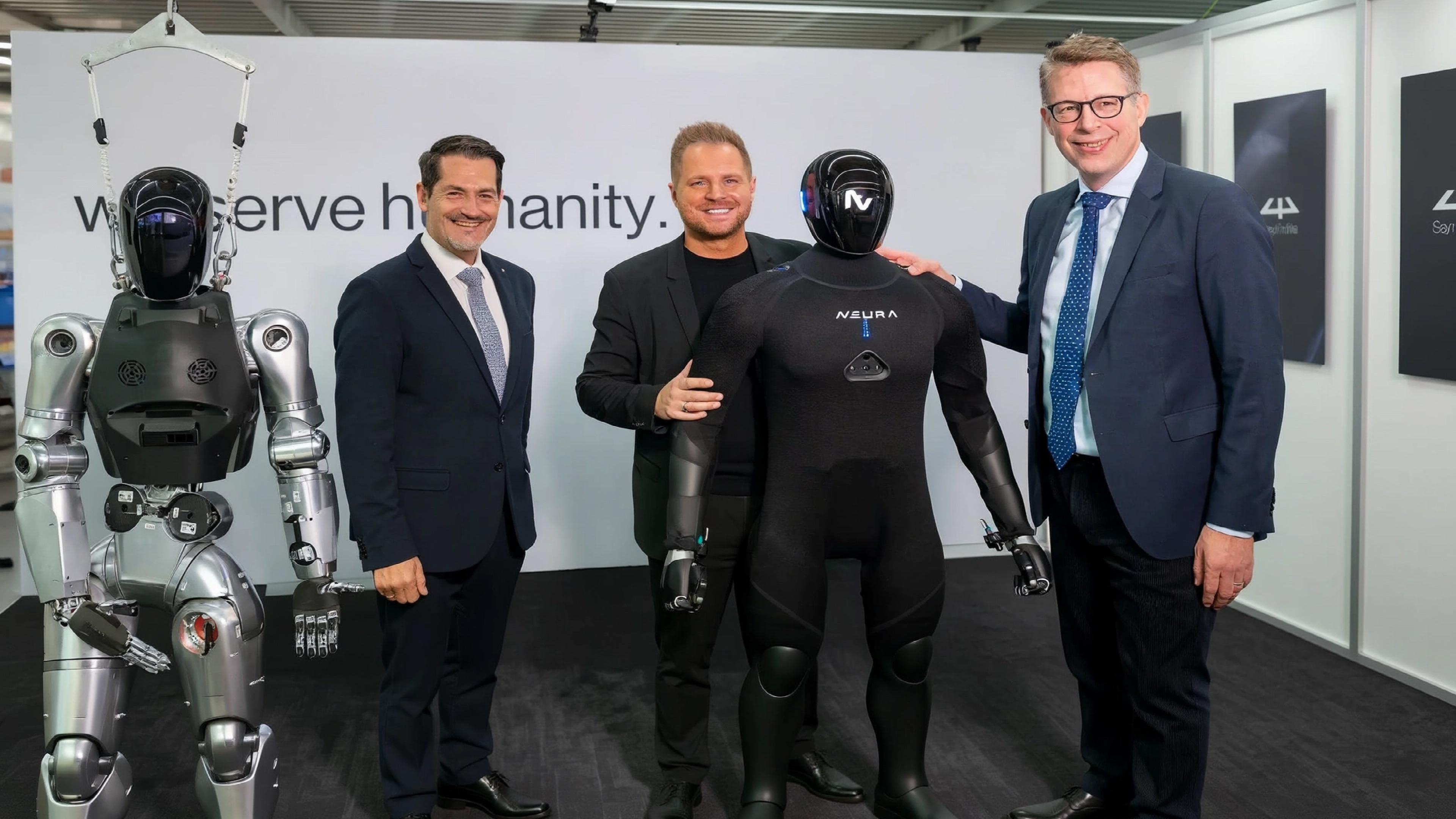
MUNICH, Germany -- Robot makers are increasingly relying on university research to help them develop the artificial intelligence, manipulation abilities and training processes that will enable them to move from demonstration to commercial applications in humanoid robots.
The latest such partnership involves German robotics company NEURA Robotics and the Technical University of Munich (TUM), which on Oct. 22 opened a joint robot training center near Munich Airport. It features industrial robotic hardware alongside scientific research to teach machines to do practical things and generate data for physical AI models.
The TUM RoboGym is about 2,300 square meters in size and can initially house around 100 robots within 48 training stations. In a three-year agreement worth €17 million ($20 million) - including €11 million from NEURA - the partners have joined forces.
Scientists will train robots to fold boxes, assemble parts and manipulate objects. Data gathered by robots in this process will allow scientists to create AI models.
NEURA showcased its fourth-generation humanoid robot, 4NE1, during the inauguration event. The company claims that the robot is 20 percent lighter than the previous generation and features enhanced hands and local reflexes.
Research Collaborations Go Beyond Germany
Collaboration between NEURA and TUM mirrors a precedent in robotics where universities develop learning algorithms while robotics firms provide the physical platform on which to test them.
For example, researchers at the Massachusetts Institute of Technology in the US developed learning algorithms for robots involving robot manipulation and learning systems combining vision, physical interaction, and reinforcement learning. This line of research allows solving the issues that traditional industrial robots face, such as dealing with unfamiliar objects and dynamic situations.
Researchers from Stanford University have researched how humanoids can learn reusable manipulation skills. As part of their HomeBody project, they collaborate with California Institute of Technology researchers and study how robots can use their spatial memory and movements learned previously to complete tasks in the household environment.
Such academic projects might not include any business cooperation with robot manufacturing companies. They need the physical robotic platform to test their algorithms.
From Academic Research To Industrial Robots
For industry, collaboration with universities can give access to research experts, training techniques, and scientific knowledge without having to develop all the skills in-house.
For universities, collaboration gives access to industrial hardware, large-scale training facilities, and problems that are hard to simulate in regular labs.
The key problem is getting enough data on physical interaction. Unlike language models, which can be trained using digital text and images, robots require information about forces, physical interactions, movements, and behavior of objects in the physical world.
Facilities like TUM RoboGym are meant to provide that information.
However, access to hardware and scientific knowledge does not automatically translate into commercial success. NEURA and TUM have not released any independent information on how fast their robots can learn new skills or how well they transfer to industrial practice.
More articles on this topic
105 articles ReportRobots vs. Drones: What Is the Real Difference?
 ReportHow Animals Inspire Better Robots
 ReportFrom Toys to Tools: The Coolest Robots in Schools Today
 ReportThis Tiny Robot Hops Like a Frog And Swims Using Elastic Limbs
 ReportJapan Tests Robot Bins at Tokyo’s Busiest Railway Station
 ReportAudi Tests Agile Robots' Mobile Humanoids for Factory Logistics
 ReportUnitree Expands H2 Humanoid Line With H2-X Guardian
 ReportNoetix Robotics Reportedly Files for Hong Kong IPO
 ReportHumanoid Expands Nvidia Partnership for Onboard Robot AI
 ReportMitsubishi Electric Develops AI-Controlled Humanoid Machining System
 ReportEka Robotics Secures $150 Million to Advance Dexterous Automation
 ReportAgility Robotics Signs Deal to Pilot Digit at AGCO Factory
BUSINESS NEWS WEEKLY LETTER
The Weekly Letter for Robotics Professionals, Summarizing the Most Important Industry Moves, Launches, Deals and Signals.