Mitsubishi Electric Develops AI-Controlled Humanoid Machining System
The Japanese manufacturer is developing a physical AI system that coordinates humanoid robots and CNC machines, with practical use targeted by 2030.

October 22, 2026 by Artem
Mitsubishi Electric Develops AI-Controlled Humanoid Machining System
The Japanese manufacturer is developing a physical AI system that coordinates humanoid robots and CNC machines, with practical use targeted by 2030.
TOKYO -- Mitsubishi Electric has developed an AI-based machining system that allows controlling humanoid robots and computer numerical control (CNC) machines. This technology is aimed at automating manufacturing tasks traditionally handled by human workers.
Japanese manufacturer made the announcement on Oct. 21, stating that it offers a new way to combine physical artificial intelligence with machine tool controls to coordinate machining tasks and robot movements. The technology should be ready for practical use by 2030 after its further development and testing.
The system is designed to enable humanoids to perform machine setup, cleaning, removing and transportation of finished products, inspection and troubleshooting.
This approach may help reduce the modifications required to incorporate robots in existing machine shops, where traditional automation solutions often require special equipment, complex programming and rearrangements of production facilities.
Mitsubishi Electric calls this technology the first ever machining system that features collaboration between humanoid robots and CNC machines. That claim is based on Mitsubishi Electric's own research and has not been independently verified.
Connecting Robots With Machine Tools
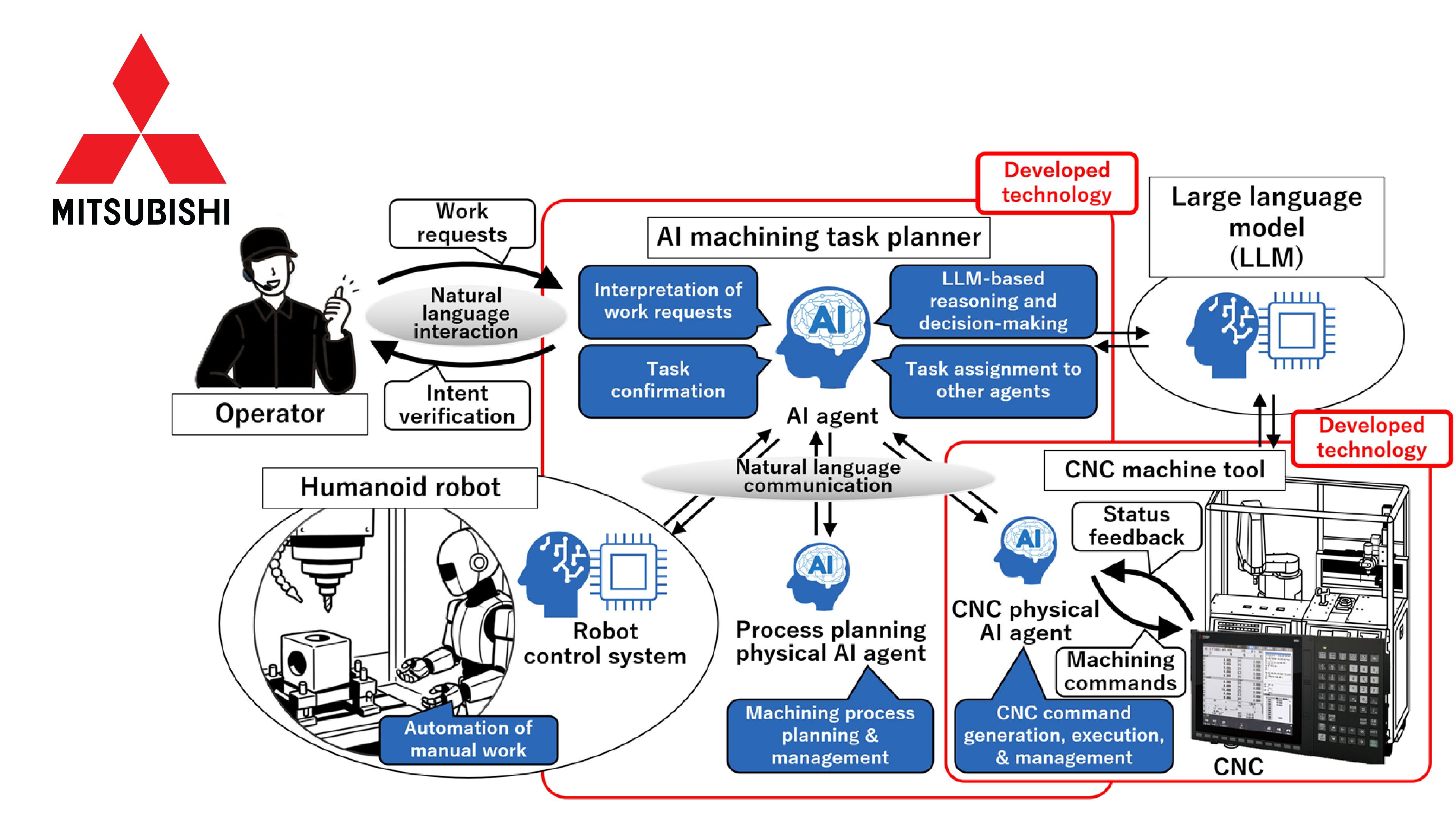
The system consists of three components: an AI machining task planner, a CNC machine equipped with physical AI and a general-purpose humanoid robot.
The task planner interprets natural-language instructions, selects and combines tasks from a predefined list, then assigns work to the CNC machine and humanoid robot.
The CNC machine exchanges operational information with the humanoid to coordinate their activities. Both the planner and the CNC system use physical AI developed with Mitsubishi Electric's Maisart technology.
One challenge in connecting robots to CNC equipment is the need to develop communication functions and control sequences for each installation. These systems must coordinate robot movements with machine operations while ensuring that equipment follows the correct sequence.
Mitsubishi Electric says its architecture reduces the need for such customized integration, allowing operators to issue basic instructions instead of programming each task separately.
The approach is intended to support unmanned machining operations, including work that would otherwise require an operator to enter the machine's working area, position parts or remove finished components.
Conventional industrial robots already perform machine-tending operations, particularly in repetitive production environments. However, accommodating different workpieces, layouts and processes can require additional engineering and specialized handling equipment.
A general-purpose humanoid could potentially perform several tasks around existing machines without requiring separate automation systems for each operation.
Whether that approach is economical will depend on the robot's reliability, operating speed, integration costs and ability to handle different manufacturing tasks.
Commercial Use Targeted for 2030
Mitsubishi Electric plans to demonstrate the system at the Japan International Machine Tool Fair (JIMTOF 2026), opening Oct. 26 at Tokyo Big Sight.
According to the company's expanded Japanese announcement, it intends to improve the system's capabilities and conduct further verification tests before targeting practical use in 2030.
Machine shops present demanding conditions for general-purpose robots. Handling metal workpieces, working around cutting equipment and coordinating movements with machine operations require precision and reliable safety controls.
The system must also manage changes in machine status, interruptions and unexpected conditions without creating additional work for operators.
These requirements could make sustained operation more difficult than completing individual tasks in a controlled demonstration.
Mitsubishi Electric has not disclosed the humanoid robot's manufacturer or model, nor has it provided comparative figures showing how much integration time or labor its system could save.
The company also has not identified commercial customers or published independent data on task completion rates, operating reliability or performance during extended machining operations.
Its immediate next step is the scheduled JIMTOF demonstration, while the broader goal of using humanoids for routine CNC machining remains several years away.
More articles on this topic
42 articles ReportRobots vs. Drones: What Is the Real Difference?
 ReportHow Animals Inspire Better Robots
 ReportFrom Toys to Tools: The Coolest Robots in Schools Today
 ReportThis Tiny Robot Hops Like a Frog And Swims Using Elastic Limbs
 ReportJapan Tests Robot Bins at Tokyo’s Busiest Railway Station
 ReportEka Robotics Secures $150 Million to Advance Dexterous Automation
 ReportAgility Robotics Signs Deal to Pilot Digit at AGCO Factory
 ReportDream Labs Raises $90M, Offers Robot AI by the Hour
 ReportOpenAI Veteran Launches Factory Automation Startup With $232M
 ReportSchaeffler Opens China Factory Where Humanoids Build Robot Parts
 ReportPHYBOT Unveils Direct-Drive Robotic Hand With 23 Active Joints
 ReportOpenAI Expands Robotics Hiring to Develop Humanoid Hardware
BUSINESS NEWS WEEKLY LETTER
The Weekly Letter for Robotics Professionals, Summarizing the Most Important Industry Moves, Launches, Deals and Signals.