PUDU FlashBot vs. KEENON BUTLERBOT W3
PUDU FlashBot and KEENON BUTLERBOT W3 are autonomous indoor delivery robots designed to transport items through commercial environments. We compare their navigation capabilities, charging requirements, operating endurance, movement speeds and multi-robot coordination to examine their suitability for hotels, hospitality facilities and other indoor delivery operations.

November 9, 2026 by Business Desk Team
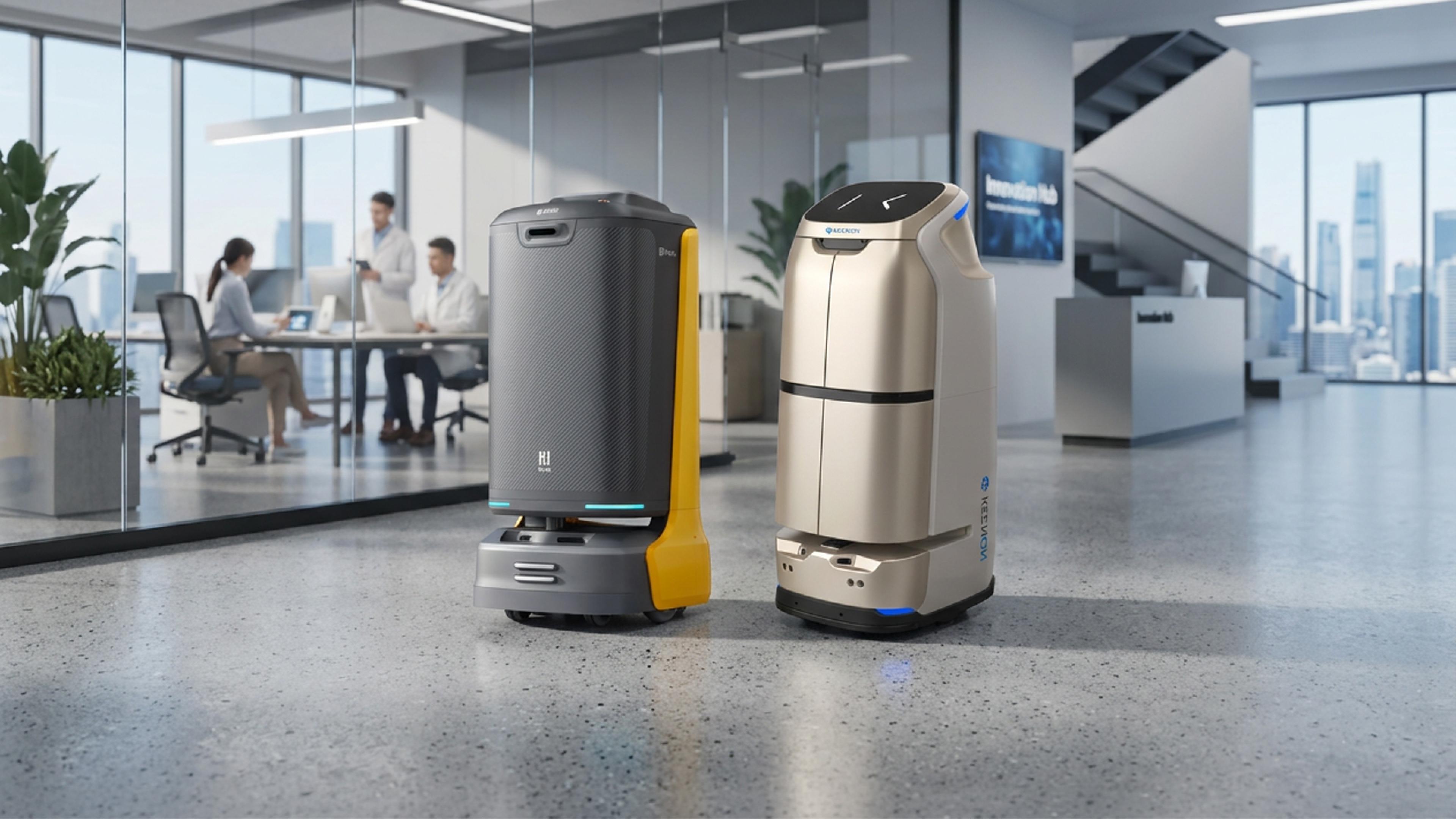
Delivery robots that operate autonomously are used in hotels, commercial buildings and other indoor locations to convey items and minimize the number of trips staff have to make.
| Automatic Charging | Yes | Yes |
|---|---|---|
| Availability | Commercially Available | Commercially Available |
| Charging Time | 4.5 hours | Approximately 6.5 hours |
| LiDAR | Yes | Yes |
| Maximum Climbing Angle | 8° | 7° |
| Maximum Speed | 0.5–1.5 m/s (adjustable) | 0.8 m/s |
| Minimum Passage Width | 70 cm | 70 cm |
| Multi-Robot Coordination | Yes | Yes |
| Nationality | Chinese | Chinese |
| Runtime | Up to 12 hours | Up to 12 hours (typical); up to 15 hours under some operating conditions |
| Weight | 55 kg | 48 kg |
| Wi-Fi | Yes | Yes |
| Typical use | Food Service | Healthcare |
| Status | Commercial | Commercial |
How They Compare
Commercial delivery and operational role: Both robots are capable of moving items from one place to another and may decrease the number of staff's formal delivery runs.
FlashBot is designed for delivery workflows in hotels and other commercial buildings. Its autonomous navigation and building-integration capabilities are intended to support deliveries across different areas of a facility.
BUTLERBOT W3 is similarly positioned for indoor delivery, with a focus on hotel and hospitality operations. Its enclosed storage design is intended to support the transport of guest amenities, supplies and other items.
Although the supplied comparison records list food service for FlashBot and healthcare for BUTLERBOT W3, both manufacturers also position their respective platforms for hotel-related delivery applications.
The suitability of either robot depends on the type of items being transported, the building layout and the required delivery workflow.
Physical design and weight
FlashBot has a recorded weight of 55 kg, BUTLERBOT W3 weighs approximately 48 kg. This makes BUTLERBOT W3 around 7 kg lighter based on the supplied specifications. However, robot weight alone does not establish which platform is easier to deploy or more suitable for confined environments.
Navigation and obstacle avoidance
The effectiveness of either system depends on its software, sensor configuration and operating environment. Site-specific testing is important in buildings with changing pedestrian traffic, furniture arrangements and narrow corridors.
Minimum passage width
Maximum speed and delivery efficiency
FlashBot has an adjustable speed range of 0.5–1.5 m/s. BUTLERBOT W3 has a recorded maximum speed of 0.8 m/s. FlashBot therefore has the higher published maximum speed.
Climbing capability and floor transitions
FlashBot has a recorded maximum climbing angle of 8°. BUTLERBOT W3 has a stated maximum climbing angle of 7°.
The difference suggests that FlashBot has a slightly higher published slope-handling capability. This may be relevant in buildings with ramps or inclined floor transitions.
However, maximum climbing angle does not establish how either robot performs on every ramp or uneven surface. Actual performance may depend on load, floor material, traction and the length of the incline.
For buildings with accessibility ramps or sloped corridors, operators should confirm the supported conditions and conduct loaded demonstrations before deployment.
Operating Time
FlashBot has a recorded operating runtime of up to 12 hours.BUTLERBOT W3 has a typical recorded runtime of up to 12 hours, with a maximum of up to 15 hours under some operating conditions.Both robots therefore have similar stated typical operating endurance.
The additional maximum figure for BUTLERBOT W3 suggests that longer operation may be possible under particular conditions. However, the supplied records do not establish the exact test conditions for these figures. Battery endurance can vary depending on payload, travel distance, movement speed, idle time and the frequency of deliveries.The stated runtimes should therefore be treated as manufacturer-reported figures rather than directly comparable results from controlled testing.
Charging and operational continuity
Both robots support automatic charging. FlashBot has a recorded charging time of 4.5 hours. BUTLERBOT W3 requires approximately 6.5 hours to charge. Based on these figures, FlashBot has the shorter stated charging duration by approximately two hours.
This may be relevant to facilities with limited charging windows or high delivery frequency. Automatic charging can reduce the need for staff to manually connect robots to charging equipment. However, charging time alone does not determine daily operating availability. Businesses should consider runtime, charging schedules, battery condition and how the robots manage tasks when their battery levels become low.
Multi-robot coordination
Both FlashBot and BUTLERBOT W3 support multi-robot coordination. This capability may be important in hotels, hospitals and commercial buildings where multiple robots share corridors, elevators and delivery areas.
Multi-robot coordination can help organize movement and reduce conflicts between robots operating in the same environment. However, the supplied records do not establish directly comparable fleet-size limits or task-allocation capabilities. Operators should confirm how each system manages shared routes, simultaneous deliveries and interactions between multiple robots. Network reliability, building layout and the number of active robots can all influence fleet performance.
Building integration and elevator operations
For hotel and multi-floor delivery, integration with building infrastructure can be as important as navigation performance. FlashBot is designed for delivery across commercial buildings and supports building-system integration, including elevator-related workflows where compatible infrastructure is available.
BUTLERBOT W3 is also positioned for hotel delivery applications involving movement between different service areas. However, the supplied comparison table does not establish the exact elevator integration requirements for either robot. Organizations should verify compatibility with existing elevators, access-control systems and delivery procedures.
Additional hardware, software or building permissions may be required. Neither robot's ability to navigate independently between floors should be assumed without confirming the complete installation requirements.
Wi-Fi connectivity and remote operations
Both robots support Wi-Fi connectivity. Wireless connectivity may support communication with management systems, remote monitoring and coordination between robots. These functions can be useful in facilities where robots operate across multiple floors or service areas.
However, Wi-Fi support does not automatically establish equivalent software integration or remote-management capabilities.The supplied records do not provide a complete comparison of APIs, fleet dashboards or third-party integrations. Businesses should confirm the available software tools and whether they meet the requirements of their existing operational systems.
Commercial availability and deployment
Both FlashBot and BUTLERBOT W3 are recorded as commercially available products. This allows organizations to evaluate them for operational deployment rather than research-only applications.
However, regional availability, installation support and product configurations may vary. Businesses should confirm warranty arrangements, maintenance requirements, replacement parts and local technical assistance. For hotel and healthcare-related environments, security, access control and the handling of transported items may also be important.
A site demonstration should assess loaded navigation, charging, elevator integration and delivery handover before either robot is introduced into daily operations.
Summary
PUDU FlashBot and KEENON BUTLERBOT W3 are commercially available autonomous delivery robots designed for indoor transport applications.
FlashBot is worth considering for facilities prioritizing adjustable travel speed, shorter charging duration and movement through commercial buildings. Its recorded maximum speed of 1.5 m/s, 4.5-hour charging time and 8° climbing capability may be relevant to delivery routes involving longer distances or inclined surfaces.
BUTLERBOT W3 may suit hotels and other facilities looking for an enclosed delivery robot with extended operating endurance. Its recorded weight of 48 kg, typical runtime of up to 12 hours and maximum runtime of up to 15 hours under certain conditions provide a different set of operational characteristics.
Both robots support LiDAR navigation, automatic charging, multi-robot coordination and a recorded minimum passage width of 70 cm.
The choice depends on the building layout, delivery frequency, charging arrangements, payload requirements and integration with elevators or other building systems.
This comparison is based on ROBOT24.com market-research data records and manufacturer-reported specifications rather than controlled performance testing. Operating endurance, navigation performance, climbing capability, charging and building integration should be verified through official documentation and site-specific trials before drawing conclusions about overall performance.
More articles on this topic
144 articles ReportRichtech DUST-E S vs. Gausium Phantas
 ReportEngineAI SE01 vs. AGIBOT RAISE A1ReportRichtech DUST-E S vs. KEENON KLEENBOT C20
 ReportPUDU PuduBot 2 vs. OrionStar LuckiBot Pro
 ReportUnitree G1 vs. EngineAI PM01
 ReportKEENON DINERBOT T11 vs. PUDU KettyBot Pro
 ReportAGIBOT D1 Pro vs. Unitree Go2 Pro
 ReportKEYi Tech Loona vs. WEILAN BabyAlpha A2
 ReportPUDU BellaBot Pro vs. KEENON DINERBOT T11
 ReportBear Robotics Servi Plus vs PUDU BellaBot Pro
 ReportUnitree G1 vs. AGIBOT X2
 ReportPUDU KettyBot Pro vs. Bear Robotics Servi Q
BUSINESS NEWS WEEKLY LETTER
The Weekly Letter for Robotics Professionals, Summarizing the Most Important Industry Moves, Launches, Deals and Signals.