PUDU FlashBot Max vs. PadBot W2
PUDU FlashBot Max and PadBot W2 are both autonomous building delivery robots compared here on payload capacity, navigation, delivery automation, security features and deployment requirements.

October 28, 2026 by Business Desk Team
Introduction
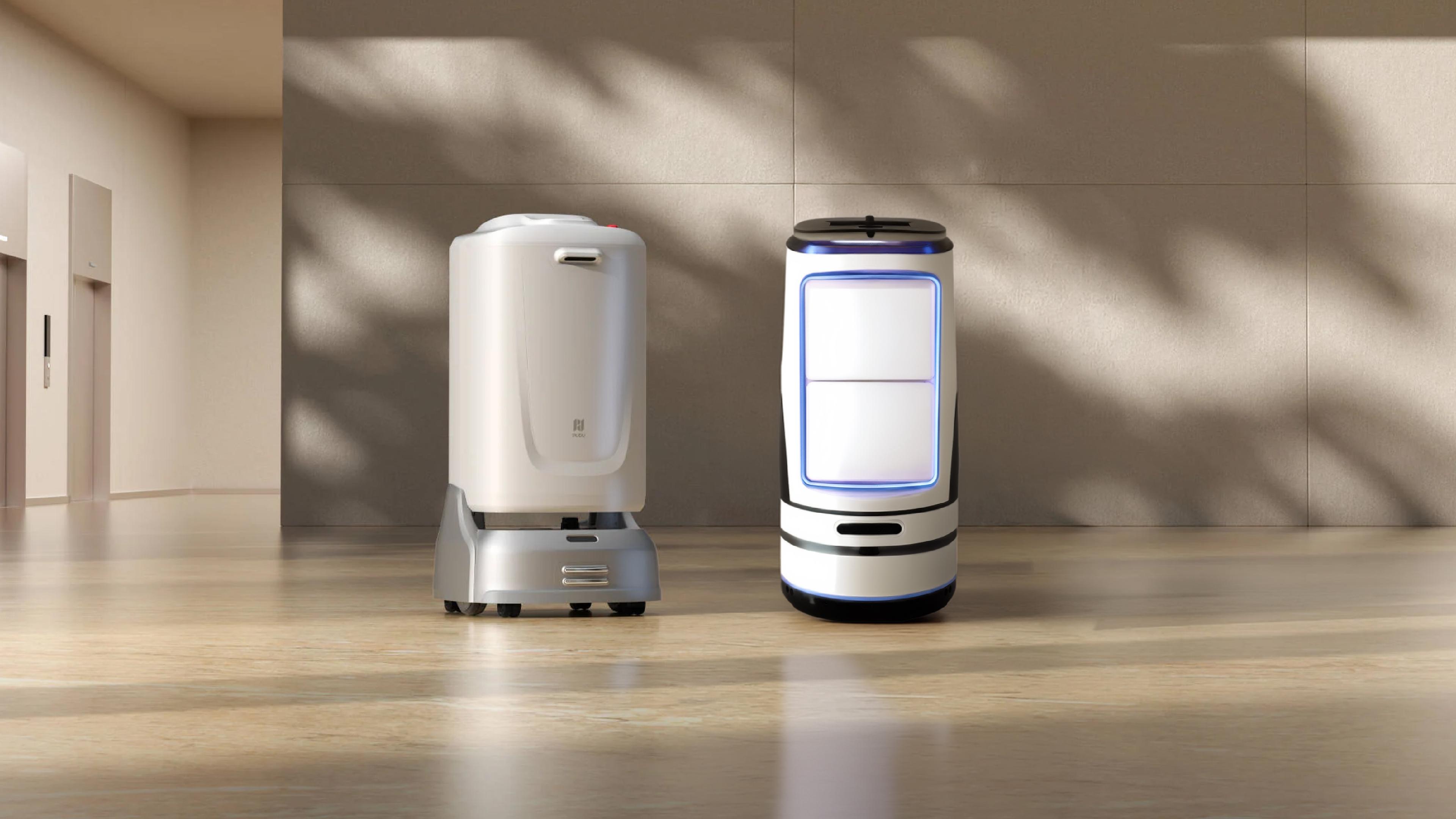
Pudu FlashBot Max and PadBot W2 are autonomous delivery robots for moving things through hotels, offices and commercial buildings. While both can be used for autonomous navigation and automated delivery workflows, their published payload specifications, compartment system and building-integration technologies are not the same.
PUDU Flash Bot Max, which utilizes secure, multi-compartment delivery, as well as elevator integration and access-control technology for multi-storey operation. PadBot W2 is used for parcel and package delivery, with a stated load capacity of 25-30kgs and maximum storage volume of 45 litres.
The key question is which system better fits the building's delivery workflow, payload requirements and infrastructure, not which robot has the largest headline specification.
At a Glance
| Metric | PUDU FlashBot Max | PadBot W2 |
|---|---|---|
| Robot type | Autonomous multi-compartment building delivery robot | Autonomous parcel and package delivery robot |
| Best-fit use cases | Hotel room service, offices and multi-floor deliveries | Parcel distribution across hotels, offices and business centres |
| Dimensions | 538 × 534 × 1,052 mm (L × W × H) | 50 × 120 × 50 cm (W × H × L, as listed by manufacturer) |
| Machine weight | 60 kg | 40 kg |
| Payload / storage | 10 kg per layer; 2–4 adjustable compartments. Confirm total permitted payload for the exact configuration | 25–30 kg stated load capacity; up to 45 L storage |
| Runtime / charging | 9 h runtime; approximately 4 h charging | At least 10 h runtime; charging listed as 8–9 h across product materials |
| Navigation / sensing | VSLAM+ and LiDAR SLAM; adjustable speed of 0.5–1.2 m/s | Laser-guided navigation; 0.7 m/s listed navigation speed; 30 m laser-scanning radius in technical material |
| Distinctive capabilities | Elevator and access-system integration; password, phone-number and NFC compartment verification; multi-floor map replication | Dual compartments; scheduled delivery missions; QR-code or pickup-number collection; automatic return to charging station |
| Key limitation / caveat | Confirm total payload, corridor clearance and compatibility with building access systems | Charging-time figures differ across product materials; verify the supplied model's current specification |
How They Compare
Operational role
PUDU FlashBot Max was engineered for delivery environments that can span multiple floors and semi-outdoor locations. Its expected functions consist of elevator command, integratable access-system, floating lockers and multiple methods of recipient authentication. These functions will resonate with lodges and high-rise buildings that want to deliver packages to particular floors or rooms with the least quantity of human input.
PadBot W2 is intended for parcel and package deliveries within commercial buildings. The 25-30kg 'official' load rating and 45L maximum volume suggest that payload size will also be an important factor to consider when assessing the payload criteria for in-building logistics.
Payload and compartment design
PUDU FlashBot Max supports two to four adjustable compartments, with a published rating of 10 kg per layer. The compartments-access features of the PUDU FlashBot Max aim to assist in managing the individual who fetches a delivery. But the per-layer figure shouldn't be treated as an assured payload for all configurations.
PadBot W2 has a load capacity of 25-30kg and offers storage for up to 45 litres. Two compartments allow for different deliveries to be received, while password protected access can limit collection. Before comparing these to the W1 on carrying capacity, double check the permissible overall weight, the load rating of each section and that these figures apply to the specific models.
Navigation and building integration
PUDU FlashBot Max fuses LiDAR SLAM with VSLAM+ and is compatible with building infrastructure. Features include elevator control, turnstile and door access, and quick map replication on multiple floors. These features can take the place of human intervention but are only effective if the actual building infrastructure supports them.
PadBot W2 offers laser-guided mapping and autonomous route planning, obstacle avoidance and self-return to dock. Product literature indicates integration with entrance guards and gate machines. The specific integrations offered at a given location should be confirmed with the supplier rather than assumed from the generic product description.
Runtime & Charging
PUDU states up to 9 hours of runtime & charging time of about 4 hours. PadBot W2: Minimum of 10 hours of continuous operation as per its product materials charging time of 8 & 9 hours.
This is manufacturer published specs, not a standard endurance test. Actual operating time may differ with payload, distance, waiting at the lift, obstacle interaction, job rate and charging pattern. A site trial is to count the actual number of deliveries completed per shift, downtime charging, and robot delivery performance with a representative load.
Important Qualification
PUDU FlashBot Max: 10kg per layer, two to four adjustable compartments. Verify the overall payload for the combination, and elevator, turnstile and door-control compatibility.
PadBot W2: 25-30kg load and 45 litres of storage. Charging time is mentioned at different values on various product pages, so make sure to ask the seller for the latest technical datasheet for the unit supplied.
Both robot: Navigating and reaching the building will always be the challenge. Tube size, thresholds, lifts, connectivity, fire safety regulations and on-site support need to be examined.
Summary
If your focus is secure delivery to specific compartments on different levels, and work around elevators/building access systems, go for PUDU FlashBot Max.
Think about PadBot W2 where the focus of the workflow is on the delivery of parcels and its load capacity and storage volume aligns more closely with the goods being delivered.
This is an apples-to-apples comparison, not a performance ranking. Confirm exact configuration, payload limits, charging details, integration costs and local support before you buy, and then test both systems in your building.
This comparison is based on ROBOT24.com market-research data records and manufacturer-reported specifications rather than controlled performance testing.
More articles on this topic
94 articles ReportRichtech DUST-E S vs. Gausium Phantas
 ReportEngineAI SE01 vs. AGIBOT RAISE A1ReportRichtech DUST-E S vs. KEENON KLEENBOT C20
 ReportRobint Rhino vs. OrionStar CleaniBot S55 Pro
 ReportMammotion LUBA AWD vs. Sunseeker X7
 ReportMirokaï vs. temi
 ReportHusqvarna Automower vs. Mammotion LUBA
 ReportKEENON DINERBOT T10 vs. OrionStar LuckiBot Pro
 ReportPUDU BellaBot Pro vs. OrionStar LuckiBot Pro
 ReportMirokaï vs. Aeolus Aeo
 ReportNexaro NR 1500 vs. ECOVACS DEEBOT PRO K1 VAC
 ReportNilfisk Liberty SC50 vs. PUDU CC1
BUSINESS NEWS WEEKLY LETTER
The Weekly Letter for Robotics Professionals, Summarizing the Most Important Industry Moves, Launches, Deals and Signals.