Robots that Explore the Great Pyramid's Narrow Shafts
Miniature robots have spent decades exploring Egypt's greatest landmark, drilling through hidden doors to unlock ancient architectural secrets.

October 28, 2026 by Dr Maulik Vyas
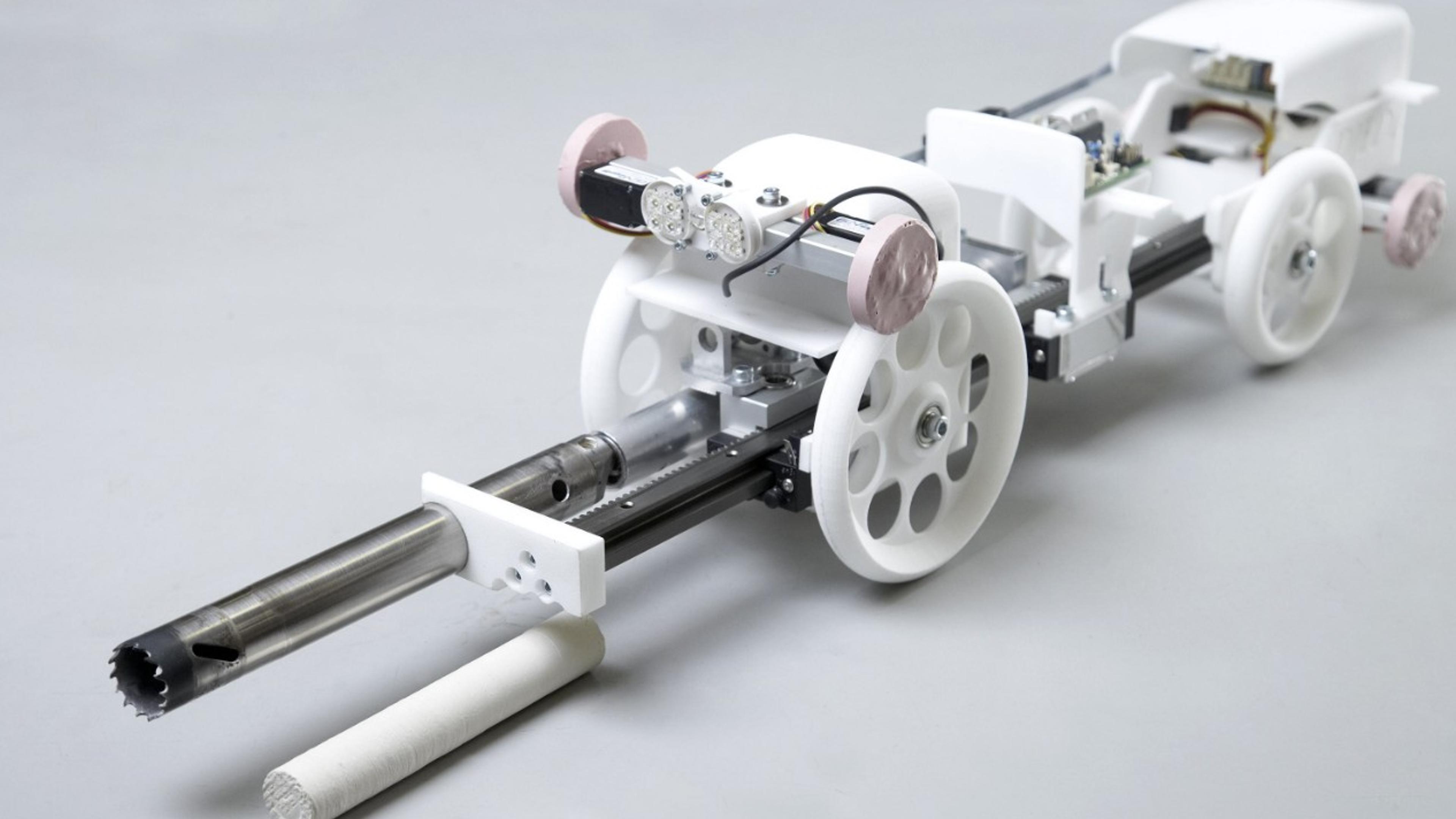
Some corners of the Great Pyramid of Giza stayed out of sight for about 4,500 years, and it wasn't for lack of curiosity. They were just too small for any person to enter.
Two stone channels, each about 20cm wide and 14cm high, run out of the Queen's Chamber and bend through the Great Pyramid of Giza. There was no person who can fit! Since 1993, a handful of small robots have gone in instead, and what they found still raises questions.
Yet, the story is interesting.
Queen’s chamber shafts inside the Great Pyramid
Engineer Waynman Dixon found the Queen's Chamber shafts in 1872, while hunting for a match to the two shafts above the King's Chamber. Those upper ones open to the outside. The lower pair stops short, and the reason is still debated.
Some researchers think the Queen's Chamber was first planned as the burial room, with shafts that got dropped when the design changed. Others read the angles as pointers to stars. Whatever the answer, the shafts climb and bend through solid stone, and a rod pushed into the northern one even got stuck on a turn. A person was never going to get in there. A machine might, and the first serious attempt came in the early 1990s.
Upuaut-2 and the stone door in 1993
German engineer Rudolf Gantenbrink built a series of robots named Upuaut, after an Egyptian god known as the opener of ways. A tiny plastic prototype stalled in 1992. Its successor, Upuaut-2, climbed about 60 meters up the southern shaft in 1993.
Long tracks kept it steady on the uneven floor, and a raised upper section pressed against the roof to hold it in place. A second small robot rode the same cable and carried gear to measure the shaft. Then the camera found a limestone slab with two copper handles. The robot couldn't see past it. That image, often called Gantenbrink's door, kept people arguing for years, and nobody got a look behind it until 2002, when the attempt went out on television.
Pyramid rover goes on television in 2002
A Boston firm, iRobot, built Pyramid Rover for the National Geographic Society and Egypt's Supreme Council of Antiquities. It entered both Queen's Chamber shafts, and the work was broadcast. The southern run reached the same slab Gantenbrink found.
Pyramid Rover drilled a small hole through the door and pushed a camera in. Behind it sat a tiny space and a second stone. The day after the broadcast, away from the cameras, the robot went into the northern shaft and found another door, nearly identical and at about the same height. It also snapped off one of the copper pins along the way, which tells you how tight the fit is. A cleaner way to look behind those stones was already coming from a university lab in England.
Djedi robot and its flexible camera
Djedi came from a team at Leeds University. Tank-like treads on the earlier robots had left scuff marks inside the shafts, so the team tried a new crawler design. A flexible camera that pans and tilts did the looking past the first door.
What it showed was small. The chamber behind the door measures roughly 19 by 23 by 23 centimeters. The camera also spotted markings painted on the floor, which had been unseen for about 4,500 years. Djedi confirmed Pyramid Rover's reading of the first door too, about 60 millimeters thick and 63.6 meters from the shaft entrance. Small numbers, big puzzles. Put the three machines side by side and the design choices start to stand out.
Comparing the three robots
Each team faced the same narrow, twisting shaft and made different choices about how to move and how to look. The gaps between them show up quickly when you lay the machines out together.
-
Upuaut-2: long tracks, a top section that grips the roof, a camera that found the door
-
Pyramid Rover: iRobot build, live broadcast, a drilled hole and a camera behind the stone
-
Djedi: new crawler, flexible pan-tilt camera, floor markings recorded
Every machine added measurements the one before it couldn't get. Each team also learned what its crawler cost the shaft walls, and that lesson shaped the next design.
Those shafts still keep part of their secret, and every new camera gets a little closer to it. If robots and ancient stone grab you, read more real-world stories on ROBOT24.com and pick one to follow up on.
More articles on this topic
236 articles ReportWhat it Really Costs to Own a Personal Assistant Robot at Home
 ReportA Little Company, Courtesy of a Robot
 ReportA Humanoid Walks into a New York Park
 ReportRailway Inspection Robots Search for Defects in Tracks
 ReportChina's Humanoid Supply Chain Moves Toward Industrial Production
 ReportCompanionship now comes with a Charging Cable
 ReportCould a Robotic Guide Help Blind Travelers Navigate Public Spaces?
 ReportThis Robot Finds Cracks and Fixes Them
 ReportXPENG's IRON Humanoid Adapts to Changing Human Gestures in Real Time
 ReportRobots Are Learning to Sort Clothes for Textile Recycling
 Report110 Humanoid Robots Set Guinness World Record With Synchronized Dance
 ReportScientists Teach Humanoid to Climb Ladders and Survive Falls
BUSINESS NEWS WEEKLY LETTER
The Weekly Letter for Robotics Professionals, Summarizing the Most Important Industry Moves, Launches, Deals and Signals.