Nexaro NR 1500 vs. ECOVACS DEEBOT PRO K1 VAC
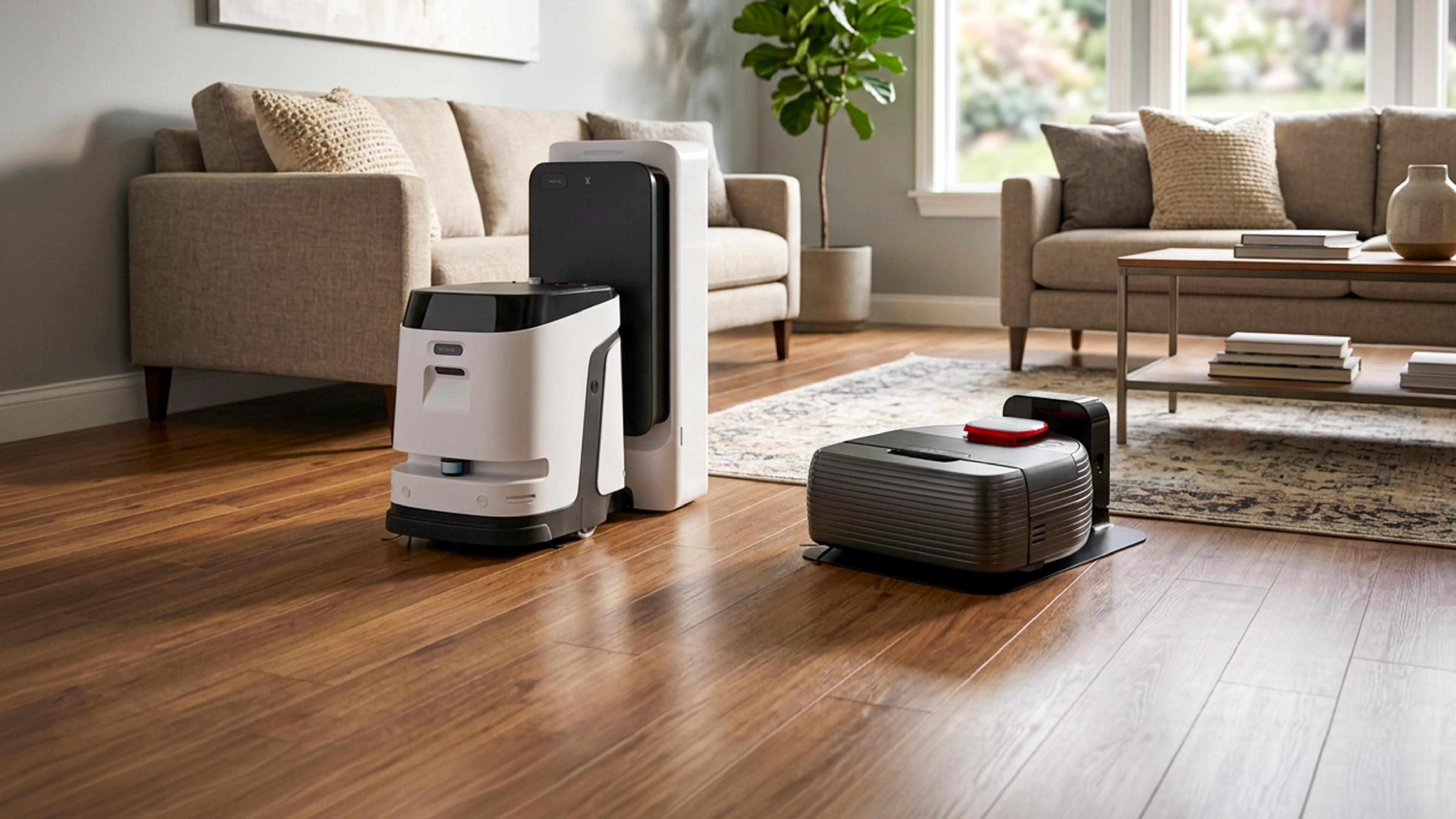
Nexaro NR 1500 and ECOVACS DEEBOT PRO K1 VAC are both commercial cleaning robots compared here on cleaning performance, floor coverage, navigation, operating endurance and deployment requirements.

October 28, 2026 by Business Desk Team
Introduction
Smart destination/auto guide ECOVACS DEEBOT PRO K1 VAC allows for cleaning of the maximum square metres. Comparability of Nexaro NR 1500 to ECOVACS DEEBOT PRO K1 VAC in terms of autonomous cleaning Nexaro NR 1500 Compact commercial vacuuming. Scalable fleet administration with AI-assisted mapping. Is your facility a compact commercial setting requiring a fleet-controlled vacuum robot, or larger platform with many floor-care modes? ECOVACS DEEBOT PRO K1 VAC Vacuuming, sweeping and dust-mopping. Is the facility dust and debris free? It will contain a 10-litre dustbin. ECOVACS DEEBOT PRO K1 VAC is an autonomous commercial vacuum platform with a published cleaning efficiency of as much as 700 m2/hr.
At a Glance
| Metric | Nexaro NR 1500 | ECOVACS DEEBOT PRO K1 VAC |
|---|---|---|
| Robot type | Compact commercial autonomous vacuum robot | Commercial vacuuming, sweeping and dust-mopping robot |
| Best-fit use cases | Hotels, corridors, offices and small-to-medium commercial areas | Commercial buildings, hotels and other larger indoor cleaning environments |
| Dimensions | 343 × 343 × 175 mm | 558 × 420 × 592 mm (L × W × H) |
| Weight | 6.5 kg | 46 kg, unladen |
| Cleaning functions | Vacuuming, with three selectable cleaning modes | Vacuuming, sweeping and dust-mopping |
| Cleaning width | 280 mm | 440 mm (manufacturer-published specification) |
| Dust capacity | 1.4 L | 10 L |
| Cleaning area / productivity | Current product page lists up to 400 m²; older technical material lists up to 800 m² under stated conditions | Up to 700 m²/h published cleaning efficiency |
| Runtime | Up to 250 minutes in Eco mode; approximately 105–110 minutes in Balanced/Performance modes in technical material | Up to 4 h vacuuming; up to 8 h dust-mopping |
| Charging | Approximately 95 minutes from 15–85%; 120 minutes from 15–95% in technical material | Approximately 1.5 h |
| Navigation / sensing | AI-assisted mapping, laser distance sensor, bumper, drop sensors, IMU and additional sensors | Intelligent path planning and autonomous navigation; detailed sensing configuration should be confirmed for the ordered model |
| Connectivity / management | Nexaro HUB; integrated 2G/LTE-M connectivity; fleet and area management with the relevant licence | Autonomous cleaning and task management; confirm software, integration and fleet-management requirements for the deployment |
| Distinctive capabilities | Compact footprint, HEPA H13 filtration, multi-robot fleet management and automatic recharging | 20 kPa advertised suction, 10 L dustbin, 52 cm minimum passable width and multiple cleaning modes |
| Key limitation / caveat | Coverage claims differ between the current product page and older technical material; runtime varies by mode | Larger and heavier platform; 700 m²/h is a productivity figure, not a maximum total floor-area rating |
All specifications are provided as per manufacturer published product specifications. Computed values may be measured figures by the software, setup, cleaning cycle and operation condition.
How They Compare
Operational role: Nexaro NR 1500 is built on basic, standalone autonomous commercial vacuuming – suitable in hotel corridors, offices and other smaller cleaning areas. Its Nexaro HUB software enables area and fleet management, with several robots in a building. ECOVACS DEEBOT PRO K1 VAC gives a wider range of floor-care modes – vacuuming, sweeping and dust mopping – in combination with a larger dustbin. It all comes down to what the user finds a more practical fit for their needs: scaled down deployment and fleet management or the variety of floor cleaning functions.
Hardware and cleaning capacity: Nexaro has a small-format dustbin (1.4 L) and cleaning width (280 mm) but the important distinction for indoor dust, is the HEPA H13 filtration. ECOVACS has a generously-sized 10 L dustbin with plenty of suction (20 kPa) and a wide cleaning path (440 mm). A larger bin can mean less emptying but when measuring dirt removal, bin size and suction strength don't tell the full story, the carpet type, load of debris, edge cleaning and frequency of maintenance all matter.
Runtime and productivity: Nexaro reports up to 250 min runtime in Eco mode, and the technical material offers lesser figures for Balanced and Performance modes. ECOVACS claims up to four hours of vacuuming or eight hours of dust-mopping, which are not different operating modes and not directly comparable endurance tests; ECOVACS's 700 m²/h is a stated cleaning-efficiency figure, whereas the reported Nexaro coverage is a total area. Same floor type, same soil level, same route conditions, same cleaning standard and only then an industry-standard comparison.
Navigation & deployment: Nexaro employs AI-enabled mapping and laser-based sensing with auto recharge and mobile dock for control via the Nexaro HUB. The 343mm footprint may be advantageous in tight hallways and rooms with furniture. ECOVACS rates the minimum passing width at 52cm and the maximum travel speed at 1.2 m/sec. For either system check for turning radius, clearance around furniture, threshold heights, transitions on carpet, pedestrian availability, and proper charging spots prior to deployment.
Automation and scalability: Nexaro's fleet-management proposition is a key differentiator: the Pro. Multi licence enables operators to administer their fleet of robots, sites, customer groups and cleaning functions. This could be useful for operators managing multiple floors or sites. ECOVACS also provides autonomous cleaning and multiple operating modes, but the software integrations and the extent to which different robots can be coordinated should be verified for the deployment.
Important Qualification
Nexaro currently states a maximum total cleaning area of 400 m2 on the product page – older technical material claims up to 800 m2 if certain conditions are met. The stated figures must not be summed without checking which product revision applies (see below), licence and site assumptions. Run time, which is a very large component of total coverage area, differs considerably by cleaning mode. ECOVACS's 700 m2/h figure is published cleaning efficiency rather than a maximum total coverage area. Do not interpret either figure as the outcome of a controlled, side-by-side test.
Summary
Choose Nexaro NR 1500 for focused autonomous vacuuming, HEPA H13 filtration and integrated fleet management for all areas of commercial cleaning. Choose ECOVACS DEEBOT PRO K1 VAC if the needs of your property are better aligned with a larger device, 10 L capacity and several floor-care modes.
This is a performance comparison that is best suited to a purpose and not a step-by-step ranking. Confirm the specific model revision, software licence, cleaning modes, site arrangement and service solutions. Replicate the conditions and cleaning objectives by trialling the equipment on site.
This comparison is based on ROBOT24.com market-research data records and manufacturer-reported specifications rather than controlled performance testing.
More articles on this topic
94 articles ReportRichtech DUST-E S vs. Gausium Phantas
 ReportEngineAI SE01 vs. AGIBOT RAISE A1ReportRichtech DUST-E S vs. KEENON KLEENBOT C20
 ReportRobint Rhino vs. OrionStar CleaniBot S55 Pro
 ReportMammotion LUBA AWD vs. Sunseeker X7
 ReportMirokaï vs. temi
 ReportHusqvarna Automower vs. Mammotion LUBA
 ReportKEENON DINERBOT T10 vs. OrionStar LuckiBot Pro
 ReportPUDU BellaBot Pro vs. OrionStar LuckiBot Pro
 ReportPUDU FlashBot Max vs. PadBot W2
 ReportMirokaï vs. Aeolus Aeo
 ReportNilfisk Liberty SC50 vs. PUDU CC1
BUSINESS NEWS WEEKLY LETTER
The Weekly Letter for Robotics Professionals, Summarizing the Most Important Industry Moves, Launches, Deals and Signals.