OrionStar GreetingBot Nova vs. UBTECH Cruzr 1S
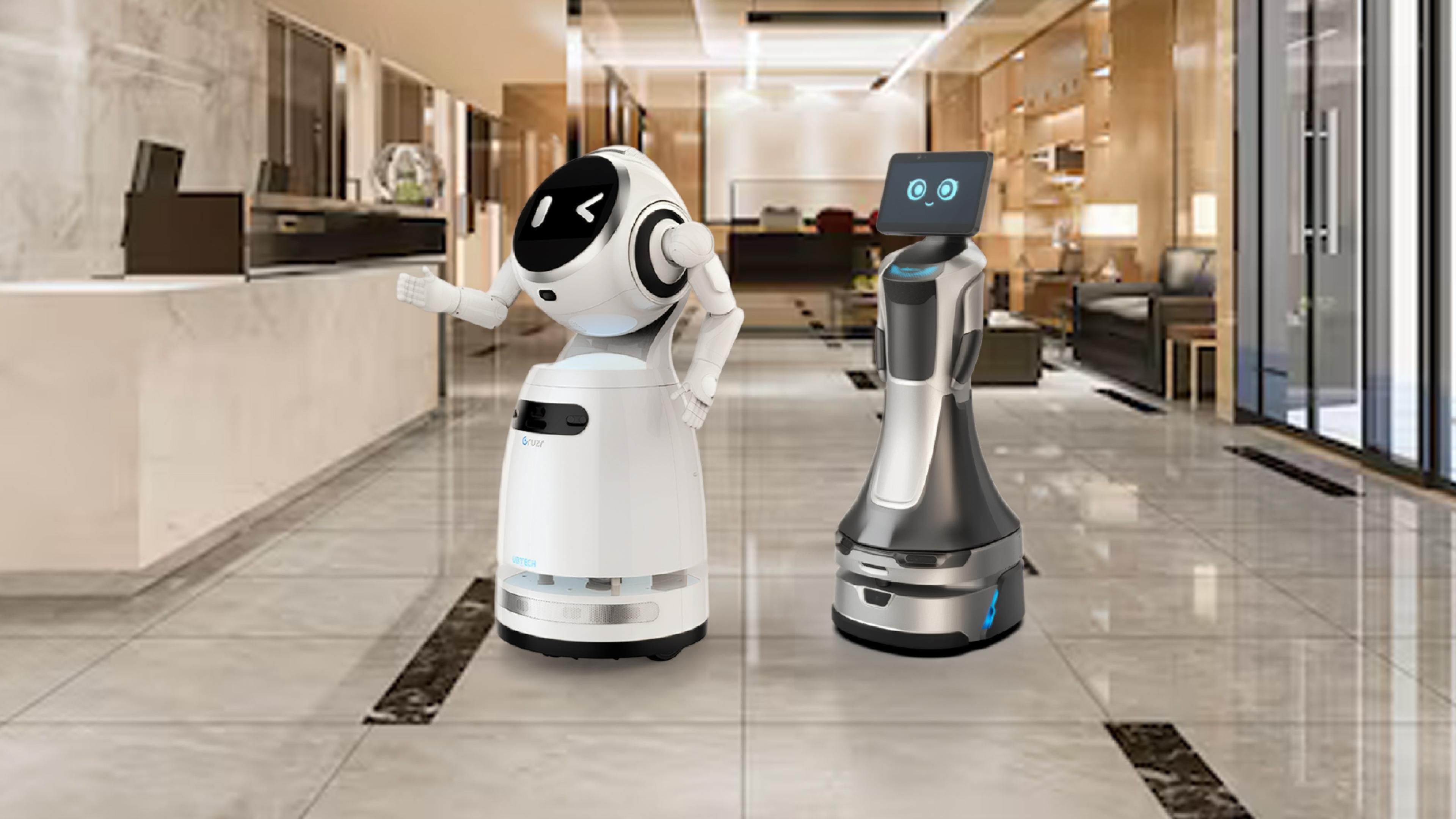
OrionStar GreetingBot Nova and UBTECH Cruzr 1S are wheeled service robots designed for customer interaction, information delivery and indoor assistance. Both support autonomous navigation, cameras, display interfaces and remote monitoring, but their physical designs and intended applications differ.

November 7, 2026 by Business Desk Team
Introduction
Autonomous service robots are increasingly used in reception areas, retail stores, hospitals and other public-facing environments to welcome visitors, provide information and guide people through buildings.
However, selecting the right robot involves more than comparing display size or camera specifications. Navigation, interaction capabilities, software integration and the physical environment can all influence how effectively a robot performs customer-service tasks.
OrionStar GreetingBot Nova and UBTECH Cruzr 1S are two Chinese wheeled service robots developed for indoor customer interaction and assistance.
GreetingBot Nova emphasizes AI-powered conversations, autonomous guidance and information delivery. Its large display and navigation capabilities make it relevant to reception areas, museums, showrooms and other visitor-facing environments.
Cruzr 1S combines a humanoid-inspired upper body with a wheeled mobile base, allowing it to interact with visitors through speech, gestures and a touchscreen interface.
Based on ROBOT24.com market-research data records and manufacturer documentation, this comparison examines their physical design, interaction capabilities, navigation, software connectivity and suitability for different commercial applications.
At a Glance
| Metric | OrionStar GreetingBot Nova | UBTECH Cruzr 1S |
|---|---|---|
| HD Camera | Yes 13 MP | Yes |
| Autonomous Navigation | Yes | Yes |
| Display | 14-inch Full HD (1080p) | 11.6" Touchscreen |
| Mobility Type | Wheeled Indoor AMR | Wheeled Humanoid |
| Nationality | Chinese | Chinese |
| Open API | Supported | Yes |
| Remote Monitoring | Supported | Yes |
| Weight | 56 kg | ~45 kg |
| Typical use | — | Healthcare, Education & Training, Retail & Showroom Operations |
| Status | Commercial | Commercial |
How They Compare
Commercial applications and operational role
OrionStar GreetingBot Nova and UBTECH Cruzr 1S are designed to assist people in indoor commercial environments. Both robots can navigate autonomously and interact with visitors, making them relevant to businesses seeking to automate repetitive reception and information-delivery tasks.
GreetingBot Nova focuses on greeting visitors, answering questions, providing guided tours and delivering explanations. OrionStar positions the robot for applications including reception areas, museums, exhibition venues, restaurants and healthcare facilities. Cruzr 1S is designed for customer-facing interaction in settings such as healthcare, education, retail and showrooms.
Its humanoid-inspired appearance and articulated upper body distinguish it from conventional screen-based reception robots. Although both platforms support visitor assistance, their interaction designs may suit different customer-service requirements.
Physical design and mobility
GreetingBot Nova is classified as a wheeled indoor autonomous mobile robot. It weighs approximately 56 kg and uses a mobile base to navigate indoor environments. Its design emphasizes a prominent display, integrated sensing and an upright structure suitable for customer-facing information delivery.
Cruzr 1S is classified as a wheeled humanoid and weighs approximately 45 kg. Unlike a legged humanoid, Cruzr 1S moves using a wheeled base while retaining a humanoid-inspired upper body with articulated arms. This allows the robot to combine wheeled movement with gestures during interactions.
The recorded weight difference is approximately 11 kg. However, robot weight alone does not establish which platform is easier to deploy or better suited to narrow spaces. Footprint dimensions, turning requirements and the layout of the operating environment must also be considered.
Display and touchscreen interaction
One of the clearest differences between the two robots is their display configuration. GreetingBot Nova features a 14-inch Full HD display with a resolution of 1080p.
The larger screen is designed to present information, interactive content and promotional material to visitors. This may be useful in museums, showrooms and reception areas where the robot needs to communicate detailed information or display visual content.
Cruzr 1S features an 11.6-inch touchscreen. Its display supports customer interaction, allowing visitors to access information and engage with the robot's available applications.
While GreetingBot Nova has the larger recorded screen, display size alone does not determine interaction quality. Screen positioning, interface design, responsiveness and the type of content presented can all influence the visitor experience.
Camera and visual sensing
GreetingBot Nova has a recorded 13 MP high-definition camera.The camera supports visual interaction functions, while the robot's broader perception system helps it navigate indoor environments.
Cruzr 1S also includes a high-definition camera, although the supplied comparison table does not specify its resolution. The robot's documented hardware includes additional depth-sensing capabilities intended to support environmental perception. Camera resolution alone does not establish superior visual recognition or obstacle-detection performance.
Image processing, lighting conditions, sensor placement and software algorithms can all influence how effectively a robot interprets its surroundings. For businesses planning interactive deployments, camera capabilities should be evaluated according to the required tasks, such as visitor interaction, remote communication or navigation support.
Autonomous navigation and obstacle avoidance
Both GreetingBot Nova and Cruzr 1S support autonomous navigation. GreetingBot Nova uses an advanced perception system designed to help it navigate large indoor environments.OrionStar documents 3D LiDAR sensing and marker-free deployment capabilities, allowing the robot to map and move through spaces without relying on traditional physical navigation markers.
These capabilities may be particularly relevant to museums, reception areas and large public buildings. Cruzr 1S combines its wheeled base with environmental sensing technologies intended to support indoor movement and obstacle avoidance.
Its documented sensing hardware includes laser-based navigation and additional proximity sensors. However, the presence of autonomous navigation does not guarantee identical performance in crowded environments. The robots' ability to navigate around visitors, furniture and temporary obstacles should be assessed through site-specific testing.
Customer interaction and communication
GreetingBot Nova emphasizes conversational AI and information delivery. OrionStar describes the robot as supporting large-language-model-based interaction, including multilingual conversations and responses to visitor questions.This makes it relevant to environments where customers may ask varied questions or require explanations about products, facilities or services.
Cruzr 1S uses a different interaction approach, combining voice communication, touchscreen functions and physical gestures. Its humanoid-inspired upper body allows it to incorporate arm movements into customer-facing interactions.
These features may be useful in educational demonstrations, retail engagement and interactive reception applications. The distinction is primarily one of interaction design.
GreetingBot Nova emphasizes conversational information services, while Cruzr 1S combines digital interaction with humanoid-style gestures. Neither approach should be considered universally more effective without evaluating the intended audience and application.
Open API and software integration
Both robots support open API capabilities according to the supplied comparison records. This may allow developers and businesses to connect robot functions with external software or create applications tailored to their requirements. GreetingBot Nova is designed to support customization and integration with different commercial workflows.
Its software capabilities may be relevant to businesses developing visitor-information services, guided-tour applications or customized reception experiences.
Cruzr 1S also supports software development and integration. Its documented software architecture includes Android and ROS components, which may be relevant to developers building interactive applications and robotic functions.
However, open API support does not necessarily mean that both platforms provide identical access to navigation, sensors or low-level movement controls. Organizations should confirm available SDKs, documentation, supported interfaces and any licensing requirements before deployment.
Remote monitoring and management
Both GreetingBot Nova and Cruzr 1S have remote monitoring recorded among their capabilities. Remote monitoring may help operators supervise robot activity, identify technical issues and manage deployments without remaining physically beside the robot. For customer-facing environments, these functions may be useful when robots operate across large buildings or multiple service areas.
However, the supplied records do not establish directly comparable monitoring dashboards or fleet-management capabilities. Businesses should confirm whether each platform supports remote diagnostics, software updates, task monitoring and multi-robot management. The availability of these functions may depend on the software package or commercial service agreement.
Healthcare, education and retail applications
Cruzr 1S has healthcare, education and training, and retail and showroom operations listed among its typical applications.
In healthcare environments, a service robot may assist with visitor guidance, information delivery or reception-related tasks. In educational settings, Cruzr 1S's humanoid-inspired design and programmable features may support demonstrations and robotics learning. Retail businesses may use its interactive capabilities to engage customers and present information.
GreetingBot Nova's typical-use field is not populated in the supplied comparison table. However, OrionStar's manufacturer documentation identifies reception, guided tours, exhibitions, restaurants, hospitals and other public-facing environments as intended applications.
These use cases overlap with several of Cruzr 1S's target markets. The more important distinction is how each robot delivers information and interacts with visitors rather than the industry category alone.
Commercial deployment considerations
Both robots are recorded as commercial products.
However, commercial status does not establish identical deployment readiness, service availability or integration requirements. GreetingBot Nova may be relevant to organizations prioritizing conversational AI, information displays and autonomous visitor guidance. Cruzr 1S may appeal to businesses seeking a humanoid-inspired service robot that combines gestures, speech and touchscreen interaction.
Before purchasing either robot, operators should assess the available floor space, navigation requirements, software compatibility and local technical support.They should also evaluate how visitors interact with the robot and whether its capabilities match the intended service workflow.
Summary
OrionStar GreetingBot Nova and UBTECH Cruzr 1S are commercially positioned wheeled service robots designed to support customer interaction, information delivery and indoor assistance.
GreetingBot Nova is worth considering for businesses prioritizing AI-powered conversations, autonomous visitor guidance and visual information delivery. Its 14-inch Full HD display, 13 MP camera and navigation capabilities support applications in reception areas, museums, showrooms and other public-facing environments.
Cruzr 1S may suit organizations looking for a humanoid-inspired service robot that combines speech, gestures and touchscreen interaction. Its articulated upper body, 11.6-inch touchscreen and documented applications in healthcare, education and retail provide a different approach to customer engagement.
The choice depends on the intended interaction style, software integration requirements, navigation environment and the level of customization required.
This comparison is based on ROBOT24.com market-research data records and manufacturer documentation rather than controlled performance testing. Navigation reliability, interaction quality, API capabilities and remote monitoring functions should be evaluated through product demonstrations and configuration-specific verification before drawing conclusions about overall performance.
More articles on this topic
144 articles ReportRichtech DUST-E S vs. Gausium Phantas
 ReportEngineAI SE01 vs. AGIBOT RAISE A1ReportRichtech DUST-E S vs. KEENON KLEENBOT C20
 ReportPUDU PuduBot 2 vs. OrionStar LuckiBot Pro
 ReportUnitree G1 vs. EngineAI PM01
 ReportKEENON DINERBOT T11 vs. PUDU KettyBot Pro
 ReportAGIBOT D1 Pro vs. Unitree Go2 Pro
 ReportKEYi Tech Loona vs. WEILAN BabyAlpha A2
 ReportPUDU BellaBot Pro vs. KEENON DINERBOT T11
 ReportBear Robotics Servi Plus vs PUDU BellaBot Pro
 ReportUnitree G1 vs. AGIBOT X2
 ReportPUDU KettyBot Pro vs. Bear Robotics Servi Q
BUSINESS NEWS WEEKLY LETTER
The Weekly Letter for Robotics Professionals, Summarizing the Most Important Industry Moves, Launches, Deals and Signals.