Is China Winning the Humanoid Robot Race?
When you see robots, your first thought is that they are probably made in China. And yes, in this humanoid race, China is not only participating, but it is out in front.

August 17, 2026 by Carl
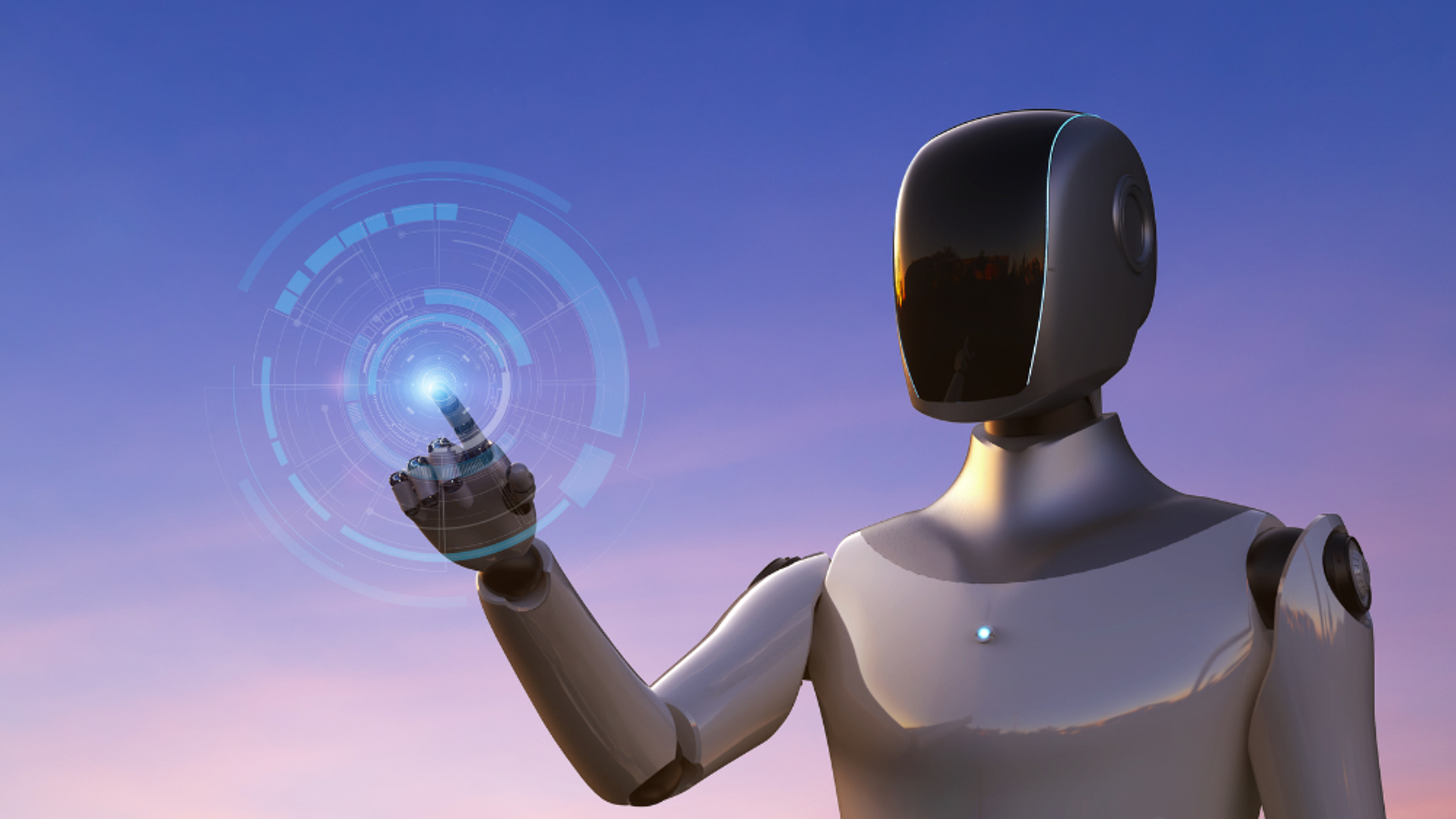
Humanoids are the talk of the town nowadays. You will see them being discussed everywhere. And it makes them more special when they backflip, do the laundry, load the dishwasher, or perform martial arts.
When you see these robots, the first thought that comes to mind is that they probably are made in China. And yes, in this humanoid race, China is not only participating, but it is out in front, at least for now.
The Numbers Tell the Story
Here’s something that might surprise you. In the first half of 2026 alone, global humanoid robot shipments tripled to about 19,100 units compared to the same period a year earlier. And Chinese manufacturers captured a massive 97% of that market share.
Read that again. Out of every 100 humanoid robots shipped in the world in early 2026, about 97 came from China.
Looking back at 2025, nearly 90% of all humanoids sold globally were Chinese. And six of the highest-selling companies in the sector were from China. That’s not a small gap. That is near-total dominance.
The two biggest players? Both Chinese. Unitree sold 5,500 robots in 2025, making it the world’s top seller. Shanghai-based Agibot came in second with 5,168 units.
Compare that to Tesla, which set a goal of producing 5,000 robots in 2025 but didn’t even hit that target.
Who Are These Chinese Robot Companies?
You might not have heard of them yet, but you will.
Unitree Robotics is based in Hangzhou and is probably the most well-known Chinese robot maker globally. Its G1 robot starts from around $13,500. And in July 2025, it launched the R1 at just $5,900 – a price that analysts thought was impossible just two years earlier. For comparison, robots from many American companies cost over $100,000.
Agibot, based in Shanghai, was ranked number one globally by research firm Omdia for 2025 shipments, with 5,168 units. Its flagship robot, the Expedition A3, hit its 10,000th unit delivery in March 2026.
UBTECH is another major player out of Shenzhen, focused mostly on industrial and factory use.
According to China’s Ministry of Industry and Information Technology, in 2025, China had more than 140 local humanoid robot manufacturers. These companies had released more than 330 different humanoid models.
In other words, a huge number of companies in China are racing to build robots. And every company is trying to develop a better and more advanced one.
Why is China So Far Ahead?
This isn’t luck. China’s lead in humanoid robots comes from a combination of factors that have been building for years.
1. Government Support
China treats robotics the same way it treats electric cars or semiconductors. The robot industry was listed as one of the key areas for technological breakthroughs in China’s 14th Five-Year Plan back in 2021. That means government money, land, and policy all flowing toward robotics companies.
China’s Ministry of Industry and Information Technology has projected a domestic humanoid robot market size of around 20 billion yuan (about $2.8 billion) by 2026.
2. The Supply Chain Advantage
This is arguably China’s biggest advantage. China has an almost fully integrated robotics supply chain. That means a lot of what is needed to build a robot is available within the same country.
In simple words, many of the parts needed for a robot, such as motors, sensors, actuators, batteries, and high-performance magnets, are manufactured in China.
In the Yangtze River Delta region, suppliers, robot manufacturers, AI labs, and electric vehicle companies are very close to each other – within roughly a two-hour logistics radius. You don’t find a robotics cluster at this level anywhere else in the world.
This closeness is actually very important. When companies need to build or test a robot prototype, they don’t have to wait for parts to arrive from far away.
That’s why a prototype that might take around 12 weeks for Western companies to build can reportedly be developed in 10-14 days in Shenzhen.
Put simply, China’s advantage isn’t just that it is building a lot of robots. The real advantage is that the entire ecosystem needed to build those robots is located very close together. This makes the process much faster.
3. Cost Efficiency
Because China controls so much of its own supply chain, it can make robots cheaper than anyone else. Chinese firms cut their total component costs by roughly 40% year-over-year. This is the pace far beyond what the industry expected.
That price drop matters a lot. Manufacturers know that mass adoption only happens when prices fall low enough to make economic sense in factories and businesses. So Chinese companies are racing each other to the bottom on price, which is speeding up the whole industry.
4. Patents and Innovation
In China, research and development in robotics are happening on a very large scale.
China filed 7,705 humanoid robotics patents over the past five years, while the U.S. filed 1,561 patents.
That means China’s patent output is almost five times higher than the U.S.
What Has Caught the World’s Attention
Beyond the sales numbers, China has been staging some pretty dramatic demonstrations of what its robots can do.
The Spring Festival Gala: Nearly 600 million viewers tuned into China’s 2026 Spring Festival Gala. They watched a fleet of Unitree humanoid robots performing synchronized martial arts routines live on national television. That’s not a small tech demo. That’s a mass entertainment event watched by more people than the Super Bowl.
The Robot Half-Marathon: In April 2026, thousands of athletes ran alongside more than 100 humanoids in the Beijing E-Town Humanoid Robot Half-Marathon. A robot called Lightning won the entire championship and even beat the human world record by several minutes.
This was a massive improvement from 2025, when the same race was held for the first time. Back then, only 6 of the 21 robot contestants even reached the finish line. Many fell, lost their heads, or spun out of control. The progress in just one year was remarkable.
World Humanoid Robot Games: China hosted the first-ever World Humanoid Robot Games in Beijing in August 2025. Here, 280 teams competed with more than 500 humanoid robots in 26 events including boxing, football, cleaning, and sorting medicines. The event is now held every year.
What About the United States?
America isn’t sitting still. It’s just running behind.
Tesla’s Optimus robot is the most talked-about American humanoid. But it is only deployed inside Tesla’s own factories. And it hasn’t been made available for anyone else to buy. Tesla says it could start selling to the general public by late 2027.
Figure AI is another strong American player. Its Figure 03 robots are commercially deployed at BMW’s largest assembly plant, billing at roughly $25 per robot-operating-hour. Figure’s factory is now producing one new robot every 90 minutes, and the company reached a $39 billion valuation in September 2025.
But here’s the honest picture. The US and China are taking two different approaches. The US is betting on AI. It is building smarter software and better vision models along with more capable robot brains. China is focusing more on scale. It is in a race to build more robots, faster and more cheaply.
In short, America leads in the software and AI side of robots. China leads in building and shipping the physical machines.
Even Elon Musk has admitted it. “China is very good at AI, very good at manufacturing, and will definitely be the toughest competition for Tesla,” he said at the World Economic Forum in January 2026.
Is the US Starting to Fight Back?
Yes, and things are getting geopolitical fast.
In June 2026, the US Department of Defense added Unitree to its list of “Chinese Military Companies.” In July 2026, the US Federal Communications Commission announced plans to restrict imports of new foreign-made humanoid and quadruped robots – a move widely seen as targeting China specifically.
On the legislative side, a bipartisan group of senators introduced the “American Security Robotics Act” in March 2026. That would stop federal agencies from buying Chinese-made robotic systems.
Some American companies are also trying to build their own supply chains from scratch. Companies like 1X and Figure AI are now manufacturing critical components, rather than relying on Chinese suppliers. It’s a smart long-term move, but it takes years to build that kind of capability.
Where is This All Headed?
The humanoid robot market is about to explode in size. Research firm Smart Analytics Global expects global humanoid robot deliveries to reach roughly 60,000 in 2026 and climb to 500,000 by 2030. Morgan Stanley has projected the market could reach $5 trillion by 2050.
China is already moving fast in that direction. It became a net exporter of industrial robots for the first time in 2025. In just the first half of 2026, its industrial robot exports reached 141 countries and regions.
China is not using this strategy for the first time. It has followed a similar approach before in industries like solar panels, electric vehicles, and batteries. And what is that approach? The government first supports the industry, then a strong network of suppliers and manufacturers develops. After that, production happens at a much larger scale, which helps bring costs and prices down.
And once the products become better and cheaper, they become more competitive in international markets.
We’ve seen this movie before. And in each of those industries, once China got a head start, catching up was extremely difficult for everyone else.
So is China Winning?
Short answer: yes, by a wide margin right now.
China controls nearly 97% of global humanoid robot shipments in 2026. It has more companies, more patents, cheaper products, faster production cycles, and strong government backing. Its supply chain has no equal anywhere in the world.
The US still has real strengths. Its AI research is world-class. Its companies attract huge investment. And American firms are starting to wake up to just how urgent this competition is.
But if history is any guide, catching up after China gets this kind of head start is very hard to do.
The humanoid robot race is still in its early chapters. The robots of 2030 will make today’s look like toys. But in the race to build those future machines, China has grabbed the lead. And it is not letting go without a fight.
More articles on this topic
59 articles ReportCounterpoint Expects Work Applications to Drive 90% of Humanoid Shipments by 2030
 ReportUnitree’s 'Superman' Robot Claims to Outrun Usain Bolt
 ReportForeign Investors And Tech Executives Pay Up To $15,000 To Tour China’s Factories
 ReportCan Certified Robots Compete With China's Cheap Patrol Bots?
 ReportQuadruped Robots Are Becoming Big Business: Here’s Why The US Is Targeting Chinese Makers
 ReportHumanoid Robots Hit Mass Production
 ReportHow Robots Are Learning to Read Minds?
 ReportAre Humanoid Robot Videos Misleading Us?
 ReportHow Do Collaborative Robots Increase Workplace Safety?
 ReportHow to Train a Humanoid Robot for Hard Work
 ReportCollaborative Robots in Hospitals
 ReportHow Humanoid Robots Can Transform Disaster Response
BUSINESS NEWS WEEKLY LETTER
The Weekly Letter for Robotics Professionals, Summarizing the Most Important Industry Moves, Launches, Deals and Signals.