How Robots Learn to Understand Humans
In 2026, robots are no longer just machines that bolt parts together on a factory floor. They are starting to watch, learn and respond to people in ways that feel almost human.

August 21, 2026 by Carl
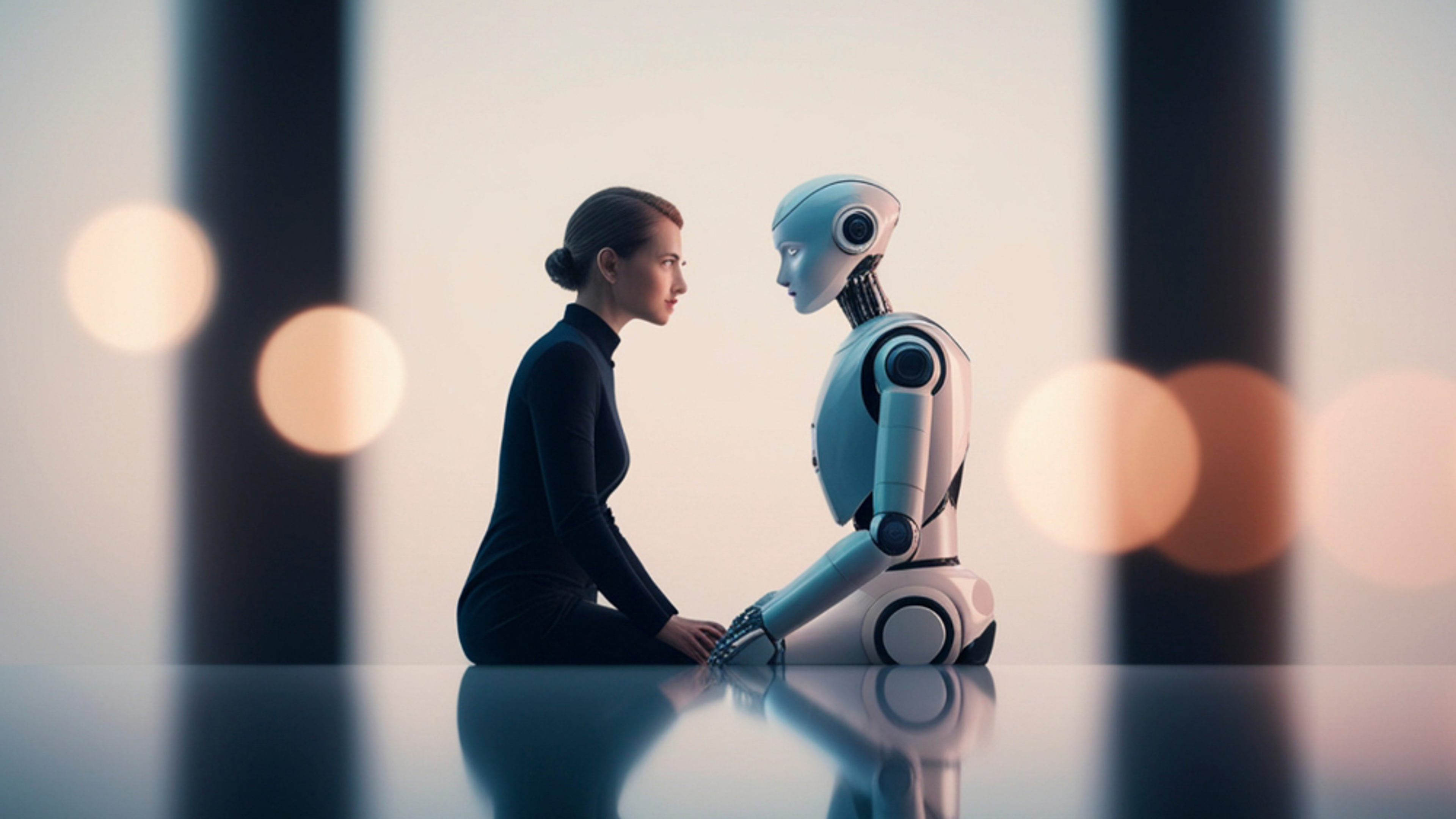
Think about the last time someone understood you without you saying much. Maybe a friend noticed you were upset just from the look on your face or a coworker figured out what you needed before you even finished your sentence. That kind of understanding is something humans do naturally. Robots can not do any of that.
But things are changing and they are changing fast.
In 2026, robots are no longer just machines that bolt parts together on a factory floor. They are starting to listen, watch, learn and respond to people in ways that feel almost human. So how exactly does a machine learn to understand us?
First, Why is This So Hard?
First, it is important to understand why it is so difficult for robots to understand humans. This helps us understand why training robots is such a challenge.
Humans do not communicate through words alone. We also express a lot through our facial expressions, hand gestures, tone of voice, pauses in speech, eye contact and even silence. For example, someone might say “that is fine.” They could genuinely mean “okay.” But if they say the same words in a different tone, they could mean the complete opposite.
So for a robot, simply understanding the words isn’t enough. It also needs to understand the tone, expression, situation and a lot more in which those words were said. For a robot, all of this is just data. And until recently, robots were terrible at reading it.
Old-style robots were programmed with fixed instructions. If you said “pick up the cup,” the robot knew what to do, but only if the cup was in the exact place and position it was trained for. Change the lighting, move the cup slightly or say “grab that mug,” and many older robots would simply fail.
The shift happening now is that robots are moving from following rigid rules to learning from experience.
Imitation Learning
One of the most important ways robots learn to understand and help humans is by watching what people do and copying it. This is called imitation learning.
Imagine teaching a child to tie their shoes. You do not hand them a textbook. You show them. You do it slowly. They watch and try to repeat the steps. Robots are now learning in a similar way.
With imitation learning, humans demonstrate a task and robots learn to copy what they see through cameras and sensors. Researchers at Georgia Tech pushed this even further with a system called SAIL. That lets robots not just copy human movements, but perform those tasks faster than the person who demonstrated them.
A newer approach called ConceptACT goes one step further. This allows robots to learn from human demonstrations by also absorbing the meaning behind tasks rather than just mimicking the physical motion.
This is a big deal. It means robots can start to understand why a task is done, not just how.
Reinforcement Learning
Another way robots learn is through trial and error. This is a method called reinforcement learning. You set up a system where the robot gets a kind of reward when it does something right and a penalty when it does something wrong. Over time, it figures out what works.
Instead of being told what to do in every situation, a learning robot observes the world through sensors, takes actions, evaluates the results and adjusts future behaviors. This is similar to how humans learn from trial and error.
Picture a child learning to ride a bike. They do not read a manual. They try, fall, try again and slowly their brain figures out the balance. Robots doing reinforcement learning go through millions of virtual tries before they try a real task in the physical world.
A newer approach called Reinforcement Learning from Demonstrations (RLfD) combines both expert human examples and reward feedback together. This helps robots learn efficiently and behave reliably in complex real-world tasks.
The Role of Big AI Models
The same type of AI that powers chatbots and image generators is now being used in robots too. These are called foundation models. These are large AI systems that are trained on huge amounts of data.
When you connect this kind of AI model to a robot, something interesting happens. The robot can start to understand context, follow instructions given in natural language and make its own decisions based on the situation.
In other words, the robot does not just follow fixed commands anymore. It tries to understand the situation and decide what action it should take.
Google DeepMind built a system using Gemini 2.0 as the foundation for a new AI model. It can process various types of input and generate action outputs that a robot can execute directly. This is called a Vision-Language-Action model. This acts as a kind of brain for the robot.
So instead of a human typing in a command, you could just say “clean up the table” or “sort my laundry by color”. And the robot figures out what that means. It also monitors its surroundings, detects changes to its environment or instructions and adjusts actions accordingly.
Reading Human Faces and Emotions
Understanding words is one thing. Understanding feelings is a whole other challenge. And robots are starting to crack that too.
Researchers are now designing algorithms that allow robots to pick up on human emotional states from multiple inputs. This includes facial expressions, body language, tone of voice and even physiological signals like heart rate. A new AI approach enables robots to learn and recognize emotions gradually over time. Think of it like a robot that keeps getting better at reading people the more it spends time around them.
Even robotic faces are evolving. In January 2026, a team from Columbia University made a notable breakthrough. For the first time, researchers built a robot that can learn lip movements for speaking and singing. This might sound like a small thing, but it matters. Humans pay enormous attention to lip movements when they interact with others. And even tiny errors in that area make robots feel unsettling or emotionally flat.
At Japan’s Expo 2025, an android robot called Nikola was shown with 63 different facial expressions. People interacted with Nikola by describing everyday situations. The robot used a large language model to infer the right emotion and express it. Interestingly, the robot seemed most emotionally believable when people gave it open-ended instructions, rather than telling it exactly what face to make.
Learning Through Eye Contact, Voice and Gesture
Beyond emotions, researchers want robots to fully understand human communication. At Germany’s Karlsruhe Institute of Technology (KIT), Professor Rudolf Lioutikov is working in this direction. His goal is to build robots that can communicate with humans in a natural way.
This includes more than just words. It also involves eye contact, tone of voice and facial expressions. The idea is that users should not need any technical knowledge to use the robot.
His team developed FLOWER, Europe’s first vision-language-action model that can run on standard hardware and be trained in just a few hours. This is important because the people who could benefit the most from robots may not necessarily be tech experts.
If using a robot requires learning long manuals or complicated commands, most people simply won’t use it. Research is also showing that a robot’s gaze direction, body movements, timing and facial expressions can all make communication feel more natural.
Just one thing is not enough. When different communication signals work together, interacting with a robot can feel much more natural.
Learning from Video
One of the exciting developments is robots learning from video.
Researchers build systems where a robot watches thousands of hours of people cooking, cleaning, and organizing and builds up an internal model of how those activities work. Then it applies that knowledge in the real world.
Around 2022, Google’s robotics team spent 17 months filming people doing everyday tasks and using that footage as a training pipeline. By 2024, that approach had produced a platform called RFM-1. It was deployed in warehouses, where you could instruct a robotic arm the same way you’d talk to a coworker.
The Trust Problem
Here is something that does not always get talked about: even if a robot can understand humans, will humans trust it?
Studies show that when robots communicate what they have learned back to the people working with them, it speeds up the learning process, builds trust and increases cooperation. A robot that just acts is harder to trust than one that can say “I am putting the red sweater in the dark bin because you asked me to sort by color.” That kind of transparency makes the machine feel more like a partner and less like a black box.
This is why explainability is becoming one of the most important areas of research. It is the ability of a robot to describe its own decisions in plain language.
What Still Needs Work
Despite all this progress, there are still some real problems.
Robots still struggle in unpredictable situations. If you put them in a completely new environment, they can sometimes fail in ways you would not expect.
As robots get better at understanding and expressing human emotions, new ethical questions are also coming up. For example, could robots be used to manipulate feelings? This is especially important in therapy, customer service and other sensitive situations. As robots become more common, society will need to seriously discuss this issue.
Then there is also the “Uncanny Valley” problem. It is that uncomfortable feeling people can get when a robot looks or behaves almost like a human. Researchers are trying to reduce this gap. But it is still a real barrier to trust and adoption.
And then there is the data problem. To teach robots how to properly understand humans, they need huge amounts of high-quality training data.
But collecting that much data safely and ethically is itself an ongoing challenge.
What is Coming Next
The direction is pretty clear now. Robots are moving toward understanding humans in a more complete way. The goal is no longer just to understand words. Robots are moving toward understanding what is happening in a room, noticing someone’s mood, figuring out what they might need and even communicating their own situation to humans.
Humanoids are no longer just machines built to perform mechanical tasks. They are becoming capable of understanding complex environments and learning through their interactions with humans.
The robots of the near future may feel more like assistants than simple tools. They could be assistants that get better as they work with you, learn your habits, remember your preferences and notice when something does not seem normal.
But we are not there yet. Still, every year, the gap between robots and humans is getting a little smaller.
More articles on this topic
59 articles ReportCounterpoint Expects Work Applications to Drive 90% of Humanoid Shipments by 2030
 ReportUnitree’s 'Superman' Robot Claims to Outrun Usain Bolt
 ReportForeign Investors And Tech Executives Pay Up To $15,000 To Tour China’s Factories
 ReportCan Certified Robots Compete With China's Cheap Patrol Bots?
 ReportQuadruped Robots Are Becoming Big Business: Here’s Why The US Is Targeting Chinese Makers
 ReportHumanoid Robots Hit Mass Production
 ReportHow Robots Are Learning to Read Minds?
 ReportAre Humanoid Robot Videos Misleading Us?
 ReportHow Do Collaborative Robots Increase Workplace Safety?
 ReportHow to Train a Humanoid Robot for Hard Work
 ReportCollaborative Robots in Hospitals
 ReportHow Humanoid Robots Can Transform Disaster Response
BUSINESS NEWS WEEKLY LETTER
The Weekly Letter for Robotics Professionals, Summarizing the Most Important Industry Moves, Launches, Deals and Signals.