How Robots Are Transforming Agriculture
Agricultural robotics is helping farmers automate repetitive tasks, reduce waste, increase yields, and make smarter decisions using AI, sensors, drones, and data.

August 17, 2026 by Carl
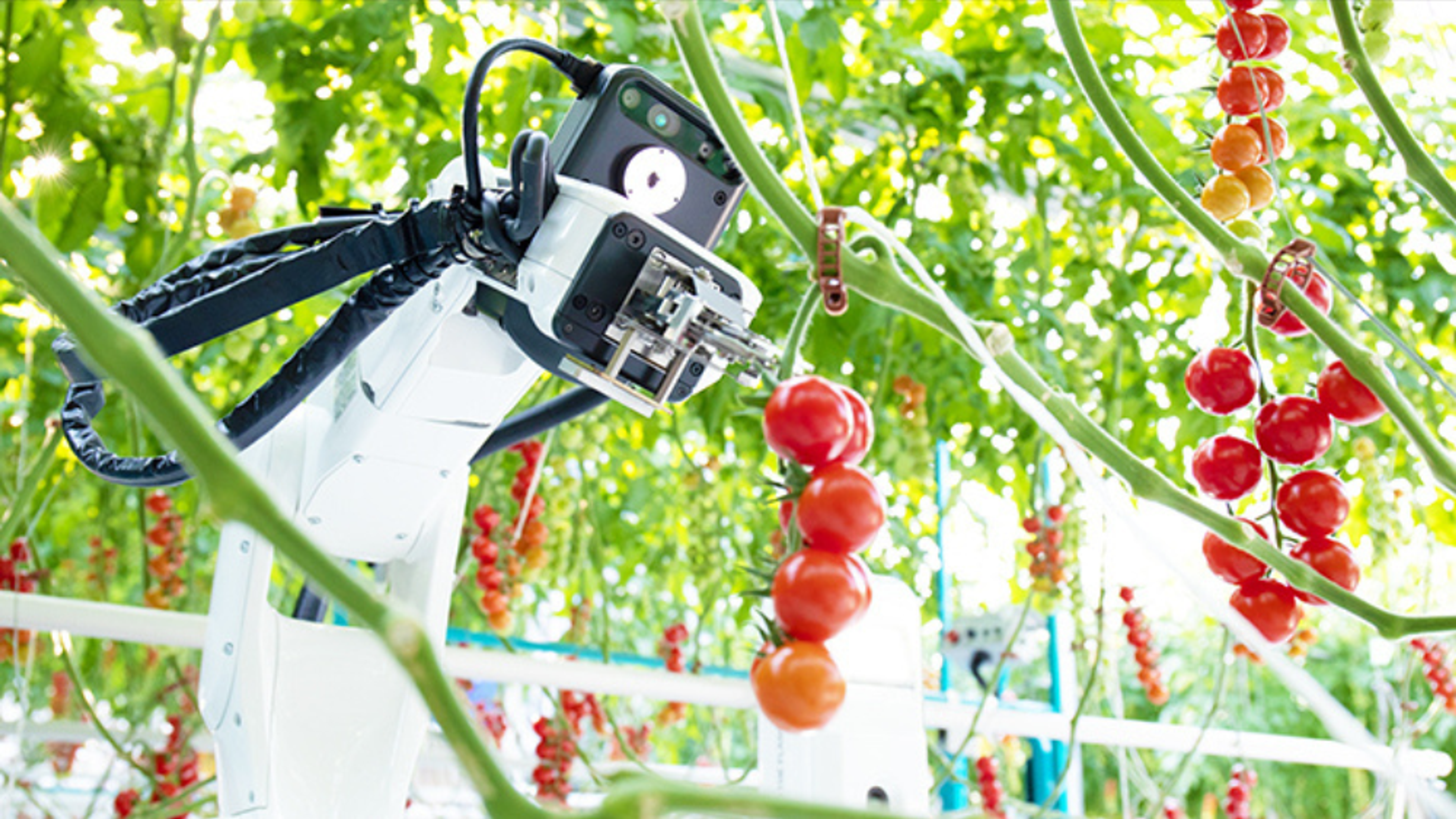
Imagine walking into a farm and seeing trucks moving on their own and robots picking up ripe tomatoes with utmost precision. Then you move a little forward and see drones spraying water on crops, and within minutes, hundreds of acres of land are completely watered. All of this sounds like a movie scene, right? But guess what? These concepts have actually turned into reality, and hundreds of farmers have started using robots on their agricultural lands.
In today’s world, robots are not limited to research labs. These machines are operating in fields, orchards, vineyards, greenhouses, and dairy farms around the world. These robots are capable of monitoring crops’ health and moving in fields without any kind of human intervention. All thanks to Artificial Intelligence (AI), computer vision, GPS, LiDAR, and sensors. But no matter how helpful these robots are, they still cannot replace humans entirely. Rather, they are being deployed to assist humans by performing repetitive tasks.
Why Agriculture Needs Robots?
The population, as we all know, is growing rapidly throughout the world. And when the population grows, demand for food, of course, grows, too. And in order to fulfil that demand, farmers really need to grow more and more crops. Moreover, there are many countries that are facing labor shortages in their agriculture sector.
Fruit, vegetable, and greenhouse growers are finding it really hard to find seasonal workers. Along with all this, the cost of labor is also becoming higher day by day. Additionally, farmers are also expected to use fewer harmful chemicals and reduce carbon emissions.
Now this is where opting for robots makes a difference.
- They can work for longer periods without getting tired.
- They perform repetitive tasks with the most accuracy.
- They collect information about crops and soil conditions.
Most of the robots are capable of figuring out which plants need to be treated. So, instead of applying fertilizer or pesticides across the entire field, they only target the ones that actually need it. Doing so reduces significant amounts of waste as well as improves crop quality, ultimately resulting in an increase in farm profitability.
The Technology Behind Robots
Agricultural robots combine a lot of advanced technologies in order to operate efficiently. Outdoor environments are clearly very harsh and super unpredictable. There’s a high chance that an obstacle comes in a robot’s way while it is moving. Now this is where computer vision comes into play. It helps robots identify crops or weeds, fruits/vegetables, and obstacles by analyzing images captured through cameras.
Another important feature is AI. It interprets these images to determine whether fruit is ripe, identify plant diseases, or distinguish weeds from crops. For navigation, robots use GPS, RTK positioning, LiDAR, radar, and multiple onboard sensors. And when all these technologies come together, robots can move accurately through fields while avoiding obstacles.
Now that you’ve seen the importance of robots in the agriculture sector and how they work, it’s time to take a look at some real-world applications of these robots.
Autonomous Tractors
Autonomous tractors, as the name suggests, are the ones that can move on their own. These are not the same as those traditional tractors that require a human to operate. Autonomous tractors can perform repetitive field operations such as plowing, tilling, mowing, hauling, and planting. And the best part? They do it all with minimal supervision. All the farmers have to do is plan routes digitally. And then the tractor follows these paths with centimeter-level accuracy.
John Deere’s autonomous tractor platform is one of the most well-known examples. It uses AI, computer vision, GPS, and onboard computing to navigate fields independently.
Another leading example is AgXeed. The company has also introduced autonomous AgBots that are designed for repetitive field operations such as tillage, seeding, and mowing.
The biggest plus point of these machines is that they can operate for longer hours without feeling fatigued. They also improve fuel efficiency and reduce overlap during fieldwork. Moreover, operators don’t need to spend their whole day driving a tractor. Rather, they can focus on tasks that require human judgement.
Precision Weeding
If you go a few years back, you’ll see humans spraying herbicides and pesticides across entire fields manually. Now imagine how tiring and time-consuming the whole process would have been. But not anymore. And that’s because modern robotic weeders take a completely different approach.
These robots use AI-powered computer vision to identify individual weeds and then eliminate them through mechanical tools, targeted spraying, or high-powered lasers.
Carbon Robotics’ LaserWeeder has become one of the industry’s leading examples. In early 2026, the company introduced its Large Plant Model (LPM). It is basically an AI foundation model trained on more than 150 million labeled plants.
Other companies such as Ecorobotix and Naio Technologies are also advancing robotic weeding and precision crop maintenance systems that reduce herbicide use while helping farmers manage herbicide-resistant weeds. Meanwhile, Taylor Farms continues supporting the deployment of the Vulcan precision weeding technology after acquiring FarmWise’s business in 2025.
Smarter Planting
Planting is another task becoming increasingly automated. Autonomous planting robots place seeds at precise depths and spacing while recording the exact location of every seed. This information becomes valuable throughout the growing season because robots know exactly where each crop should emerge.
FarmDroid’s FD20 demonstrates this concept particularly well. The fully autonomous, solar-powered robot uses high-precision RTK GPS to plant seeds before returning later to mechanically remove weeds between individual plants without damaging crops. Because it remembers every planting position, the robot can weed with remarkable precision while reducing the need for chemical herbicides.
This illustrates an important trend in agricultural robotics: the value of data collected during one farming operation extends throughout the entire production cycle.
Harvesting Robots
Harvesting remains one of the most technically difficult tasks for agricultural robots. Unlike factories where products always appear in predictable positions, fruits and vegetables vary in size, shape, color, and orientation. They may also be hidden behind leaves or branches, making detection much more difficult.
To solve these challenges, harvesting robots combine AI, computer vision, robotic arms, specialized grippers, and advanced motion planning.
Greenhouses provide ideal environments for these systems because lighting, crop spacing, and plant growth can be carefully controlled. Companies such as TTA-ISO and Four Growers have developed greenhouse harvesting robots that illustrate this approach. TTA-ISO’s HarvAI and Four Growers’ GR-200 use AI-powered vision systems to identify ripe tomatoes, while robotic arms precisely harvest and place the fruit into collection containers with minimal crop damage.
Researchers continue expanding robotic harvesting into apples, strawberries, peppers, grapes, and other delicate crops as AI vision systems become more accurate.
Agricultural Drones
Agricultural drones have become one of the fastest-growing robotic technologies in farming. Equipped with RGB, multispectral, thermal, and hyperspectral cameras, drones allow farmers to inspect thousands of acres in a fraction of the time required for manual field scouting.
These aerial robots identify irrigation problems, nutrient deficiencies, pest infestations, and disease outbreaks before visible damage spreads across entire fields.
Drone sprayers such as DJI Agras and XAG systems also perform targeted spraying in orchards, vineyards, steep hillsides, and waterlogged fields where ground equipment struggles to operate efficiently. Rather than replacing traditional sprayers completely, drones excel in precision applications where speed, accessibility, and localized treatment matter most.
Greenhouse Automation
Greenhouses have become one of the earliest success stories for agricultural robotics. Unlike open fields, greenhouse environments provide predictable layouts, controlled lighting, and standardized crop arrangements that simplify robotic navigation.
Today, greenhouse robots monitor plant growth, harvest tomatoes, transplant seedlings, inspect crops, and collect environmental data throughout the day.
Instead of relying solely on faster robotic arms, developers now focus equally on AI vision, lighting optimization, gripper design, and motion planning. A harvesting robot is only as effective as its ability to recognize fruit accurately under changing conditions. This systems-based approach continues improving both harvesting speed and picking accuracy.
Livestock Robotics
Robotics is transforming livestock farming as much as crop production. Robotic milking systems allow dairy cows to be milked whenever they choose rather than following fixed schedules. These systems automatically clean udders, attach milking equipment, monitor milk quality, and collect health information for every animal.
Companies such as Lely, DeLaval, and GEA have developed robotic dairy systems that improve labor efficiency while providing farmers with continuous insights into herd health and productivity.
Beyond milking, robotic feed pushers, feeding systems, manure cleaning robots, and livestock monitoring platforms help maintain healthier and more efficient barns while reducing repetitive manual work.
Rather than replacing farmers, these systems allow them to spend more time managing animal health instead of performing routine physical tasks.
Beyond the Field
Do you think agricultural automation is limited to harvesting and planting, etc? Well, that’s not quite the case here. And that’s because today, these robotic systems sort fruits and vegetables according to their size and quality. They can package fresh produce and stack pallets. Not only that, but these robots can also transport bins and move harvested crops from one place to another.
Examples include Burro. It is an autonomous mobile robot and is designed to transport heavy loads in tough outdoor environments. Burro is not like those robots that can only operate in controlled indoor environments. In fact, it can navigate narrow vineyard rows, orchards, and nurseries, and even large industrial yards with ease. Burro is powered entirely by electricity, and it reduces the need for manual hauling. The robot carries tools, crops, and equipment, allowing workers to focus on higher-value tasks.
Challenges Still Remain
Agricultural robotics are indeed advancing quickly. But even then, these robots are not the perfect solution for each and every problem. There are still some challenges in their way.
First things first, the heavy initial investment. There are many smaller farms that want to use robots, but it’s the cost that is serving as a hurdle in their way. Farm owners need to pay a hefty amount right in the beginning if they wanna buy robots to automate most of the operations.
Then comes the environment. Outdoor environments, as we all know, are unpredictable. Dust, rain, changing sunlight conditions, and uneven terrain are all the factors that give birth to the challenges that are not otherwise faced by the robots that work in controlled factory environments.
Moreover, reliable connectivity is also something that robots don’t really get in most of the farms. And that’s because these farms operate in remote areas with limited network coverage. Additionally, farmers also need training so that they can integrate robots with existing workflows in the most suitable way.
Keeping all these challenges in mind, there are many manufacturers that are offering a Robotics-as-a-Service (RaaS) model. As per this model, farmers can start using robots without having to pay the full price of buying a robot. All they have to do is simply pay a fixed monthly or yearly subscription fee.
The Future of Farming
The future of agricultural robotics won’t be just about using one robot at a time. There are many companies that are working on such connected fleets that can work together at the same time.
For example, an autonomous tractor can prepare the fields, and drones can check the health of the crops from above simultaneously. Similarly, ground robots can deal with weeds, and at the same time smart irrigation systems can water the crops as per their needs.
Now there are also some researchers who are building robots that can even work at night time. That means even if the sun sets, farmers don’t need to worry at all. New AI models are also helping robots identify a variety of crops and adjust according to the changing conditions of farms.
Now, it is worth mentioning that farms won’t become fully automated overnight. And yes, farmers will still be the ones making important decisions. What we will likely see in the future is farmers and robots working together. Robots can handle tasks that are repetitive and extremely tiring. Meanwhile, farmers will get more time and energy to focus on the crops and use their experience to make the best decisions.
More articles on this topic
59 articles ReportCounterpoint Expects Work Applications to Drive 90% of Humanoid Shipments by 2030
 ReportUnitree’s 'Superman' Robot Claims to Outrun Usain Bolt
 ReportForeign Investors And Tech Executives Pay Up To $15,000 To Tour China’s Factories
 ReportCan Certified Robots Compete With China's Cheap Patrol Bots?
 ReportQuadruped Robots Are Becoming Big Business: Here’s Why The US Is Targeting Chinese Makers
 ReportHumanoid Robots Hit Mass Production
 ReportHow Robots Are Learning to Read Minds?
 ReportAre Humanoid Robot Videos Misleading Us?
 ReportHow Do Collaborative Robots Increase Workplace Safety?
 ReportHow to Train a Humanoid Robot for Hard Work
 ReportCollaborative Robots in Hospitals
 ReportHow Humanoid Robots Can Transform Disaster Response
BUSINESS NEWS WEEKLY LETTER
The Weekly Letter for Robotics Professionals, Summarizing the Most Important Industry Moves, Launches, Deals and Signals.