HOBOT S7 Pro vs. ECOVACS WINBOT W2 PRO OMNI
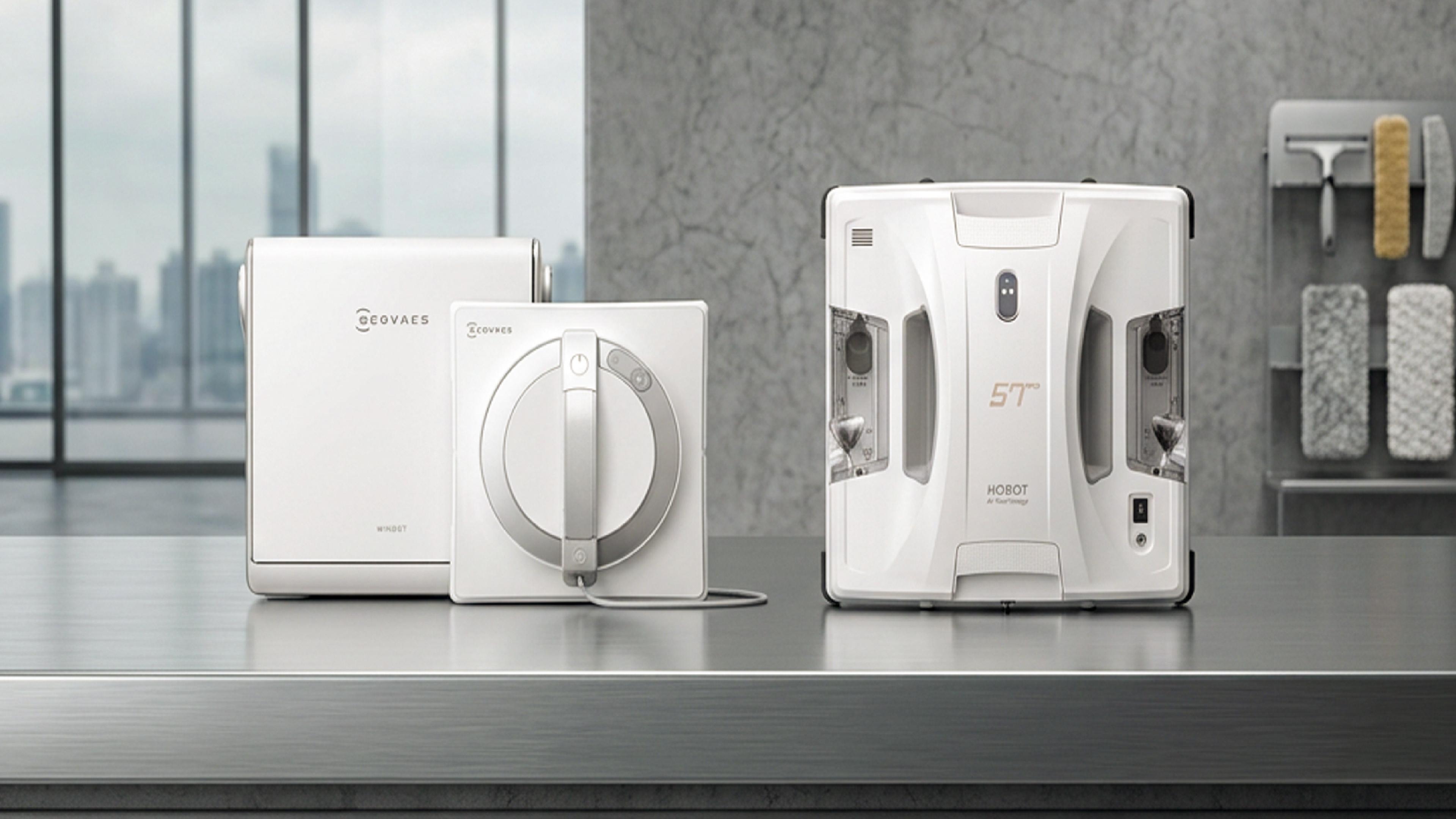
HOBOT S7 Pro vs. ECOVACS WINBOT W2 PRO OMNI are both robotic window cleaners compared here on cleaning technology, suction performance, navigation capabilities, safety systems and operational flexibility.

November 2, 2026 by Business Desk Team
Introduction
HOBOT S7 Pro and ECOVACS WINBOT W2 PRO OMNI are robotic glass-washing robots for robotic window washers using vacuum adhesion, onboard scheduled navigation and water-spray systems. Their difference is in their cleaning style, power configurations and safety architecture.
HOBOT S7 Pro uses dual ultrasonic spray and reciprocating dual-mop polishing with 4 mm vibration stroke at 600 motions per minute. ECOVACS WINBOT W2 PRO OMNI is more focused on portable battery operation, automatic cord handling, WIN-SLAM 4.0 route planning and multi-function station. A functional decision is based on window size, power availability, cleaning need and how the safety system interfaces with your installation.
At a Glance
| Metric | HOBOT S7 Pro | ECOVACS WINBOT W2 PRO OMNI |
|---|---|---|
| Robot type | Vacuum-adhering robotic window cleaner | Battery-powered robotic window cleaner with portable station |
| Best-fit use cases | Residential glass cleaning, including frameless and inclined windows | Residential glass cleaning where portability and cordless operation are useful |
| Dimensions | 262 × 264 × 89 mm (L × W × H) | 271 × 271 × 77 mm (L × W × H) |
| Weight | Approximately 1.65 kg | Approximately 1.6 kg; station approximately 5.5 kg |
| Adhesion / suction | 4,800 Pa stated suction power | Up to 5,500 Pa ± 500 Pa maximum suction; 2,800 Pa while moving |
| Cleaning mechanism | Dual reciprocating mops; 4 mm stroke; 600 movements/min | Microfibre cleaning pad with three-nozzle wide-angle spray |
| Water system | Dual ultrasonic spray; 2 × 26 ml removable tanks | Six spray nozzles; approximately 60 ml water tank |
| Navigation / sensing | Linear and zigzag routes; ELB edge and leakage detection; four edge-leakage sensors | WIN-SLAM 4.0 route planning; frame and obstacle detection; edge sensors |
| Runtime / power | Mains-powered operation; approximately 20-minute UPS backup after power loss | Up to 110 minutes per charge; approximately 3 hours charging |
| Cleaning speed | Approximately 2.6 min/m² | Approximately 1 min 45 sec/m² in Fast mode |
| Distinctive capabilities | Reciprocating dual-mop polishing, dual ultrasonic spray, frameless-window support | Portable battery station, automatic cable take-up, edge-cleaning mode, multiple cleaning modes |
| Key limitation / caveat | Requires a connected power supply during normal operation; UPS is emergency backup, not normal cordless runtime | Battery runtime and estimated coverage vary by cleaning mode; deep-cleaning coverage is lower than Fast-mode coverage |
How They Compare
Cleaning mechanism and performance: HOBOT S7 Pro employs a pair of reciprocating cleaning pads with a 4 mm stroke and 600 movements per minute, enhanced by dual ultrasonic spray, injecting both mechanical swabbing and mist. WINBOT W2 PRO OMNI's single microfiber pad relies on 6-nozzle spray with separate Fast, Deep, Thorough, Edge, Spot, Zone and Heavy-Duty modes. Their claimed speeds are based on manufacturers' own test conditions and are not a reliable basis for an independent comparison of cleaning performance.
Navigation and edge detection: HOBOT S7 Pro employs zigzag and linear cleaning routes, and ELB technology has 4 edge-leakage sensors, 4 silicone bumpers and a central pressure sensor. WINBOT W2 PRO OMNI employs WIN-SLAM 4.0 route planning, frame detection, obstacle sensing, and automatically returns to the starting point. Both the two products are able to navigate the glass surface on their own, but the architectures of sensing and route planning are different.
Power and operational flexibility: HOBOT S7 Pro can be operated with mains power and has a 20-minute uninterruptible power system to help preserve the suction even if there is a power cut. Please note this does not mean 20 minutes of standard battery operation. WINBOT W2 PRO OMNI has a built-in 4,500 mAh battery and portable station for operation without a power point, ECOVACS specify up to 110 minutes of operation per charge with 55 m2 coverage in Fast mode and around 22 m2 coverage in Deep mode.
Safety and deployment: HOBOT S7 Pro is compatible with frameless glass and inclined windows from 20° to 90°, with a safety rope of 230 kgf. WINBOT W2 PRO OMNI has suction monitoring, power-off protection, automatic cable take-up, as well as a power-and-safety cable compound. ECOVACS states a maximum power-off protection period of 30 minutes with a full charge. In either case, window size, glass quality, frame geometry, access to the window, and the manufacturer's installation instructions must be reviewed prior to use.
Important Qualification
HOBOT S7 Pro: 20-minute UPS Specification is the emergency suction support after the power failure, rather than the cordless running time. 4,800 Pa's suction value should also not be directly compared with ECOVACS's maximum suction power measurement results without taking into account the different test conditions.
ECOVACS WINBOT W2 PRO OMNI: The advertised 110-minute runtime and 55 m² coverage refers the specified operating conditions (ECOVACS states about 22 m² in Deep mode), where the cleaning intensity affects the coverage. The handheld station also means extra carrying weight and storage needs.
Summary
Select HOBOT S7 Pro for reciprocating dual-mop, ultrasonic spray, and seamless cleaning of frameless or inclined glass for the system. Choose ECOVACS WINBOT W2 PRO OMNI if battery operation, portability, automatic cable management, and a variety of wash modes fit the environment better.
This is a fit-for-purpose comparison, not a performance test ranking. Verify window size, frame type, glass condition, power availability and safety considerations for comparing these two models. Test the equipment on the desired glass surface before assessing cleaning efficiency or operational benefits.
This comparison is based on ROBOT24.com market-research data records and manufacturer-reported specifications rather than controlled performance testing.
More articles on this topic
144 articles ReportRichtech DUST-E S vs. Gausium Phantas
 ReportEngineAI SE01 vs. AGIBOT RAISE A1ReportRichtech DUST-E S vs. KEENON KLEENBOT C20
 ReportPUDU PuduBot 2 vs. OrionStar LuckiBot Pro
 ReportUnitree G1 vs. EngineAI PM01
 ReportKEENON DINERBOT T11 vs. PUDU KettyBot Pro
 ReportAGIBOT D1 Pro vs. Unitree Go2 Pro
 ReportKEYi Tech Loona vs. WEILAN BabyAlpha A2
 ReportPUDU BellaBot Pro vs. KEENON DINERBOT T11
 ReportBear Robotics Servi Plus vs PUDU BellaBot Pro
 ReportUnitree G1 vs. AGIBOT X2
 ReportPUDU KettyBot Pro vs. Bear Robotics Servi Q
BUSINESS NEWS WEEKLY LETTER
The Weekly Letter for Robotics Professionals, Summarizing the Most Important Industry Moves, Launches, Deals and Signals.