Every Brick, Even the Curves—Monumental Shows What Its Robots Can Build
The company says its machines completed a Dutch home’s brickwork, including decorative lettering, with another 15 houses set to follow.

November 8, 2026 by Vismay
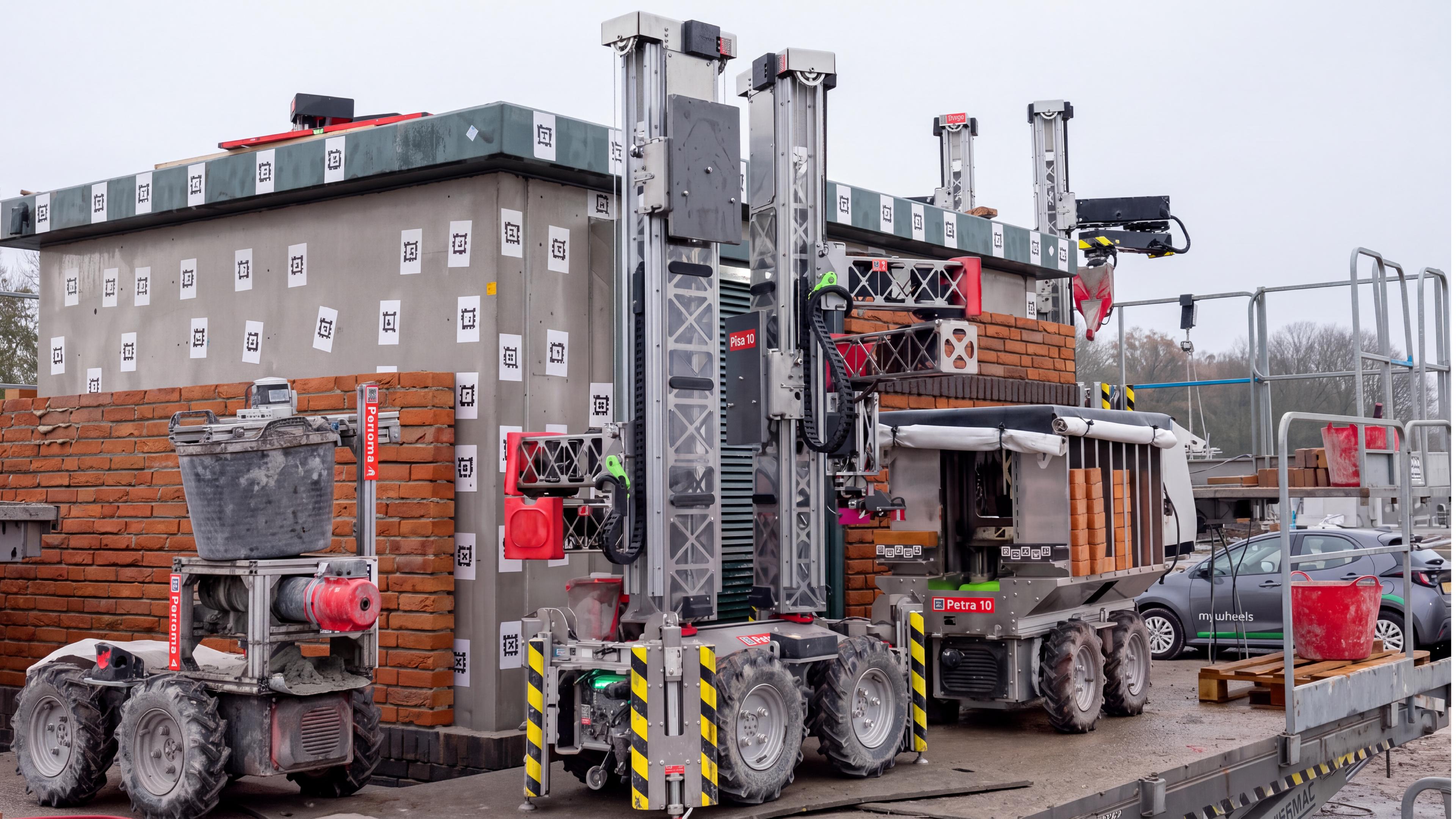
Curved walls, different brick types and lettering set into the masonry, Monumental says its robots handled them all at a house in Almere, the Netherlands. In a recent announcement, CEO Salar al Khafaji said the Amsterdam-based company’s machines had laid every brick, using a fleet that divides the work of placing bricks and supplying materials. Another 15 houses would follow in the coming weeks, he said.
The architectural details give the project its interest. Alongside straight sections, the robots tackled curves, varied brick patterns and recessed text, showing how the company’s machines can accommodate more individual building designs.
The claim is about the home’s brickwork. It does not mean robots constructed the entire house or worked without human support.
Monumental’s system shares the masonry work among three robot types. Pisa applies mortar and places bricks using two crane mechanisms. Petra delivers the bricks, while Panama replenishes the mortar.
According to the company, Petra can carry up to 128 bricks across eight bays and select different types or colours in a programmed order. This allows the fleet to create patterns and combine materials while keeping the bricklaying robot supplied.
People help keep that process running. Monumental’s construction-operator job description includes moving bricks and mortar, restocking robots, setting up equipment, troubleshooting and cleaning the site. The company has not specified how many people supported the Almere project or how often they needed to intervene.
For contractors, hiring Monumental works much like bringing in a masonry subcontractor. They pay for completed walls, while Monumental supplies and operates the robots through its own team. Contractors therefore do not need to buy the machines or learn to manage them themselves.
The company says its robots have already built walls for homes, a school, a community centre and a hotel across the Netherlands and the United Kingdom. Almere adds an example of more varied brickwork to that growing list of projects.
What remains unclear is how the Almere job compares with conventional bricklaying. The available reports do not give a project-specific completion time, price or labour requirement, so they cannot establish whether the robots delivered the work faster or at a lower cost.
For now, the project’s strongest selling point is visible in the walls themselves. Curves, patterns and lettering suggest that robotic bricklaying can leave room for architectural character. The next question is whether Monumental can deliver that flexibility consistently—and competitively—across the homes that follow.
More articles on this topic
261 articles ReportRobots vs. Drones: What Is the Real Difference?
 ReportHow Animals Inspire Better Robots
 ReportFrom Toys to Tools: The Coolest Robots in Schools Today
 ReportWhat it Really Costs to Own a Personal Assistant Robot at Home
 ReportThis Tiny Robot Hops Like a Frog And Swims Using Elastic Limbs
 ReportJapan Tests Robot Bins at Tokyo’s Busiest Railway Station
 ReportDexterous Robot Hand Sales in China May Triple in 2026
 ReportWhy Industrial Data is Becoming the New Strategic Asset in the AI Race
 ReportCarnegie Mellon Develops Pixel Humanoid for Under $15,000
 ReportFrance’s Physicl Raises $10 Million for AI Training Data
 ReportRobotic Systems Are Bringing Greater Precision to Veterinary Surgery
 ReportServe Robotics Launches Physical AI Services to Supply Technology to Other Robot Makers
BUSINESS NEWS WEEKLY LETTER
The Weekly Letter for Robotics Professionals, Summarizing the Most Important Industry Moves, Launches, Deals and Signals.