Do We Really Need Humanoid Robots in Every Home?
Every home may not need a humanoid robot. What matters more is creating machines that perform useful tasks reliably, safely, affordably, and sustainably every day.

August 20, 2026 by Carl
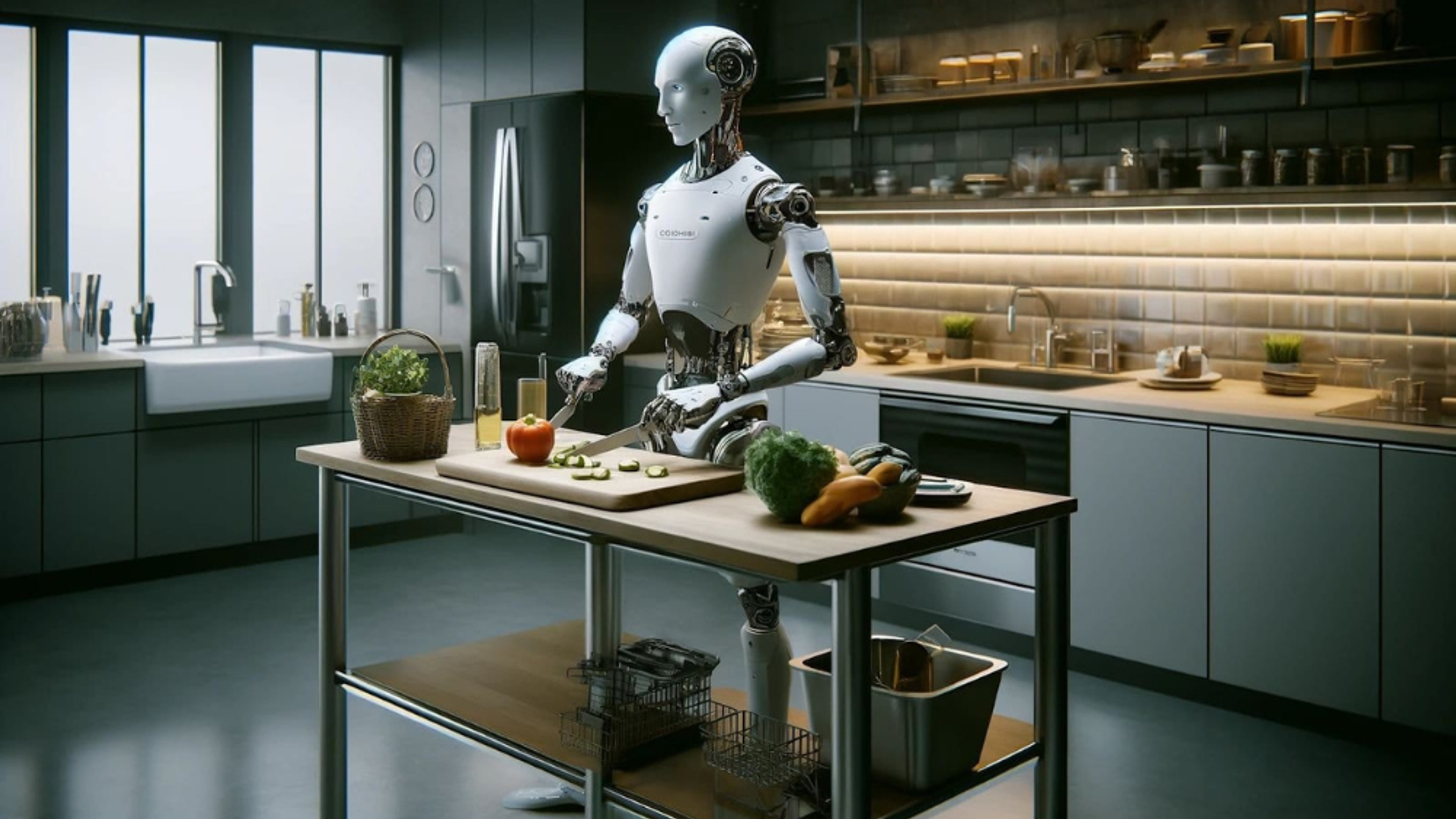
You have probably seen robots loading dishwashers, carrying groceries, folding clothes, tidying rooms and moving around kitchens with increasingly convincing human-like movements. It surely is an appealing vision.
Now most of us have a long list of household chores we would happily let a robot do for us. And in this case, the idea of a general-purpose robot sounds even more attractive because, unlike a robotic vacuum or lawnmower, a humanoid could use the same doors, shelves, appliances and tools that we do. But there is a question that deserves more attention as humanoid robotics moves from laboratories and demonstrations toward commercial products: Is putting a humanoid robot in every household really the problem we should be trying hardest to solve?
Putting up this question does not mean opting for household robots is a bad idea. In fact, they could eventually make everyday life much easier. The question is whether they really need a human-like body to get the job done.
The distinction matters because robotics is reaching an interesting point. Companies are no longer competing only to demonstrate that robots can walk, grasp objects or perform impressive movements. They increasingly have to demonstrate that their machines can perform useful work repeatedly, safely and economically.
Recent reporting from the 2026 World Robot Conference reflects exactly this shift: attention is moving away from spectacular demonstrations and toward productivity, practical applications and Return On Investment (ROI). And the home may be one of the most demanding places to prove that a robot is genuinely useful.
A Home is Not a Factory
A factory can be designed around automation. A home cannot. In a factory, a robot might repeatedly pick up the same component from a known location and place it somewhere else. The lighting can be controlled. The workspace can be organized. People can be kept out of dangerous areas. The robot’s job can be narrowly defined.
A household is the opposite. There are toys on the floor, clothes in different places, pets moving unpredictably, children, guests, clutter, fragile objects and furniture that changes position. A robot may encounter an object it has never seen before and have to decide what it is, whether it can touch it and where it belongs.
Recent research illustrates both the progress and the difficulty. The Kitchen Robotic Manipulation utilizing Foundation Models developed a perception and planning system that could handle tasks such as transferring dishes from a sink to a dishwasher and stacking cups in real-world demonstrations. The researchers specifically highlight the challenge of deploying robots in everyday environments containing clutter and hidden objects.
The Humanoid Advantage is Real, But So is Its Cost
There is a good reason companies are building humanoids. Human environments are designed for human bodies. Doors have handles at human height. Kitchen counters are designed around standing adults. Washing machines, shelves, cupboards and stairs are all designed for people. A humanoid can potentially enter this environment without requiring homeowners to redesign their houses.
That is a powerful advantage. But it also means reproducing a remarkably complicated machine. A bipedal robot needs legs, joints, actuators, balance control and sophisticated sensing simply to move around. It must constantly manage its center of mass and remain stable while manipulating objects. If it falls, the consequences can include damage to the robot, the house or a person nearby.
Safety is particularly complicated for humanoids because stopping a balancing robot is not necessarily as simple as cutting its power. Recent research into industrial humanoid safety identifies a fundamental problem: removing power from a balancing biped can itself create a hazard because the robot may fall.
That does not make humanoids impractical. It does, however, raise an important question. Why should a household robot have legs if the task does not require legs?
Isaac 1 Offers a Different Answer
One of the most interesting alternatives comes from Weave Robotics. Its Isaac 1 is a mobile domestic robot, but it is not a conventional bipedal humanoid. It uses a wheeled base, two arms and a collapsible torso. The robot can extend to a height of about 5 feet 9 inches when it needs to reach things and collapse when it is not working. Its wheeled base also provides passive stability while it performs household tasks.
Isaac 1 is designed around specific domestic tasks, including finding and picking up dirty clothes, folding and putting away laundry, making beds, fixing pillows and blankets, and returning toys, shoes and other clutter to their places.
Isaac 1 is currently listed at $7,999 upfront or $449 per month, with California deliveries beginning in fall 2026 and broader U.S. availability planned from 2027. Those prices are still far from ordinary-appliance territory, but they make the idea of a commercially available domestic robot much more concrete.
What Consumers Actually Want
Another thing to remember is that people already buy robots for specific tasks. According to the International Federation of Robotics, nearly 20 million consumer service robots were sold in 2024, with domestic robots for tasks such as floor cleaning and lawn mowing representing by far the largest consumer category. Consumer service robot sales grew 11% that year. That tells us something simple but important.
Consumers do not necessarily want a robot because it is intelligent, impressive or human-like. They want a machine because it solves a problem. A robotic vacuum does not need arms because its job is to clean floors. A lawn robot does not need hands because it has no reason to manipulate objects. A laundry-folding machine does not need to walk around the house if its job can be performed from one location.
The engineering principle should therefore be: Build the simplest machine that can solve the problem well. Humanoids make sense when general-purpose physical interaction provides enough additional value to justify their complexity. They should not become the default simply because humans happen to have two arms and two legs.
The Environmental Cost
There is also an environmental argument. A humanoid is a collection of motors, sensors, computers, batteries, structural components and electronics. It consumes energy while moving and computing, and some of that electrical energy ultimately becomes heat.
If millions of households eventually operate powerful mobile robots for hours every day, their electricity consumption will become part of the technology’s environmental impact. And energy is only one part of the equation.
There are batteries to manufacture, motors and electronics to produce, components to replace and eventually entire machines to dispose of. A household humanoid that is no longer useful after a few years could create a very different environmental burden from an appliance designed to last decades and receive replacement parts. This is why sustainability should be considered during robot design, not after the robot reaches the market.
Robots Need to Be Repairable
Imagine buying an $8,000 household robot and discovering five years later that one actuator has failed. If the solution is to ship the entire robot to another country for repair, replace the entire machine or discover that the manufacturer no longer exists, the economics and environmental case become much less attractive.
This is where modular robotics becomes particularly interesting. Researchers are increasingly exploring robots whose physical structures can be reconfigured, replaced or adapted for different tasks. A 2026 review in Science Robotics explains how modular robots could perform different tasks by changing their design. It also stresses that these robots should be developed based on real-world needs and practical requirements.
These approaches point toward a potentially different future. Instead of throwing away an entire robot because its arm is outdated, we could replace the arm. Instead of replacing the whole machine because its battery has degraded, it would be better if we replace the battery. Instead of buying a completely new robot for a new task, perhaps we add or rearrange modules. That is a much more interesting vision of a household robot.
Why Humanoids Still Matter
It would be unfair, however, to dismiss humanoid robots. There are household tasks for which human-like manipulation could be extremely valuable. Helping an elderly person retrieve objects from high shelves, handling unfamiliar appliances, moving through stairs and narrow spaces, or assisting someone with limited mobility are difficult problems that may benefit from a general-purpose machine.
Humanoids could also eventually become valuable precisely because they can handle many different tasks without requiring a house to be redesigned. And the technology is moving quickly.
Researchers are improving perception, foundation models, manipulation and whole-body control. Companies are beginning to gather real-world data from commercial deployments. Even the wider robotics industry is increasingly focused on moving beyond impressive demonstrations toward useful work.
So the argument is not that humanoids have no place in the home. The argument is that a humanoid should be a means, not a mission.
What Should Be the Priority?
If robotics companies want to make household robots genuinely useful, the priorities should probably look something like this:
First, solve valuable problems. A robot that reliably removes an hour of work that humans don’t feel like doing every day is more valuable than one that can perform twenty impressive tricks once.
Second, measure real-world performance. How often does it fail? How often does a human intervene? How much energy does it consume? How much maintenance does it require? How long does it last?
Third, design for repair and reuse. Batteries, actuators, sensors and computing hardware should ideally be replaceable rather than turning the entire robot into electronic waste.
Fourth, make safety fundamental. A household robot operates around people who did not sign up to work inside a robotics laboratory. Children, pets and visitors must be considered part of the environment.
Finally, stop assuming that human shape is the answer. If two wheels and an arm can perform a task more safely and efficiently than two legs, use the wheels. If a stationary machine can do the job, there may be no need for it to move. If a modular robot can do different tasks by changing its design, that may be better than copying the entire human body.
The Real Future of Home Robotics
The most compelling future for household robotics may therefore be rather different from the one presented in many viral videos. It may not be millions of identical humanoids wandering around kitchens. It may be a generation of intelligent machines designed around actual household needs: some wheeled, some stationary, some modular, some highly specialized and perhaps some genuinely humanoid.
Isaac 1 is interesting precisely because it demonstrates this alternative direction. It does not abandon general-purpose robotics; it simply does not assume that general-purpose capability requires a conventional bipedal body. Its development from the specialized Isaac 0 laundry robot also illustrates a valuable product philosophy: start with a measurable problem, deploy a useful system and expand from real-world experience.
That may ultimately be the more important lesson for the entire humanoid industry. The goal should not be to make robots look as much like us as possible. The goal should be to make them useful enough that we actually want them in our homes.
A robot that can load a dishwasher is impressive. A robot that can decide whether the dishwasher should be loaded at all, use the minimum energy required, recognize that a glass is fragile, safely work around a child, repair its own replaceable components and keep doing the same job for ten years would be far more impressive.
And maybe that is where the real progress in household robotics will come from. Not when every home has a humanoid. But when we finally stop asking robots to imitate us and start designing them to do what machines are uniquely good at.
More articles on this topic
59 articles ReportCounterpoint Expects Work Applications to Drive 90% of Humanoid Shipments by 2030
 ReportUnitree’s 'Superman' Robot Claims to Outrun Usain Bolt
 ReportForeign Investors And Tech Executives Pay Up To $15,000 To Tour China’s Factories
 ReportCan Certified Robots Compete With China's Cheap Patrol Bots?
 ReportQuadruped Robots Are Becoming Big Business: Here’s Why The US Is Targeting Chinese Makers
 ReportHumanoid Robots Hit Mass Production
 ReportHow Robots Are Learning to Read Minds?
 ReportAre Humanoid Robot Videos Misleading Us?
 ReportHow Do Collaborative Robots Increase Workplace Safety?
 ReportHow to Train a Humanoid Robot for Hard Work
 ReportCollaborative Robots in Hospitals
 ReportHow Humanoid Robots Can Transform Disaster Response
BUSINESS NEWS WEEKLY LETTER
The Weekly Letter for Robotics Professionals, Summarizing the Most Important Industry Moves, Launches, Deals and Signals.