Comparisons · Robot24.com Original
DEEPRobotics Lite3 vs. Unitree Go2 EDU
Two compact quadruped robots for robotics research, education and autonomous-navigation development compared on mobility, payload, runtime, AI compute and development capabilities.

September 25, 2026 by Business Desk Team
Introduction
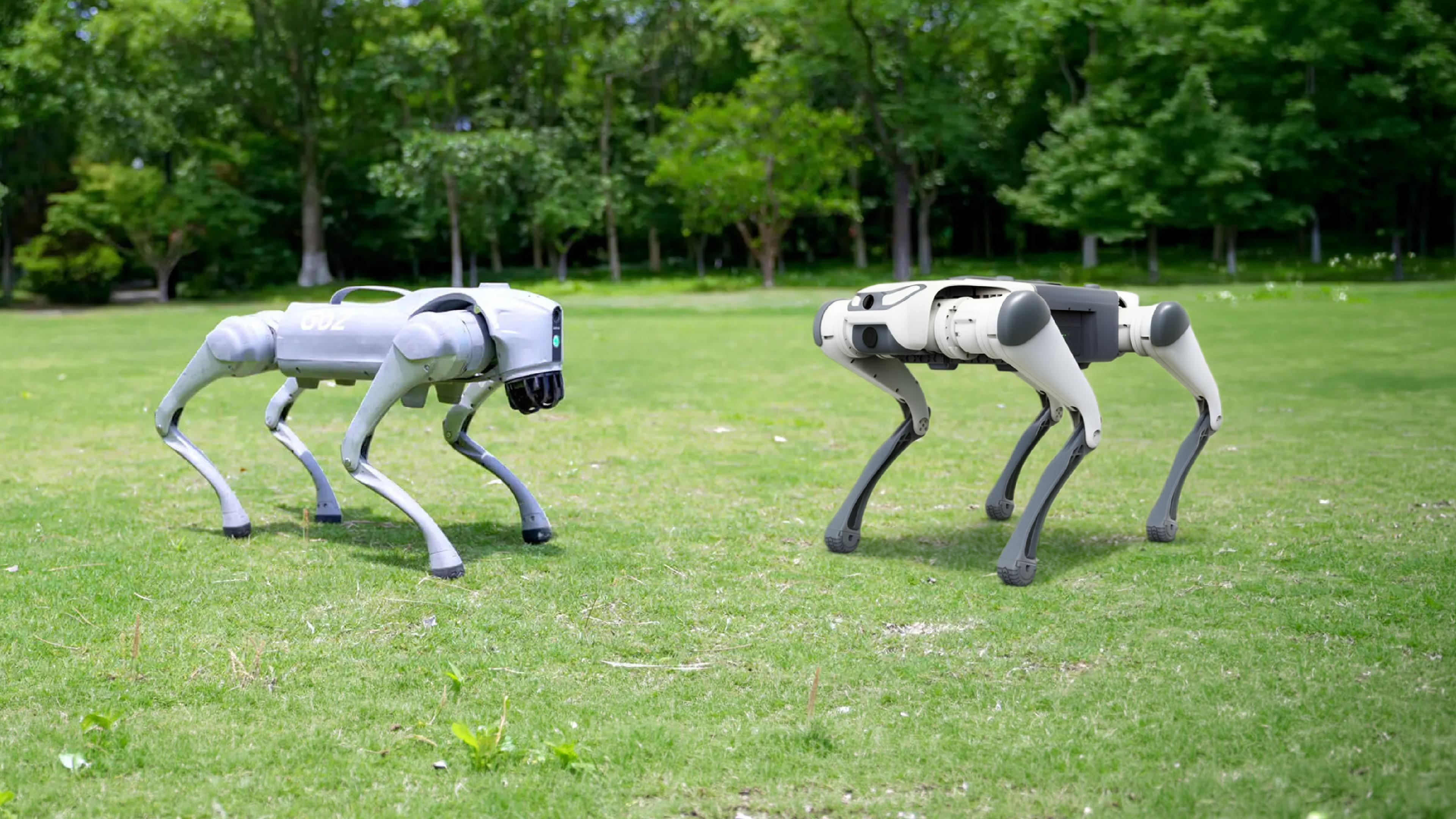
The DEEPRobotics Lite3 and Unitree Go2 EDU are small quadruped robots intended for use mainly in robotics research, autonomous-navigation systems development and AI testing and learning.
The DEEPRobotics Lite3 and Unitree Go2 EDU are small quadruped robots intended for use mainly in robotics research, autonomous-navigation systems development and AI testing and learning.
Each one offers four-legged mobility, autonomous navigation, obstacle avoidance, SDK access and ROS support.
Lite3 is a small form factor development platform that comes in a range of profiles including standard, Pro and LiDAR.
The record from 1 to 150 meters by Robot24 Unitree is stored as Go2 Edu Plus. It is equipped with 100 TOPS of NVIDIA Jetson Orin NX computing, and filled with perception equipment and extensive development interfaces.
At a Glance
| Metric | DEEPRobotics Lite3 | Unitree Go2 EDU |
|---|---|---|
| Robot type | Research / education quadruped | AI research quadruped |
| Release year | 2023 | 2026 Robot24 record |
| Weight | Approx. 12–13.5 kg | Approx. 15 kg |
| Degrees of freedom | 12 | 12 |
| Payload | Approx. 2.5–5 kg | Approx. 8 kg; maximum approx. 12 kg |
| Maximum speed | Approx. 2.2–4.0 m/s depending on variant | 3.7 m/s; up to 5 m/s maximum recorded |
| Runtime | 90– 120 minutes | 2–4 hours |
| Maximum slope | 40° | 40° |
| Step / obstacle height | Approx. 15– 18 cm | Approx. 16 cm |
| Vertical jump | Up to 0.3 m | Not separately recorded |
| Long jump | Up to 0.4 m | Not separately recorded |
| Autonomous navigation | Supported; LiDAR variant specifically recorded | Yes |
| Obstacle avoidance | Yes | Yes |
| SLAM | Development support | Yes |
| Terrain adaptation | Yes | Yes |
| Main AI compute | NVIDIA Jetson Xavier NX on Pro / LiDAR versions | NVIDIA Jetson Orin NX |
| AI compute performance | Not recorded | 100 TOPS |
| Camera | Wide-angle camera; depth/RGB depending on variant | HD wide-angle camera + Intel RealSense D435i |
| LiDAR | LiDAR variant available | 4D LiDAR L1; additional LiDAR options |
| IMU | Yes | Yes |
| Wi-Fi | Yes | Wi-Fi 6 |
| Ethernet | Yes | Gigabit Ethernet |
| ROS | ROS1 and ROS2 | ROS2 |
| SDK | Yes | Yes |
| Secondary development | Supported through SDK/API | Yes |
| Warranty | Not disclosed | 12 months |
| Price | Approx. US$2,890–18,270 depending on variant | Approx. US$16,000–22,500 |
| Availability | Commercially available | Commercially available |
How They Compare
Lite3 and Go2 EDU cater to a similar segment of the robotics market: small quadrupeds, aimed at developers, universities and robotics labs.
Lite3 and Go2 EDU cater to a similar segment of the robotics market: small quadrupeds, aimed at developers, universities and robotics labs.
DESPRobotics Lite3 has an estimated weight of 12 - 13.5kg, and an estimated payload of 2.5 - 5kg. The top speed of Deeprobotics Lite3 varies on the version. It ranges from 2.2 to 4m/s.
This record of locomotion is of climbing slopes 40, crossing steps 15-18, jumping vertically 0.3 m, long jump 0.4 m.
Lite3 features also include terrain adaptability, autonomous gait control, obstacle avoidance and autonomous navigation (LiDAR version). It can be equipped with NVIDIA Jetson Xavier NX computing platform for Pro and LiDAR versions. It offers support for ROS1 and ROS2, SDKs and APIs for secondary development and robotics research.
Unitree Go2 EDU The unitre record weighs around 15kgs and has around 8kgs payload weight capacity (max one measured around 12kgs).
Maximum speed 3.7 m/sec, maximum 5 m/sec Runtime of two to four hours compared to about 90-120 mins for Lite3.
Go2 EDU's computer and perception system also equipped with extremely powerful computing power. The record for the Robot24 includes the NVIDIA Jetson Orin NX providing about 100 TOPS, 4D LiDAR L1, Intel Real Sense D435i depth camera, HD wide-angle camera, IMU, foot-end force sensor and joint encoder.
Summary
Summary
Both robots have capable autonomous navigation, obstacle avoidance and SLAM research capabilities as well as reinforcement learning and sensor fusion and secondary robotics development.
DEEPRobotics Lite3 and Unitree Go2 EDU are Off-the-shelf quadruped development platform for research, education, SLAM, AI and autonomous-navigation experimentation.
Lite3 is the lighter platform and different configurations from cheaper development models to LiDAR models, has good dynamic mobility, including jump, climb slope, terrain adaptation and other functions, supported with ROS1/ROS2, SDK and API, etc.
Go2 EDU's recording payload, longer runtime, and more powerful integrated computing specification makes it especially suitable for highly capable AI and autonomous systems research, with features like its NVIDIA Jetson Orin NX, 100 TOPS of AI compute, 4D LiDAR, Real Sense depth camera, and broad development capabilities.
The primary difference is then the fact that Lite3 is the lightweight, configurable quadruped-Development System and Go2 EDU is a more robust AI research platform that has a higher payload, longer runtime and more processing power.
More articles on this topic
28 articles ReportStäubli FL1500 vs. VisionNav VNE30
 ReportIDMind AIDA vs. Reeman Nurse
 ReportAGIBOT G2 vs. EngineAI SE01
 ReportUBTECH Cruzr 1S vs. OrionStar GreetingBot Mini Robot: Which Retail Service Robot Fits Better?
 ReportDoog THOUZER THOUZER Standard vs. SPARQ Lift AL-450: Which Warehouse AMR Fits Better?
 ReportRobopreneur AI Security Robot (Johan & Jaguh) vs. IHMC Alex / Alexander: Who’s Better Suited to Patrol?
 ReportDonut Robotics Cinnamon Guide vs. AeiROBOT AIMY: Which Hotel Service Robot Fits Better?
 ReportBG1 (Pudu Robotics) vs. Servi Clean (Bear Robotics): Commercial Cleaning Comparison
 ReportG2 Genie (AGIBOT) vs. D7 (Pudu Robotics): Humanoid Comparison
 ReportServi (Bear Robotics) vs BellaBot (Pudu Robotics)
 ReportHolaBot (Pudu Robotics) vs. Foodie (Robint): Restaurant Service Comparison
 ReportPudu Robotics BG1 vs. VIGGO SC50 Pro Plus: Which Cleaning Robot Fits Your Facility?
Free Weekly
BUSINESS NEWS WEEKLY LETTER
The Weekly Letter for Robotics Professionals, Summarizing the Most Important Industry Moves, Launches, Deals and Signals.
120,000+ robotics professionals follow Robot24.com