AGIBOT Expedition A3 vs. Unitree H2
AGIBOT Expedition A3 and Unitree H2 are full-size bipedal humanoid robots developed for commercial applications, intelligent movement and embodied AI research. We compare their physical specifications, walking speeds, operating endurance, autonomous navigation and intended applications to examine how the two platforms differ.

November 9, 2026 by Business Desk Team
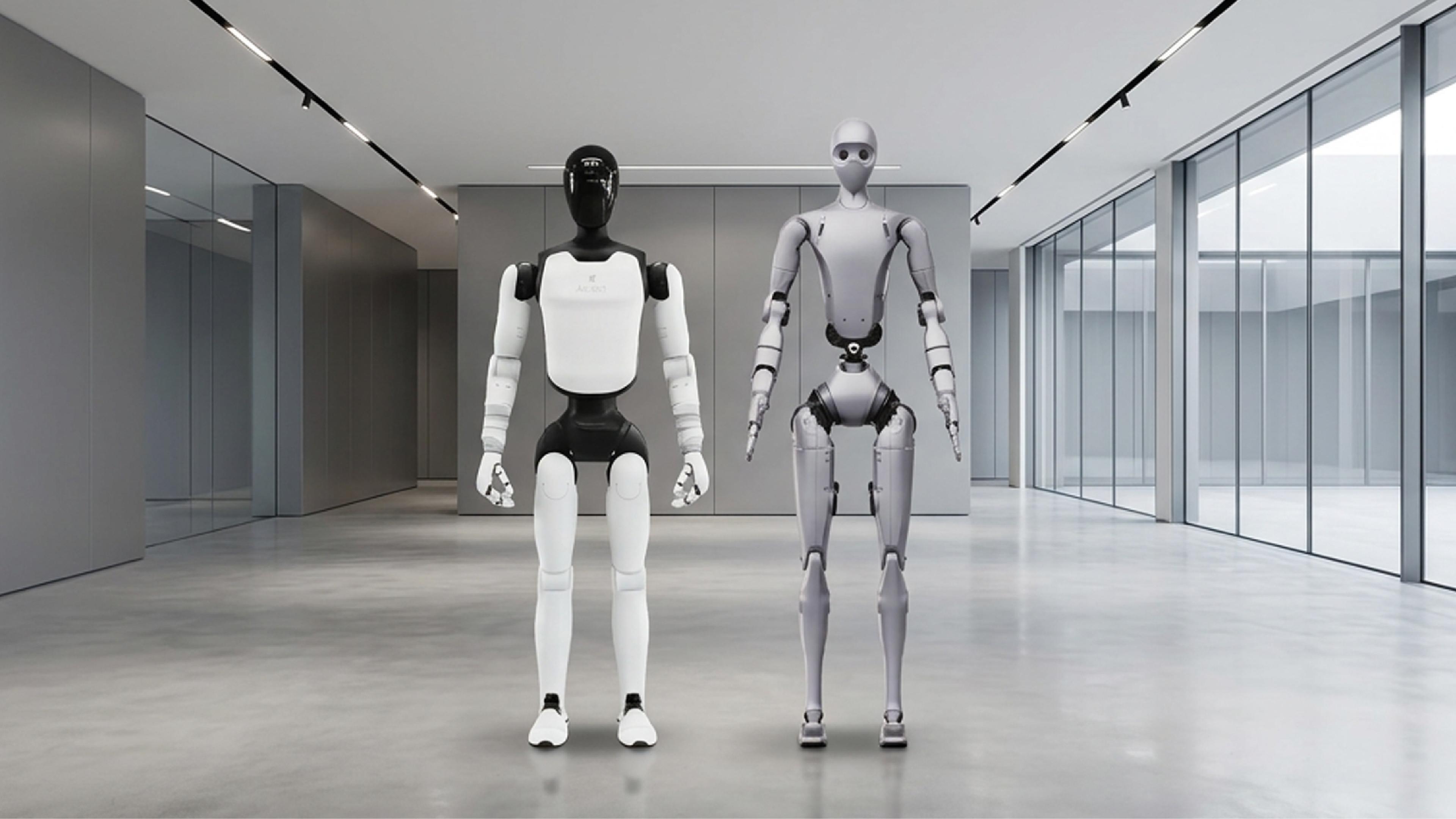
Humanoid robots are being designed for more and more tasks, like customer assistance, presence robot demonstration, manufacturing automation, and even embodied AI studies. Providers and developers are beginning to compare the physical design, mobility and endurance of machines of different sizes and capabilities, when selecting a candidate for deployment.
At A Glance
| Height | 175 cm | 180 cm |
|---|---|---|
| Walking Speed | 7 km/h | >3 m/s |
| Weight | 55 kg | ~70 kg |
| Autonomous Navigation | Yes | Yes |
| Availability | Commercially Available | Commercially Available |
| Cloud Connectivity | Supported | Supported |
| Dynamic Balance | Yes | Yes |
| Mobility Type | Bipedal | Bipedal Humanoid |
| Nationality | Chinese | Chinese |
| Runtime | Up to 8–10 h | Approximately 2–3 hours |
| Typical use | Retail & Showroom Operations, Service Applications, Research & Development | Industrial & AI Development, Research & Development, Education & Training |
| Status | Commercial | Commercial |
How They Compare
Commercial applications and research emphasis
Physical dimensions and design
Expedition A3 has a recorded height of 175 cm and weighs 55 kg. Unitree H2 stands 180 cm tall and weighs approximately 70 kg. H2 is therefore 5 cm taller and approximately 15 kg heavier based on the supplied records.
These differences may influence how the robots interact with workspaces, equipment and surrounding objects. A lighter robot may have different transportation and installation requirements, while a taller platform may provide a different working reach. However, height and weight alone do not determine operational performance.
Stability, joint configuration, actuator capabilities and weight distribution also influence how effectively a humanoid moves and interacts with its environment. Both robots use a full-size humanoid design intended to support bipedal movement.
Dynamic balance and movement control
Autonomous navigation
Both robots have autonomous navigation recorded among their capabilities. This is relevant to applications where humanoids need to move between locations without continuous manual control.
For Expedition A3, autonomous navigation may support movement through retail spaces, showrooms and other commercial environments. For Unitree H2, navigation capabilities may be relevant to robotics research and the development of autonomous physical tasks.
However, the supplied comparison data does not specify the complete sensor configurations or navigation methods used by either platform. It also does not establish directly comparable obstacle-detection performance, mapping accuracy or navigation reliability. Organizations should confirm how each robot navigates unfamiliar environments and whether autonomous movement is supported in the required operating configuration.
Battery endurance and operating runtime
Operating endurance represents another significant difference in the supplied records. Expedition A3 has a recorded runtime of up to 8–10 hours. Unitree H2 has a recorded runtime of approximately 2–3 hours.
These figures suggest that Expedition A3 may support longer operating periods between charging sessions. This could be relevant to commercial environments where robots are expected to remain active throughout extended service periods.
H2's recorded runtime may be sufficient for certain research sessions, demonstrations and development activities. However, the figures should not be interpreted as directly comparable without confirming their measurement conditions.
Runtime can vary considerably depending on whether a robot is standing, walking, performing manipulation tasks or executing computationally demanding workloads. An extended operating figure may reflect a different activity profile from a runtime measured during continuous movement.
Battery capacity, charging time and battery replacement arrangements are not included in the supplied comparison records. These details should be verified before assessing either robot's practical operating endurance.
Cloud connectivity and software integration
Both Expedition A3 and Unitree H2 have cloud connectivity recorded as supported. Cloud connectivity may enable data exchange, remote monitoring, software updates and other connected functions, depending on the robot's software configuration.
For commercial applications, connected services may be relevant to managing robot operations and maintaining software. For research and development, connectivity may support data collection, experimentation and the integration of AI systems.
However, cloud connectivity does not necessarily establish equivalent access to software development tools. The supplied records do not specify directly comparable APIs, SDKs or computing configurations.
Developers should confirm the available software interfaces, programming access and supported development environments before selecting either platform.
Retail, service, and industrial applications
Commercial availability and deployment
Both Expedition A3 and Unitree H2 are recorded as commercially available, with commercial status listed in the supplied data.However, commercial availability does not necessarily mean that every hardware configuration or software capability is immediately available in all markets.
Product editions, developer access, delivery schedules and technical support may vary. Businesses evaluating Expedition A3 should confirm its supported service applications, navigation capabilities and operational requirements.
Developers considering Unitree H2 should verify the available research configuration, programming interfaces and motion-control capabilities. For either platform, practical deployment requires consideration of safety, maintenance, operating space and the tasks the robot is expected to perform.
Summary
AGIBOT Expedition A3 and Unitree H2 are full-size bipedal humanoid robots developed for commercial applications, intelligent movement and embodied AI research.
Expedition A3 is worth considering for organizations exploring humanoid robots in retail, showroom and service environments. Its recorded weight of 55 kg, walking speed of 7 km/h and runtime of up to 8–10 hours provide a set of specifications relevant to commercial deployment planning.
Unitree H2 may appeal to developers and researchers focused on dynamic movement, industrial AI and humanoid robotics experimentation. Its approximately 70 kg body, recorded movement speed exceeding 3 m/s and research-oriented applications reflect a different development focus.
Both robots support autonomous navigation, dynamic balance and cloud connectivity.
The choice depends on the intended application, required movement capabilities, operating endurance and available development tools.
This comparison is based on ROBOT24.com market-research data records rather than controlled performance testing. Walking speed, runtime, autonomy and commercial availability should be verified against configuration-specific manufacturer documentation before drawing conclusions about overall performance.
More articles on this topic
144 articles ReportRichtech DUST-E S vs. Gausium Phantas
 ReportEngineAI SE01 vs. AGIBOT RAISE A1ReportRichtech DUST-E S vs. KEENON KLEENBOT C20
 ReportPUDU PuduBot 2 vs. OrionStar LuckiBot Pro
 ReportUnitree G1 vs. EngineAI PM01
 ReportKEENON DINERBOT T11 vs. PUDU KettyBot Pro
 ReportAGIBOT D1 Pro vs. Unitree Go2 Pro
 ReportKEYi Tech Loona vs. WEILAN BabyAlpha A2
 ReportPUDU BellaBot Pro vs. KEENON DINERBOT T11
 ReportBear Robotics Servi Plus vs PUDU BellaBot Pro
 ReportUnitree G1 vs. AGIBOT X2
 ReportPUDU KettyBot Pro vs. Bear Robotics Servi Q
BUSINESS NEWS WEEKLY LETTER
The Weekly Letter for Robotics Professionals, Summarizing the Most Important Industry Moves, Launches, Deals and Signals.