AgiBot Expedition A3 vs. UBTECH Walker C
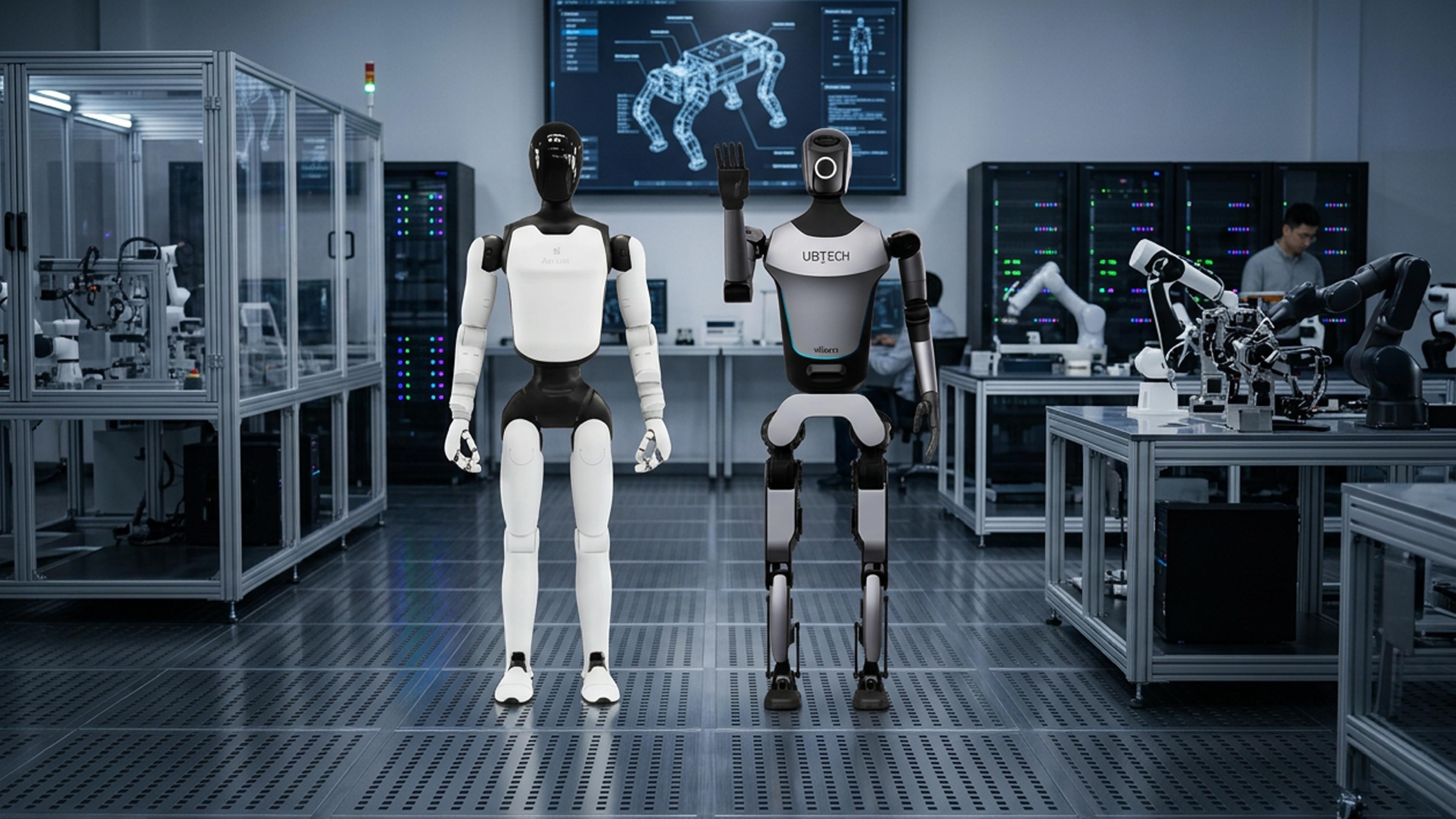
AgiBot Expedition A3 and UBTECH Walker C are both full-size bipedal humanoid robots compared here on mobility, operating endurance, manipulation capabilities, AI-driven interaction, sensor systems and commercial deployment.

November 10, 2026 by Business Desk Team
Introduction
AgiBot Expedition A3 and UBTECH Walker C are compared as full-size bipedal humanoid robots intended for human-designed and human-centric areas. They both are designed to move the capabilities of robots outside typical industrial work cells, but advertised features suggest different starting points for each.
Robot features; AgiBot Expedition A3 is targeted for commerce, retail, entertainment and research use, with capabilities such as long operational time, high onboard AI computing power and end effectors optimized for Dexterous hands. UBTECH Walker C is indicated as an industrial scale humanoid platform, optimized for manufacturing and logistics scenarios. The key question is whether each robot's mobility, manipulation, sensing and software capabilities are sufficiently documented and mature for the intended workflow.
At a Glance
| Metric | AgiBot Expedition A3 | UBTECH Walker C |
|---|---|---|
| Robot type | Full-size bipedal humanoid robot | Full-size bipedal humanoid robot |
| Best-fit use cases | Commercial performances, retail, interactive entertainment and research | Industrial demonstrations, logistics-oriented applications, reception and guided interaction |
| Height | 173 cm (current manufacturer documentation) | 163 cm |
| Weight | Approximately 55 kg | 43 kg |
| Maximum speed | 1.2 m/s in developer documentation | Up to 6 km/h (manufacturer claim) |
| Runtime | Up to 10 hours (manufacturer-rated endurance) | 2 hours walking; 4 hours standing |
| Charging time | Up to 2 hours | 1.5 hours |
| Degrees of freedom | 31 active DOF without optional dexterous hands; configuration-dependent | 20 DOF |
| Arm payload | 5 kg per arm | Not specified in the official product specification reviewed |
| Navigation / sensing | Dual binocular cameras; UWB positioning; autonomous navigation and obstacle avoidance | Two RGB-D cameras, two structured-light 3D cameras and high-precision IMU |
| Connectivity | Wi-Fi, Bluetooth and 4G/5G | Wi-Fi and Bluetooth |
| AI / interaction | Human-machine interaction and support for further development; WorkGPT listed in supplied record | Self-developed embodied interactive large model; multilingual interaction and voice broadcasting |
| Distinctive capabilities | 1,152 Wh battery, 15° slope mobility, 25 cm obstacle-height capability and optional dexterous hands | 6 km/h advertised speed, 20 DOF articulation and guided-tour / reception capabilities |
| Commercial status | Commercial product; developer and standard configurations available | Commercial product; demonstrated in public-facing deployments |
| Key limitation / caveat | Published specifications vary by configuration; optional hand capabilities should not be treated as standard | Shorter walking endurance; industrial manipulation payload is not established by the reviewed official specification |
How They Compare
Business function: AgiBot Expedition A3 is ready for commercial operations, entertainment, retail and research. Its extended announced endurance and optional dexterous hands align to demonstrations, interactive spaces and flexible humanoid roles. UBTECH Walker C as a humanoid platform for industrial/commercial environments, with documented observations in reception, show guide and public interaction. Its actual applicability to production and logistics is a function of its manipulatory and other integrations by role.
Mobility and endurance: AgiBot Expedition A3 has an advertised endurance of up to 10 hours and up to 2 hours of charging time. The documentation from the manufacturer specifies a top speed of 1.2 m/s, a top obstacle height of 25 cm and a slope operation up to 15°. The documentation from the manufacturer specifies a top speed of 1.2 m/s, a top obstacle height of 25 cm and a slope operation up to 15°. Walker C specifies a walking operation of 2 hours and a standing operation of 4 hours and a charging time of 1.5 hours. UBTECH states a maximum speed of 6 km/h. Those three numbers use different conditions of operation: Standing endurance should not be compared directly with continuous walking endurance.
Manipulation and dexterity: AgiBot Expedition A3 states 7 degrees of freedom per arm and a rated payload of 5 kg per arm in its developer documentation. Optional dexterous-hand configurations make the total number of hand degrees of freedom optional and contingent on which you order. Walker C has 20 total degrees of freedom with a claimed arm wingspan of 500 mm; its official product specification does not set an arm payload comparable to that of Expedition A3. This renders A3's published manipulation capabilities more comprehensive but not independently superior.
Navigation and perception: AgiBot Expedition A3 features binocular cameras, UWB localisation and autonomous navigation with obstacle avoidance. Its documentation defines a positioning accuracy of ±10cm and ±10°. Walker C employs two RGB-D and two structured-light 3D cameras, plus a high-precision inertial measurement unit. Its U-SLAM navigation algorithm enables autonomous localisation and tour-route navigation. Both platforms' perception and mobility systems are designed for dynamic and cluttered environments but should be tested for repeatability via object recognition, localisation and obstacle avoidance tests, and recovery from navigation errors tests.
AI, interaction and deployment: AgiBot platform enables future development and communication versatility of communication (WLAN, BT, 4G/5G). Record supplied shows WorkGPT, however, verify whether this specific integration is included for the ordering configuration. Walker C's manufacturer emphasizes independent creation of the embodied interactive large model, multilingual interaction, voice broadcasting and custom question-and-answer service. Its public demonstrations recorded so far has shown a, therefore, interactive reception and a guided experience. For either robot, verify whether task AI model, software API, fleet management and integration with third-party system has already built-in or need additional development.
Important Qualification
AgiBot Expedition A3:The default Robot24 record provides a height of 175cm, a top speed of 7km/hr, 49+ DOF and 200 TOPS (near identical specs as A1). According to the latest Agi Bot documentation, the newer robot can stand at 173 cm and weigh 55 kg. It has 31 active DOF (no optional hands) and can reach a top speed of 1.2 m/s (almost 5 times faster than listed above, in the developer guide). The official A3 webpage claims up to 10 hours of endurance. Ensure that you have the right model and build before publishing the higher values!
UBTECH Walker C: Official spec is 20 DOF, 43 kg, 163cm and 2 hours of walking operation. Speed of 6 km/h claimed is not the working speed. This product specification that we have checked does not list an arm payload to compare with.
Both robots: End-users experienced limited industrial productivity, no guarantee of collaborative safety and no assurance of consistent application performance. End-user experience on the industrial robot Confirm payloads, safety functions, required software access, maintenance needs and integration cost in the manufacturer provided documentation and at a test site.
Summary
Select AgiBot Expedition A3 if a longer advertised endurance, 5 kg-per-arm payload, and optional dexterous hands and commercial interaction more closely align with the application. Consider UBTECH Walker C if a 20-DOF humanoid platform with multiple languages for interaction, autonomous guided-tour functionality, and public-facing demos more precisely meet the deployment needs.
AgiBot has the stronger published endurance and more detailed arm-payload specifications in the documentation reviewed. Walker C provides a well-documented interaction and guided-service proposition, and a higher advertised maximum speed. This comparison is targeted to be fit-for-purpose, not performance controlled. Validate configurations, manipulation requirements, safety measures and real-world operational endurance before expressing superiority.
This comparison is based on ROBOT24.com market-research data records and manufacturer-reported specifications rather than controlled performance testing.
More articles on this topic
144 articles ReportRichtech DUST-E S vs. Gausium Phantas
 ReportEngineAI SE01 vs. AGIBOT RAISE A1ReportRichtech DUST-E S vs. KEENON KLEENBOT C20
 ReportPUDU PuduBot 2 vs. OrionStar LuckiBot Pro
 ReportUnitree G1 vs. EngineAI PM01
 ReportKEENON DINERBOT T11 vs. PUDU KettyBot Pro
 ReportAGIBOT D1 Pro vs. Unitree Go2 Pro
 ReportKEYi Tech Loona vs. WEILAN BabyAlpha A2
 ReportPUDU BellaBot Pro vs. KEENON DINERBOT T11
 ReportBear Robotics Servi Plus vs PUDU BellaBot Pro
 ReportUnitree G1 vs. AGIBOT X2
 ReportPUDU KettyBot Pro vs. Bear Robotics Servi Q
BUSINESS NEWS WEEKLY LETTER
The Weekly Letter for Robotics Professionals, Summarizing the Most Important Industry Moves, Launches, Deals and Signals.