Why Turning a Doorknob is Robotics’ Hardest Test
Opening a door remains a complicated problem for many bots, but technology is fast improving.

October 31, 2026 by Jeremy
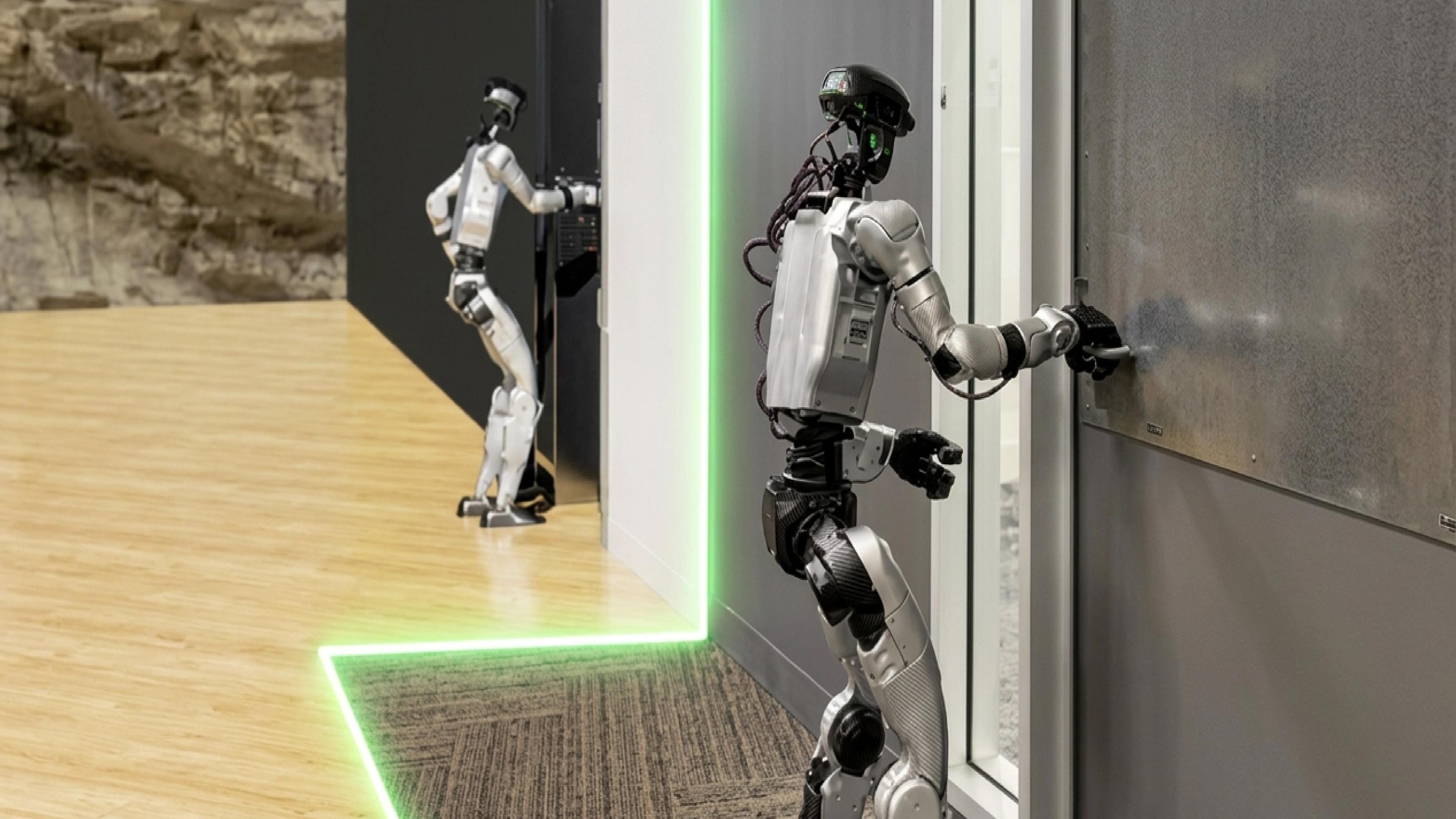
We turn doorknobs daily without thinking about it, but for a robot it can be impossible. Our hands, eyes, and brain work together naturally, but robots don’t have the same hardware. For them, the task is almost herculean.
Robots don’t have flesh, and the brain tells muscles how much force to use. They use sensors, motors, and onboard AI to decide what to do. However, they have to analyze every doorknob before they can open it. Here’s why they can still struggle to perform the simple task.
Why Is Opening a Doorknob So Difficult?
Hand-eye co-ordination is a skill we take for granted, but like a muscle, it atrophies if we don't use it. This shows how complicated the process actually is, even if we use it all the time. A robot has to make sense of the doorknob and how much distance to move. Doing so already requires understanding what type of doorknob it is and how far it must move.
Once it has that information, the robot’s brain must also know how much force it needs to turn a doorknob or press it down. After that, the robot has to turn the doorknob while pushing or pulling the door at the same time. Plus, it still has to adapt to changes that occur while moving things, not to mention other factors like angle, wind, and floor inclination.
The simpler a process, the easier it tends to be. However, based on what we mentioned above, opening a door isn’t a simple process for machines. Our bodies have years of practice baked in, which makes it easier for us. A robot has to analyze everything from scratch and form the proper solution. AI and machine learning can help, but a robot without a brain can’t adapt on its own.
While AI can learn and adapt, what happens if it gets the action wrong? The robot must retry until it succeeds, but doing so wastes time and energy. It has to make millions of calculations while we open them without even thinking. Fortunately, the technology has been improving.
Not Impossible, but Difficult
We mentioned that robots find it difficult to open doors, but it isn’t impossible. A team from Carnegie Mellon University consisting of Russell Mendoca, Kenneth Shaw, Deepak Pathak, and Haoyu Xiong designed a robot butler that can open doors autonomously. This robotic butler is more of an arm connected to a rectangular body, but it still gets the job done via machine learning. It also costs $25,000.
According to the team, the robot has a 95 percent success rate, but it can sometimes take up to 30 minutes to open the door. Fortunately, it can use its knowledge of other doors to open a new one more quickly. It even opens drawers.
NVIDIA also has its own solution for robots to open doors. Its DoorMan system can help humanoid robots solve this herculean task just using its onboard cameras. The company installed the DoorMan system on a Unitree G1 humanoid robot and watched it open doors about 25 percent faster than humans. It’s not perfect, but it’s quite the leap compared to older technology.
Behind DoorMan’s 83 percent success rate is a “procedural generation pipeline that randomizes physical and visual properties of articulated objects” in NVIDIA’s Isaac Lab framework. Since the system was trained on an unlimited number of possibilities, it was able to open a door with lower failure rates.
A Long Way to Go
As mentioned earlier, robots need plenty of data to help them open doors, and there are some other technologies that can help them improve. One option is electronic skin, which simulates human skin and gives a robot even more crucial data to help it apply the right amount of pressure and force. With AI, it can learn how to open doors even faster, even if electronic skin isn’t as good as human skin yet.
Right now, a robot opening a door is more a trick than a function. They still struggle with the task and aren’t ready to replace humans at this job yet. Even so, the technological development that arises from solving this problem is incredible. Keen Technologies founder John Carmack puts it best when referring to robots performing small tasks like opening doors:
“Yes, you could build and train a specialist robot to do that today, but there is a very long way to go to replace the full range of human capabilities. Near term doomer scenarios should stop at “secretly controlling humanity” instead of “wiping humanity out”
We don’t need a robot that only opens doors; just like a doorman is also a hotel’s greeter and can help with other services. Perhaps the day a reliable generalist house robot that can open doors and more will come soon, but today is still not the day.
More articles on this topic
247 articles ReportWhat it Really Costs to Own a Personal Assistant Robot at Home
 ReportAgiBot Deploys Six Genie G2 Humanoids for a 24-Hour Convenience Store Challenge
 ReportFF EAI Robotics Reports 1,168 Robot Deliveries Since February After Record October Sales
 ReportUBTECH Launches Thinker-Sim to Train and Test Robots in Virtual Environments
 ReportAgility Robotics Expects $465 Million Gross Capital Raise in Proposed Nasdaq Listing
 ReportHD Hyundai Robotics Says Palantir AI Cuts Robot Problem-Solving Time by 63%
 ReportMeta Builds Humanoid Robot Prototype with China's Fourier, Begins Work on Second Version
 ReportThe Ultimate Blind Spot: How Rescue Robots Sense the Invisible
 ReportCan Powered Exoskeletons Make Physically Demanding Jobs Easier?
 ReportRobotic Insects Reveal New Possibilities for Tiny Flying Machines
 ReportETH Zurich Engineers Create Tiny Robots Powered by Mouse Muscle
 ReportRobots that Explore the Great Pyramid's Narrow Shafts
BUSINESS NEWS WEEKLY LETTER
The Weekly Letter for Robotics Professionals, Summarizing the Most Important Industry Moves, Launches, Deals and Signals.