The Ultimate Blind Spot: How Rescue Robots Sense the Invisible
While human eyes can fail in the chaos of disaster zones, rescue robots leverage technologies like LiDAR, echolocation, radar, and thermal imaging to pierce through smoke, darkness, and debris – saving critical seconds when life and death hang in the balance.

October 31, 2026 by Jeremy
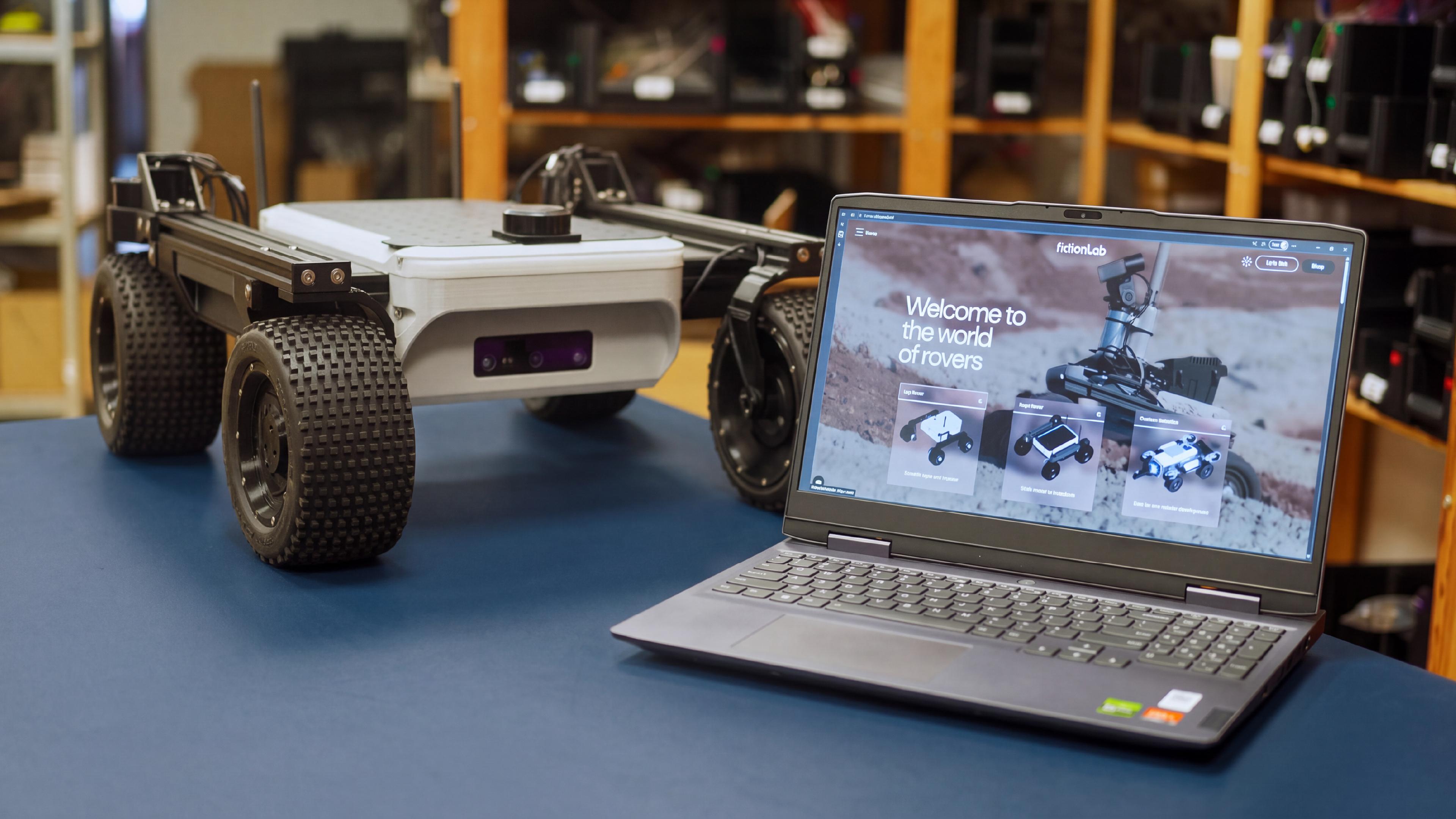
Robots have a superpower that human first responders don’t: the ability to strip away smoke, ash, and pitch darkness to see a clear path forward.
When disaster strikes, whether it is a raging wildfire or a toxic chemical spill, human senses are quickly overwhelmed. Rescue robots, however, navigate these environments with ease by relying on a sophisticated set of sensors and real-time machine learning to decode the invisible world.
LiDAR
Light detection and ranging (LiDAR) is one of the top optical sensors used by simultaneous localization and mapping (SLAM) systems, according to Polish robot manufacturer fictionlab. LiDAR works well over long distances regardless of weather or lighting, although fog and heavy cloud cover reduce its effectiveness. With LiDAR, a rescue robot can see in the dark and through smoke.
Think of LiDAR as superhuman vision. You shoot beams of light and measure how long they take to return. This information lets you map out the surrounding area before making the next move. LiDAR can create either 2D or 3D reconstructions of any area it can scan.
Echolocation
Bats are the most cited example of creatures using echolocation, but did you know other animals like dolphins, whales, oilbirds, and even shrews use it? These animals don’t have poor vision, but they use sound waves to locate objects around them. Instead of shooting light, they make sounds that bounce around, just like LiDAR. Think of echolocation as the sound-based version, if that makes sense.
The Worcester Polytechnic Institute’s Perception and Autonomous Robotics Group (PEAR) unveiled a new robot, Saranga, in 2026. It uses bat-inspired echolocation, a low-power perception mode, which also lets Saranga be built smaller than other flying robots. Normally, LiDAR- and radar-based robots use more power and must be bigger to house more battery capacity.
According to the group, in a real search-and-rescue mission, a few more seconds of flight time “could be the difference between life and death for a survivor.” That’s why echolocation remains a viable technology for rescue robots.
Radar Cameras
Radio detection and imaging (radar) predates LiDAR by decades, but we still use it today. Unlike LiDAR, radar uses radio waves instead of light to detect objects. Radio waves bounce back to the sensor, allowing a robot to make sense of the surrounding area. Radar is better for long-range detection than LiDAR and also works better in adverse weather. As a result, some robots still use it.
Professor Mingmin Zhao of the University of Pennsylvania designed a robot that uses 3D radar. With onboard AI, it can map its environment in 3D. Another robot, SmokeBot, combines 3D radar, LiDAR, and thermal imaging. With all of this on one platform, SmokeBot can enter dangerous areas before humans do. These robots aren’t at their best yet, but over time, the technology will mature enough to be reliably deployed in real-world situations.
According to Professor Zhao, the idea behind radar is to “help robots obtain superhuman vision – to see in scenarios where human eyes or traditional visual sensors cannot.” Another analogy is that radar and LiDAR function like invisible flashlights, but they aren’t the only sensors robots use.
Thermal Imaging Cameras
Infrared light (IR) is part of the electromagnetic spectrum, just like radio waves are. Thermal cameras operate in three main wavelength ranges: short-wave IR, mid-wave IR, and long-wave IR. They each have different advantages.
A Norwegian-Japanese collaboration for a project called CURSOR developed the Soft Miniaturised Underground Robotic Finders, or SMURF for short. SMURF has lights, an infrared camera and other sensors that help it distinguish between humans and animals, and between living and dead people. SMURF is well-suited for rescue operations because of its small size and affordable price, but it’s still under further development.
Deep Robotics’ X30 rugged quadruped robot is designed for search-and-rescue operations. While it looks like a typical robot dog, it comes equipped with IR cameras, LiDAR, acoustic sensors, and can even analyze gas compositions. This makes it ideal for toxic environments where other rescue robots may struggle. The X30 can even transport supplies like oxygen cylinders in case the rescue team needs more time to reach trapped people.
One Sensor or More?
Some of the rescue robots we mentioned above have only one sensor, but many deployed models use multiple sensors to see through smoke. More ways to see in the dark or in harsh conditions increase the chances of finding victims trapped inside a building. If the area is too polluted, the robot can switch from LiDAR to radar. Infrared is also great for locating people, as the body’s heat levels will likely differ from the surroundings.
Humans are still incredible at seeing things, but robots have the upper hand with non-visible light. This is why they can help rescue operations go more smoothly.
More articles on this topic
247 articles ReportWhat it Really Costs to Own a Personal Assistant Robot at Home
 ReportAgiBot Deploys Six Genie G2 Humanoids for a 24-Hour Convenience Store Challenge
 ReportFF EAI Robotics Reports 1,168 Robot Deliveries Since February After Record October Sales
 ReportUBTECH Launches Thinker-Sim to Train and Test Robots in Virtual Environments
 ReportAgility Robotics Expects $465 Million Gross Capital Raise in Proposed Nasdaq Listing
 ReportHD Hyundai Robotics Says Palantir AI Cuts Robot Problem-Solving Time by 63%
 ReportMeta Builds Humanoid Robot Prototype with China's Fourier, Begins Work on Second Version
 ReportWhy Turning a Doorknob is Robotics’ Hardest Test
 ReportCan Powered Exoskeletons Make Physically Demanding Jobs Easier?
 ReportRobotic Insects Reveal New Possibilities for Tiny Flying Machines
 ReportETH Zurich Engineers Create Tiny Robots Powered by Mouse Muscle
 ReportRobots that Explore the Great Pyramid's Narrow Shafts
BUSINESS NEWS WEEKLY LETTER
The Weekly Letter for Robotics Professionals, Summarizing the Most Important Industry Moves, Launches, Deals and Signals.