UBTECH Launches Thinker-Sim to Train and Test Robots in Virtual Environments
UBTECH's Thinker-Sim rebuilds real factories and showrooms in 3D, then lets robots practice and get tested there before facing the real thing.

November 3, 2026 by Dr Maulik Vyas
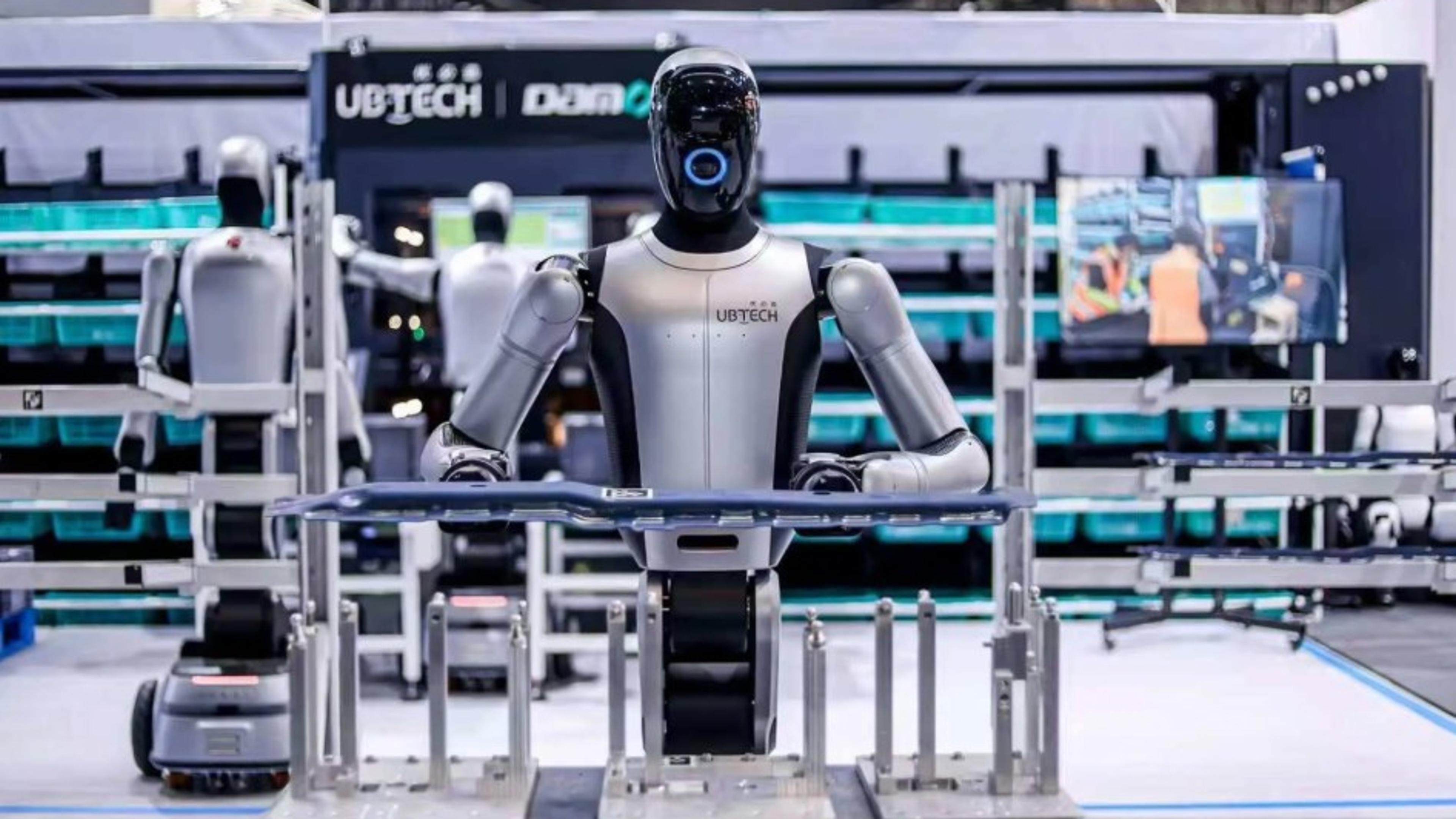
UBTECH has launched Thinker-Sim, a simulation platform where robots can practice, and get graded, in a virtual world before they touch a real one. The Shenzhen-based robot maker announced it on Monday.
The platform is built around an approach called Real2Sim2Real. A real place gets scanned and rebuilt digitally, robots train inside that copy, and what they learn is then tested back in the real world. UBTECH says Thinker-Sim covers all of it in one system: digitizing real scenes, producing synthetic training data at scale, and evaluating robot skills.
The problem it's chasing is a familiar one. Collecting real data one robot at a time is slow and expensive. Building a good simulated environment is complicated, and checking an algorithm can drag on for ages. UBTECH's answer is to let simulation carry most of that load.
Scene rebuilding is the first piece. The company uses its own Thinker-GS algorithm to turn real scans into detailed 3D scenes, plus an automated process that produces simulation-ready assets. UBTECH says it can handle places such as industrial factories and commercial showrooms.
Data is the second piece. Embodied AI models need huge amounts of varied, high-quality examples, so UBTECH built its own rendering engine and a massively parallel simulation setup. By the company's numbers, rendering efficiency is up 67.3 percent, a single eight-GPU node can produce about 390 hours of simulation data a day, and communication efficiency has improved by more than 400 percent.
Testing comes third. Thinker-Sim includes a unified benchmark for perception, navigation and manipulation, so different robot algorithms and models can be compared on equal terms. To copy the messiness of real life, it randomizes things like scenes, lighting, textures and materials.
The platform is also meant to be easy to pick up. Standard task templates start with one click and stream live video, and a visual, zero-code workflow builder is said to fit more than 90 percent of the target simulation scenarios. A built-in assistant called Ulab-Agent lets users create scenes, set up environments and schedule tasks by typing in plain language.
UBTECH says it will keep strengthening the foundation capabilities behind its embodied AI models. It wants Thinker-Sim to serve as infrastructure for putting humanoid robots to work at scale in industrial and commercial settings.
The platform enters a field where Nvidia's Isaac Sim is already well established. The performance figures in this announcement come from UBTECH, and the company hasn't released independent test results. The real measure will be how closely robots trained in Thinker-Sim perform once they leave the virtual world.
More articles on this topic
247 articles ReportWhat it Really Costs to Own a Personal Assistant Robot at Home
 ReportAgiBot Deploys Six Genie G2 Humanoids for a 24-Hour Convenience Store Challenge
 ReportFF EAI Robotics Reports 1,168 Robot Deliveries Since February After Record October Sales
 ReportAgility Robotics Expects $465 Million Gross Capital Raise in Proposed Nasdaq Listing
 ReportHD Hyundai Robotics Says Palantir AI Cuts Robot Problem-Solving Time by 63%
 ReportMeta Builds Humanoid Robot Prototype with China's Fourier, Begins Work on Second Version
 ReportWhy Turning a Doorknob is Robotics’ Hardest Test
 ReportThe Ultimate Blind Spot: How Rescue Robots Sense the Invisible
 ReportCan Powered Exoskeletons Make Physically Demanding Jobs Easier?
 ReportRobotic Insects Reveal New Possibilities for Tiny Flying Machines
 ReportETH Zurich Engineers Create Tiny Robots Powered by Mouse Muscle
 ReportRobots that Explore the Great Pyramid's Narrow Shafts
BUSINESS NEWS WEEKLY LETTER
The Weekly Letter for Robotics Professionals, Summarizing the Most Important Industry Moves, Launches, Deals and Signals.