Can Powered Exoskeletons Make Physically Demanding Jobs Easier?
Powered exoskeletons can make physically demanding jobs easier by reducing strain on workers’ muscles and backs. Studies show they can lower muscle strain by 10-60 percent, depending on the suit and task.

October 30, 2026 by Dr Maulik Vyas
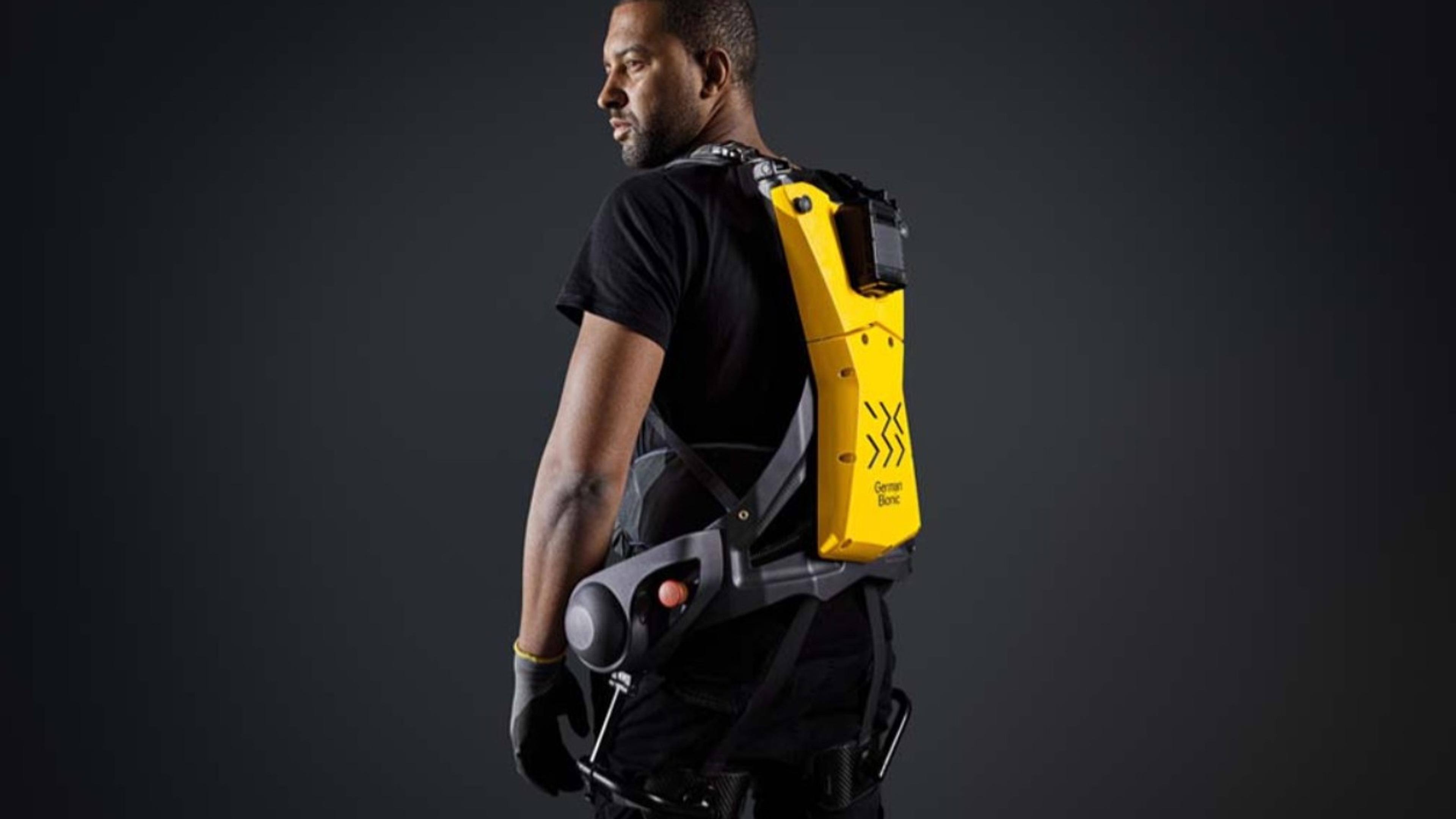
Lifting a heavy box once is easy. Lifting it again and again, eight hours a day, for years, is how backs wear out. Exoskeletons are built for that second kind of lifting, and a few can be rented by the month.
Let’s learn what they are and how they function.
Passive and Powered Exoskeletons
There are two families. Passive exoskeletons have no motors. They use springs, counterweights and clever frames to move a load onto the body's stronger muscle groups. Powered ones add electric motors or pneumatic systems that push back, so the machine does part of the work.
The difference matters. German Bionic, which sells a powered suit, argues that passive frames merely shift forces to other parts of the body. Take that with a grain of salt, since they sell the powered kind, but the logic is easy to follow. A spring has to put the force somewhere. A motor can add some.
German Bionic Cray X
The Cray X is a back-support suit. Its fourth generation has a lightweight carbon fiber frame and two servo motors that offset lifted loads of up to 28 kilograms. A removable battery is rated for about eight hours on a charge, and the wearer can adjust how much help the suit gives. There's also an augmented reality visor, the Cray Visor, which puts information over the worker's view of the task.
German Bionic sells it as a service. Rates for corporate customers started at €699 a month, according to one report. That's a recurring fee per suit, which a manager will weigh against the cost of back injuries.
Weight and Price
A suit that helps you lift also has to be carried around. Researchers comparing back exosuits put the Cray X at about 7 kilograms and a similar active suit, XoTrunk, at 8. Some passive suits come in at about 3. Those same researchers point to the high cost of active suits as a drawback, which helps explain why subscriptions are popular.
For a worker who bends and lifts all day, a few kilograms on the hips isn't nothing. The trade only works if the suit takes off more load than it adds.
Sarcos Guardian XO
Sarcos Guardian XO is built for the whole body. In one study, researchers gave five healthy men an early prototype and had them do two simulated industrial jobs, including moving an 11.3-kilogram load with one arm. Depending on the muscle group, using the suit gave lower or similar muscle activity.
It was a small, preliminary study. Participants trained for only 3 to 5 sessions over two or three weeks, and there was just one prototype size, which didn't fit everyone equally well. Read it as an early look, not a verdict.
Construction and Warehouse Use
Construction work is hard on backs. Low back injuries are common on building sites, where crews spend their days lifting, carrying, bending and kneeling. Powered suits have been tried for overhead drilling, installation work, material handling and concrete finishing. Warehouses and logistics fit the same pattern, since so much of the job is repeated lifting.
One review of back exosuit research found they reduce back muscle load by 10 to 40 percent. The same review mentions an estimate that wearing one could lower the risk of low back disorders by about 20 percent.
What Studies Found
Results vary because tasks, suits and methods vary. A study of the Cray X found that muscle activity dropped when the suit gave maximum support, and the more support the suit gave, the lower the muscle activity. Workers also rated the effort as lower. A broader review noted that in 22 of 27 studies, back muscle activity fell significantly with an exoskeleton.
A study led by Professor Herbert Schuster and published by German Bionic reported an average 48 to 50 percent drop in strain on lower back muscles, with peaks of 66 percent. Oxygen use fell by more than 15 percent, and the highest heart rate fell by about 15 percent during lifts of up to 25 kilograms. Since the company shared those numbers, an independent check would be welcome.
Another study, this one by researchers working on construction tasks, found powered back suits cut back and abdominal muscle activity by about 60 percent on average. They also lowered metabolic cost by 17 percent and ergonomic risk by 50 percent, without hurting stability.
Can they make hard jobs easier?
Well, for lifting, the numbers lean yes; for a full shift of bending, kneeling and walking with a battery strapped on, fewer studies exist. Hence, the best verdicts may come from the people wearing them.
More articles on this topic
239 articles ReportWhat it Really Costs to Own a Personal Assistant Robot at Home
 ReportRobotic Insects Reveal New Possibilities for Tiny Flying Machines
 ReportETH Zurich Engineers Create Tiny Robots Powered by Mouse Muscle
 ReportRobots that Explore the Great Pyramid's Narrow Shafts
 ReportA Little Company, Courtesy of a Robot
 ReportA Humanoid Walks into a New York Park
 ReportRailway Inspection Robots Search for Defects in Tracks
 ReportChina's Humanoid Supply Chain Moves Toward Industrial Production
 ReportCompanionship now comes with a Charging Cable
 ReportCould a Robotic Guide Help Blind Travelers Navigate Public Spaces?
 ReportThis Robot Finds Cracks and Fixes Them
 ReportXPENG's IRON Humanoid Adapts to Changing Human Gestures in Real Time
BUSINESS NEWS WEEKLY LETTER
The Weekly Letter for Robotics Professionals, Summarizing the Most Important Industry Moves, Launches, Deals and Signals.