Sanctuary AI Hits 99.5% Success in Factory Robot Test
Sanctuary AI proved that AI-powered robots can do the trickiest jobs in the car manufacturing industry.

June 24, 2026 by Carl
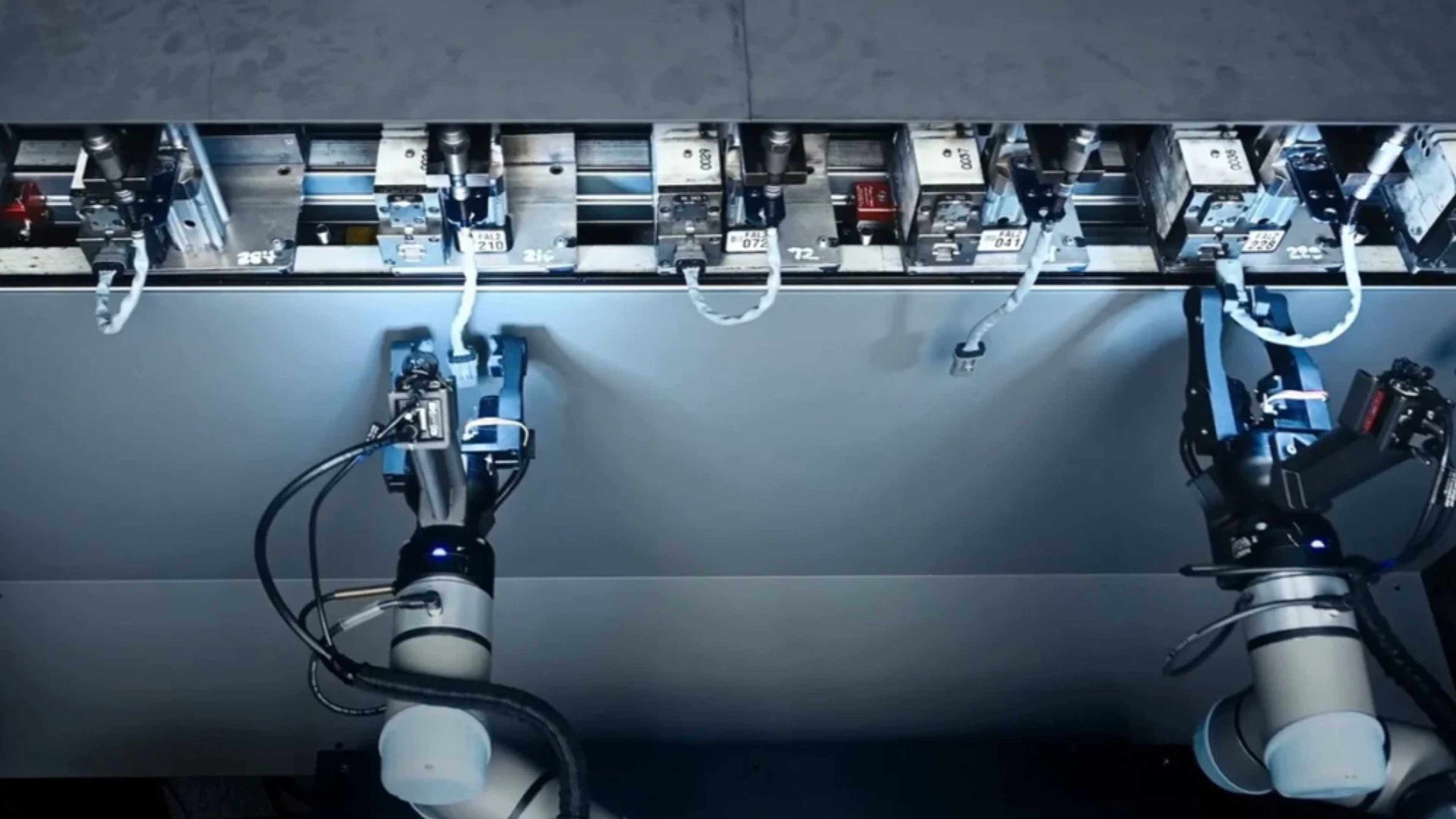
Factories all around the world are facing workforce shortages, but still, they are expected to increase production. There is constant pressure on them. That’s why they are always looking for solutions. Factories are now looking for smarter ways to overcome this problem and are increasingly inclined towards using robots. Advances in AI have made it possible for robots not only to do the work that once only humans were supposed to do, but they have also proved their precision in it.
One such example has recently been seen in Vancouver, Canada. Sanctuary AI has proved that robots, if powered by AI, can even do the trickiest jobs in the car manufacturing industry. They can even do it fast enough to keep up with the real production line. They did it to check whether AI software could control robot arms well enough so that they could perform a real factory task without slowing things down. And you know what the answer was? The answer was yes by a wide margin.
The robot finished its job correctly more than 99.5% of the time. On top of that, it completed each cycle in just 2.54 seconds. These are not just stats but show that this was fast enough to keep up with a working production line. And guess what? This wasn’t a lab test. This experiment was done in an actual factory environment.
What Was the Robot Doing?
The task sounds straightforward, but it is actually one of the harder things to automate in a factory. How? The task was quite complicated because the robot had to plug the flexible wires into specific spots. Another challenge was that those parts were continuously moving along a conveyor belt.
Flexible wires are tricky. They twist and shift around. They do not stay in one place as a metal bolt does. Regular factory robots usually face challenges with this kind of work. This is because they are built for tasks where everything stays in the same position.
Sanctuary AI’s system handled all this effortlessly.
A Change in How the Company Does Business
There is an interesting side to the story too. Sanctuary AI is mainly known for making humanoid robots. And surprisingly, during this test, they did not use any of them. They used a standard industrial robotic arm, which is quite common in many factories. So what was different? Sanctuary AI is making a smart move. Instead of asking factories to buy new robots, they want factories to keep their existing ones. The only thing they are going to do is give them smarter software. Their AI can run on many different types of robots, not just their own hardware.
This matters a lot because buying new robots costs more. That means factories can instantly start working with this technology without waiting to introduce a new system to their whole setup.
Why Factories Should Pay Attention
Factories around the world are dealing with a real problem. It is getting harder to find enough workers, especially for repetitive or physically demanding jobs. At the same time, production demands keep going up.
Traditional robots handle simple, repetitive tasks well as long as nothing changes. The moment things get unpredictable, those robots fall apart. That is why human workers still do a lot of the more complex jobs in factories.
Sanctuary AI’s technology is designed to close that gap. Their Physical AI – which is just a term for AI that understands and reacts to the physical world – can adjust when things change. It can deal with objects that move or shift, which is exactly what makes it useful in a real factory setting.
Olivia Norton, the company’s co-founder and Chief Technology Officer, put it plainly. She said factories need AI that can keep up with both accuracy and speed requirements. She further said that the company built its AI with safety and production performance as top priorities from the very beginning.
What’s the Future
This test is just one example. But the point here is that bigger things are soon going to happen in the manufacturing industry. You can clearly see that AI robots are getting smarter day by day, and they are handling jobs in quite an efficient way.
That means a lot for various industries such as logistics companies or factories that rely heavily on labor. This advancement can be a practical path going forward. Business owners need to understand that they do not need to wait for robots to arrive. They can start improving their existing setups with AI.
This is just the beginning. The same AI system that is currently working perfectly on an arm could run on more advanced robots in the future. It may take time to gradually improve it. But the automotive test proves to be a strong signal that the future is bright. It proves that physical AI is now moving out of labs and can even meet the hard standards that serious manufacturing demands.
More articles on this topic
218 articles ReportWhat it Really Costs to Own a Personal Assistant Robot at Home
 ReportThese Robots Are Taking Wall Repairs to New Heights
 ReportAudi Tests Agile Robots' Mobile Humanoids for Factory Logistics
 ReportFrom Flips to Dance Moves: New AI Trains Humanoid Robots in Record Time
 ReportHow a Tiny Robot Searches for Hidden Damage Inside the Wind Turbine Blades
 ReportRadioactive Mess? Better Call Spot
 ReportJapan's LOVOT Companion Robot Makes Abu Dhabi Healthcare Debut
 ReportTesla Starts Optimus Production, Targets First Commercial Deliveries in 2027
 ReportStrawberry-Harvesting Robots Learn to Pick Only Ripe Fruit
 ReportNVIDIA and Agile Robots Launch Humanoid Research Platform
 ReportThe Robots Giving Old Electric Vehicle Batteries a Second Life
 ReportUnderwater Robot Teams Take on the Problem of Seabed Waste
BUSINESS NEWS WEEKLY LETTER
The Weekly Letter for Robotics Professionals, Summarizing the Most Important Industry Moves, Launches, Deals and Signals.