Robotise JEEVES vs. Hantewin BenXiaoDi D10
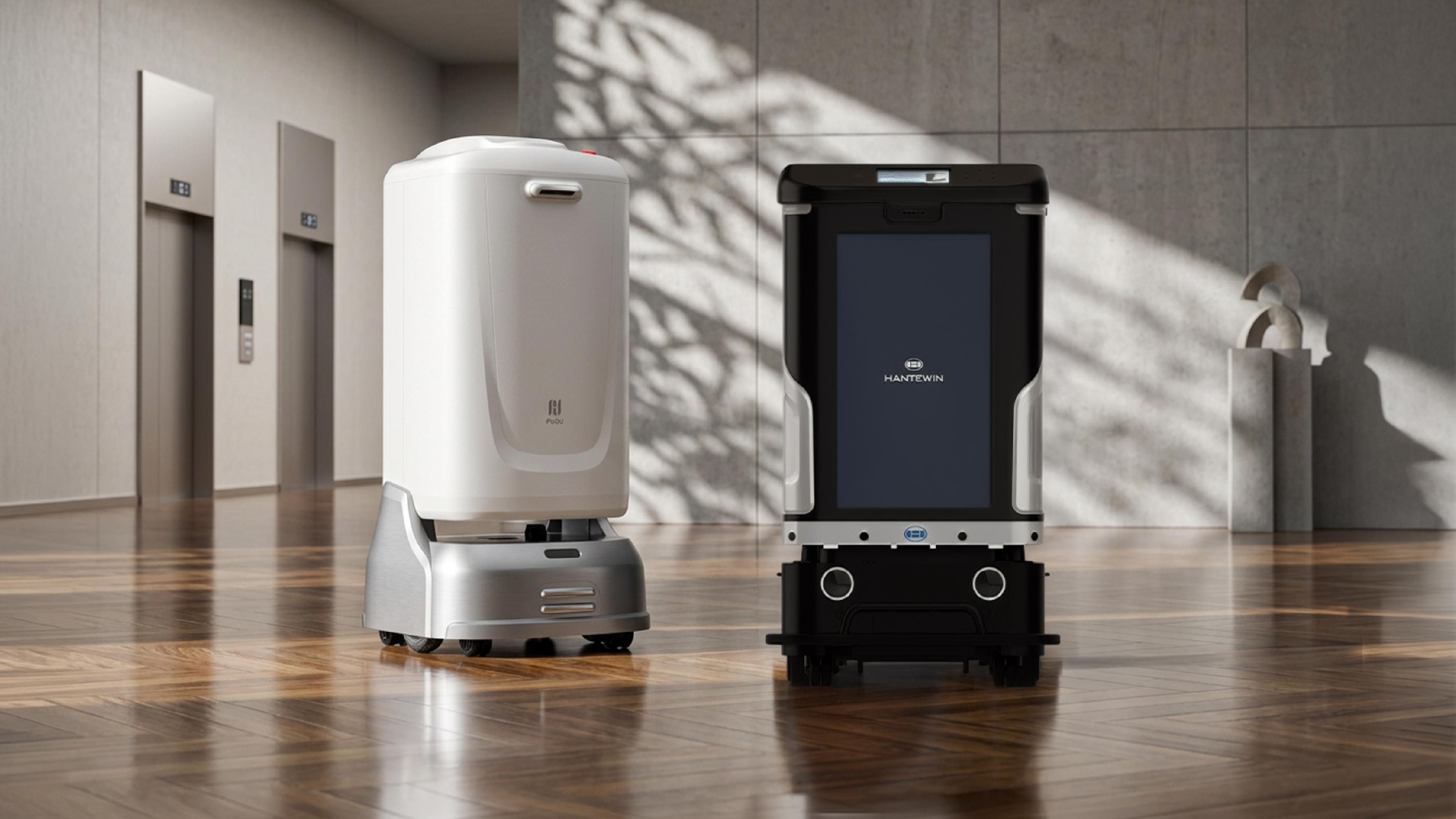
Robotise JEEVES and Hantewin BenXiaoDi D10 are commercial delivery robots designed for indoor transport applications. Both are associated with hospitality and general delivery operations, but their recorded specifications differ in physical dimensions and intended applications. We compare their designs, commercial availability, deployment requirements and suitability for different service environments.

November 12, 2026 by Business Desk Team
Introduction
Autonomous delivery robots are increasingly being considered by hotels, healthcare facilities and commercial workplaces seeking to reduce repetitive internal transport tasks.
Moving supplies, guest amenities and other items between designated locations can require significant staff time, particularly in larger buildings. Delivery robots offer a way to support these activities, provided they can navigate the facility and integrate with its operating procedures.
However, choosing a delivery robot involves more than identifying a machine capable of moving items. Physical dimensions, carrying capacity, navigation technology and building integration can all influence whether a robot is suitable for a particular environment.
Robotise JEEVES and Hantewin BenXiaoDi D10 are two commercial robotic platforms associated with indoor delivery operations. JEEVES is developed by Robotise Technologies GmbH, a German robotics company. It is positioned for healthcare, general deliveries and hospitality, with a commercial deployment model based on project quotations.
BenXiaoDi D10 is associated with Fujian Hantewin Intelligent Technology Co., Ltd., a Chinese manufacturer. Its listed applications include general deliveries, hospitality and workplace assistance. Both robots have commercial status, although their purchasing arrangements and physical dimensions differ.
Based on ROBOT24.com market-research data records, this comparison examines their dimensions, intended applications, availability and deployment considerations while identifying the technical specifications needed for a more complete performance assessment.
At A Glance
| Availability | Commercially offered by quotation for project deployment; configuration and delivery to be confirmed with the supplier. | Commercially available |
|---|---|---|
| Dimensions | Approximately 124 × 56 × 65 cm | 987 × 624 × 1,168 mm |
| Manufacturer | Robotise Technologies GmbH | Fujian Hantewin Intelligent Technology Co., Ltd. |
| Typical use | Healthcare, Generic Deliveries, Hospitality | Generic Deliveries, Hospitality, Workplace assistance |
| Status | Commercial | Commercial |
How They Compare
Commercial Applications and Intended Use
Both Robotise JEEVES and Hantewin BenXiaoDi D10 are targeted at commercial deliveries. The known applications of Robotise JEEVES include healthcare, general deliveries and hospitality.
These types of settings might require transportation of goods from one defined place to another within a building. Hantewin BenXiaoDi D10 has such applications as general deliveries, hospitality and assistance in the workplace.
From the above applications, it can be deduced that this robot is supposed to perform routine transport activities in commercial settings. The common applications are hospitality and general deliveries. This means that these sectors are the areas of comparison of the two robots. But the available information does not indicate that the two robots have similar processes of deliveries.
Manufacturer and product positioning
JEEVES is developed by Robotise Technologies GmbH. The company focuses on autonomous service robots for indoor commercial environments. JEEVES is positioned as a delivery platform for organizations seeking to automate internal transport tasks.
BenXiaoDi D10 is associated with Fujian Hantewin Intelligent Technology Co., Ltd. The supplied product reference is a commercial supplier listing, indicating that purchasing and configuration details may need to be confirmed directly with the supplier.
The manufacturers' different commercial arrangements may influence how organizations evaluate procurement, deployment and technical support. However, manufacturer identity alone does not establish differences in robot performance or reliability. These factors require technical documentation and operational evidence.
Physical dimensions
JEEVES has recorded dimensions of approximately 124 × 56 × 65 cm. BenXiaoDi D10 measures 987 × 624 × 1,168 mm. Expressed in millimeters, the JEEVES dimensions are approximately 1,240 × 560 × 650 mm. However, the supplied records do not explicitly identify the measurement order for JEEVES.
It would therefore be inappropriate to assume that its first measurement represents length or height without confirmation. BenXiaoDi D10's dimensions are also most useful when the manufacturer confirms their order. These measurements indicate different physical profiles, but they do not establish which robot occupies less floor space. A meaningful footprint comparison requires confirmed length and width measurements for both platforms.
Building access and space requirements
Physical dimensions are important when deploying delivery robots in hotels, healthcare facilities and workplaces. Robots may need to move through corridors, doorways and shared service areas. They must also be able to approach delivery destinations without obstructing normal building operations.
JEEVES and BenXiaoDi D10 have different recorded dimensions, making site-specific clearance checks important. However, dimensions alone do not establish maneuverability. Turning radius, minimum passage width, wheel configuration and obstacle clearance also affect how a robot moves through confined spaces.
The supplied records do not provide directly comparable information about these capabilities. Organizations should therefore evaluate both robots against the actual routes they intend to automate.
Hospitality applications
Hospitality is a listed application for both JEEVES and BenXiaoDi D10. Hotels and similar facilities often require staff to transport guest amenities, supplies and other suitable items between service locations. Delivery robots may support these workflows by carrying items along configured routes.
JEEVES's commercial positioning makes it relevant to organizations considering structured internal delivery operations. BenXiaoDi D10's listed hospitality application indicates potential relevance to similar environments. However, the supplied records do not establish whether both robots support the same guest-delivery procedures.
Compartment configuration, recipient identification, access controls and building integration can all influence hospitality deployment. These capabilities should be confirmed before comparing their suitability for hotel operations.
General delivery operations
Both robots have general deliveries among their recorded applications. This category can involve moving suitable items between designated locations in commercial buildings. For example, a robot may support repetitive internal transport tasks where employees would otherwise need to make regular trips.
However, general delivery is a broad application category. The supplied records do not identify the maximum payload, compartment capacity or supported item types for either robot. These details are necessary to determine whether a platform can transport the objects required by a business.
A robot intended for small packaged items may have different operational requirements from one used for larger supplies. Businesses should therefore assess carrying capacity and loading arrangements rather than relying on the general delivery classification alone.
Healthcare applications
Healthcare is included among JEEVES's recorded applications. In healthcare facilities, autonomous delivery robots may be considered for transporting suitable nonclinical items between designated locations. Such operations may involve additional requirements related to hygiene, access control and interaction with staff and patients.
However, the supplied records do not establish whether JEEVES meets particular medical-device or clinical transport standards. Its healthcare positioning should not be interpreted as evidence of suitability for every hospital workflow.
BenXiaoDi D10 does not have healthcare explicitly included among its listed applications. This does not necessarily mean it cannot operate in a healthcare environment, but such use would require separate verification. Organizations should confirm application-specific capabilities and compliance requirements before deployment.
Workplace assistance
Workplace assistance is included among BenXiaoDi D10's recorded applications. This category may involve transporting suitable items between designated areas in offices or other commercial facilities.
JEEVES's general delivery positioning may also be relevant to workplace transport, although workplace assistance is not separately identified in its supplied application categories. The practical requirements of workplace deliveries can vary considerably. Some operations involve moving items across a single floor, while others require deliveries between departments or building levels.
The supplied records do not establish whether BenXiaoDi D10 supports elevator integration, automated door access or other building-control functions. These capabilities should be verified before planning complex workplace delivery workflows.
Navigation and obstacle avoidance
Navigation is a central requirement for indoor delivery robots. Commercial environments can contain moving pedestrians, furniture, equipment and other obstacles. A delivery robot must be able to navigate its intended routes while responding appropriately to changing conditions. JEEVES is associated with autonomous indoor delivery technology, but the supplied comparison table does not include its navigation specifications.
The BenXiaoDi D10 table also does not identify its sensors, mapping technology or obstacle-detection capabilities. It would therefore be inappropriate to conclude that either robot has superior navigation performance.
A meaningful comparison would require information about localization, obstacle avoidance, route planning and operation in crowded environments. These capabilities should be evaluated under comparable conditions.
Elevator integration and multi-floor delivery
Multi-floor delivery can be particularly important in hotels, hospitals and commercial office buildings. Robots operating across multiple floors may need to communicate with compatible elevator systems. JEEVES is associated with building-integrated delivery applications, but elevator compatibility for the exact proposed deployment should be confirmed with Robotise. The supplied records do not establish whether BenXiaoDi D10 supports elevator integration.
Elevator operation may require additional hardware, software or installation work. Even when a robot supports elevator integration, compatibility can depend on the building's existing equipment. Businesses should confirm the specific systems supported and any associated installation requirements.
Payload and compartment capacity
The carrying capacity of a delivery robot influences which tasks it can perform. Payload limits determine the maximum weight that can be transported, while compartment dimensions influence the size and number of items that can be accommodated. The supplied comparison records do not provide payload capacities or compartment measurements for either JEEVES or BenXiaoDi D10.
As a result, the available data does not establish which robot can transport heavier loads or larger items. Physical dimensions should not be used as a substitute for carrying-capacity specifications. Organizations should request payload and storage information for the exact configurations being considered.
Battery endurance and charging
Operating endurance affects how long a delivery robot can remain available before charging. Charging methods and charging time also influence how robots fit into daily service schedules. However, the supplied comparison table does not include runtime, battery capacity or charging specifications for either platform.
These omissions prevent a direct comparison of operating endurance. For businesses operating across extended hours, workload-specific battery performance may be particularly important. Manufacturers should be asked to provide endurance estimates based on representative delivery routes and payloads.
Commercial availability and procurement
Both robots have commercial status in the supplied records. JEEVES is offered through a quotation-based project deployment process, with configuration and delivery terms to be confirmed with the supplier. BenXiaoDi D10 is listed as commercially available.
This distinction may influence how businesses approach procurement. A quotation-based deployment can involve discussing the intended application, building requirements and technical configuration with the supplier.
However, commercial availability does not necessarily mean that every product configuration is immediately available in every market. Organizations should confirm delivery schedules, installation arrangements, warranty coverage and technical support before purchasing either platform.
Deployment and maintenance considerations
Successful delivery-robot deployment depends on both the robot and the environment in which it operates. Businesses should consider corridor dimensions, delivery destinations, charging locations and interactions with staff and visitors. JEEVES's project-based commercial arrangement may allow deployment requirements to be discussed directly with the supplier.
For BenXiaoDi D10, organizations should confirm what installation and support services are included in the commercial offering. However, the supplied records do not establish directly comparable maintenance programs, software-support arrangements or service-level commitments.
These factors can influence long-term operating costs and reliability. A site-specific assessment and demonstration would help determine whether either robot is suitable for the intended workflow.
Summary
Robotise JEEVES and Hantewin BenXiaoDi D10 are commercial delivery robots associated with hospitality and general indoor transport applications. JEEVES is developed by Robotise Technologies GmbH and is offered through a quotation-based project deployment process. Its listed applications include healthcare, general deliveries and hospitality.
BenXiaoDi D10 is associated with Fujian Hantewin Intelligent Technology Co., Ltd. and is listed as commercially available. Its recorded applications include general deliveries, hospitality and workplace assistance. Both platforms may be relevant to organizations seeking to reduce repetitive internal transport tasks.
However, their recorded dimensions use measurement formats that require confirmation before a reliable footprint comparison can be made. The supplied specifications also do not establish directly comparable navigation performance, payload capacity, battery endurance or elevator integration. The choice depends on the intended delivery workflow, building layout, technical requirements, procurement arrangements and available support.
This comparison is based on ROBOT24.com market-research data records rather than controlled performance testing. Physical dimensions, navigation capabilities, carrying capacity, runtime and commercial availability should be verified against current manufacturer or supplier documentation before drawing conclusions about overall performance.
More articles on this topic
147 articles ReportRichtech DUST-E S vs. Gausium Phantas
 ReportEngineAI SE01 vs. AGIBOT RAISE A1ReportRichtech DUST-E S vs. KEENON KLEENBOT C20
 ReportPUDU FlashBot Max vs. Hantewin BenXiaoDi D10
 ReportPUDU FlashBot Max vs. Robotise JEEVES
 ReportPUDU PuduBot 2 vs. OrionStar LuckiBot Pro
 ReportUnitree G1 vs. EngineAI PM01
 ReportKEENON DINERBOT T11 vs. PUDU KettyBot Pro
 ReportAGIBOT D1 Pro vs. Unitree Go2 Pro
 ReportKEYi Tech Loona vs. WEILAN BabyAlpha A2
 ReportPUDU BellaBot Pro vs. KEENON DINERBOT T11
 ReportBear Robotics Servi Plus vs PUDU BellaBot Pro
BUSINESS NEWS WEEKLY LETTER
The Weekly Letter for Robotics Professionals, Summarizing the Most Important Industry Moves, Launches, Deals and Signals.