Why Google's AI Made Spot Practise Using a Bin
Google's Spot demo shows you a simple task and the way robots practice a physical task in a simulated environment.

October 16, 2026 by Nisha
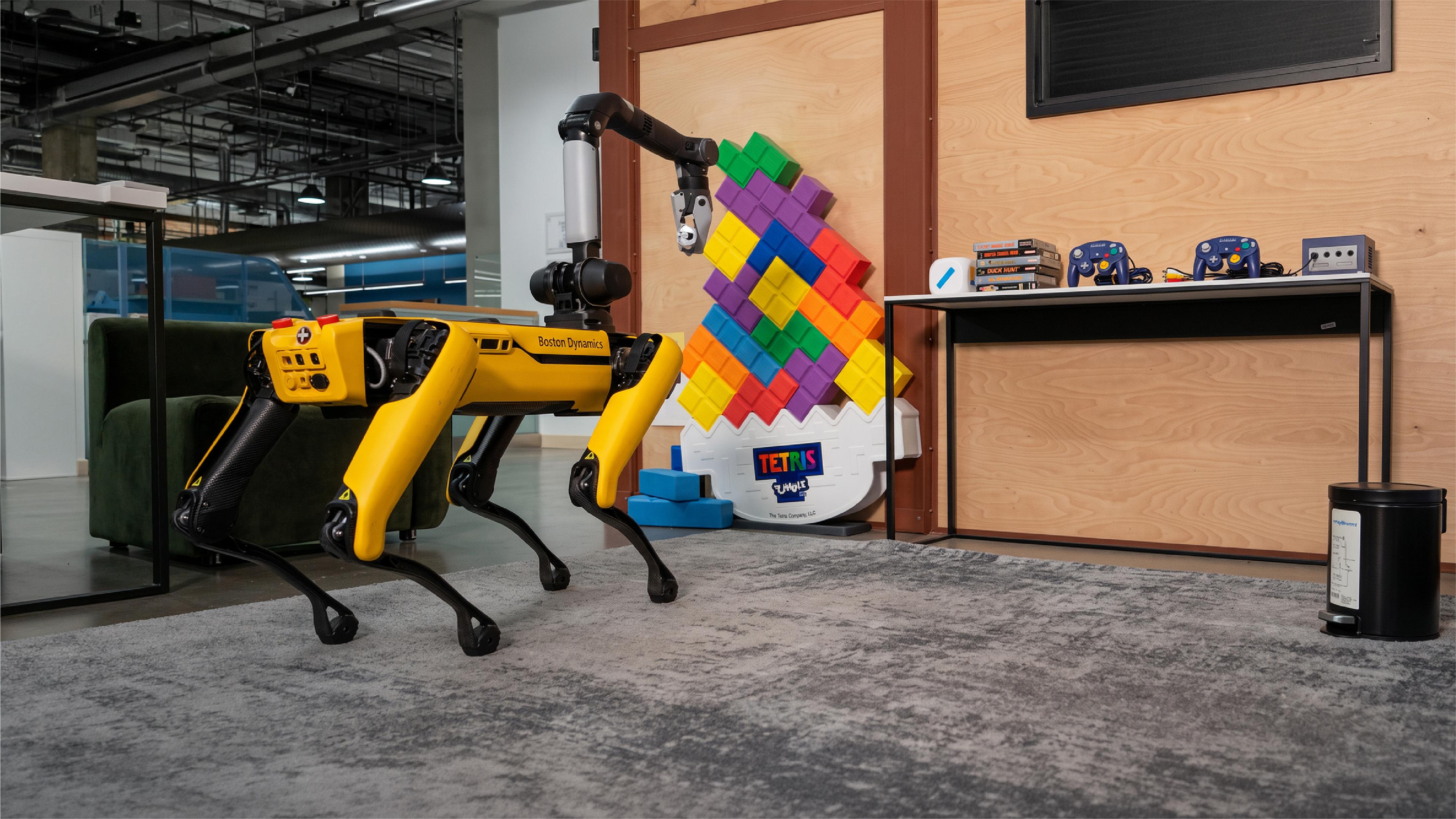
Reach for a drink can, press the pedal of the bin and drop it in. For us, it's barely worthy of a second thought. But for a four-legged robot using an arm, combining the two is a double challenge: how to pick up an object while balancing on a foot.
The exercise was performed by the Gemini 4 Argon AI model, which Google trialled using a Boston Dynamics robot 'Spot'.
According to Spot, the robot hitches a ride on Google and grabs a can before targeting it with its wrist camera. It then proceeds with three-legged balance, presses the pedal and looks at the gripper until it's above the opening before finally dumping the rubbish.
This entire practise was done on MuJoCo, an open-source physics engine used for simulating physical interactions and movements. Applications range from testing robot control algorithms to running a robot before installing code onto the hardware-providing a simulated environment for designers to see how their movement will function before they go to hardware.
The bin takes the problem down to a simple solution. To land the can in the bin is half the battle. The robot has to push the can down the on-off switch that keeps it in working order and ready to fall. In this case, using the foot and arm together to perform a coordinated action. A properly positioned gripper is no good if the lid remains closed. Opening the lid does nothing if the can doesn't hit the opening. The juice is in making the operation flow.
This example has limits. Google published it as a way to show they control a robot.
If robots are to be deployed in homes and workplaces, they will need to manipulate objects and environments that are specifically tailored for humans. Take a pedal bin as an example-staying open to deposit trash requires multiple skills: balancing, selecting the pedal, leaning over it to press it, positioning the can and releasing. Performing each action in sequence is one thing; unifying them is another.
What is more intriguing than the can plopping into the bin is all the work that goes into it. Making the simple task an effective gauge of how well a robot can translate a plan into tightly orchestrated physical movement and how much practice it needs before that movement is reliable.
More articles on this topic
187 articles ReportWhat it Really Costs to Own a Personal Assistant Robot at Home
 ReportFour Humanoids Designed To Tackle Danger Zones
 ReportTwo Tiny Robots Taking Heart Treatment from the Inside Out
 ReportPhysical Intelligence Opens Its Robot AI Models to Developers
 ReportAbu Dhabi’s New Robot Cooks Dinner Within Four Minutes
 ReportTry Before You Buy: Five Places to Test-Drive a Robot
 ReportGoogle AI Teaches Humanoid Robot to Play Cornhole by Watching Human Videos
 ReportYour Old Smartphone Could Soon Get a New Robotic Avatar
 ReportWhy Google's AI Made Spot Practise Using a Bin
 ReportHumanoid Robots Are Learning to Navigate Obstacles Like Humans
 ReportWhat Happens When a Humanoid Robot Makes a Mistake?
 ReportFrom Factories to Homes: How Robots are Assisting at Construction Sites
BUSINESS NEWS WEEKLY LETTER
The Weekly Letter for Robotics Professionals, Summarizing the Most Important Industry Moves, Launches, Deals and Signals.