What Happens When a Humanoid Robot Makes a Mistake?
As humanoid robots enter everyday spaces, researchers have now been developing safety systems to detect mistakes, prevent accidents and protect people. So, how do they really do it?
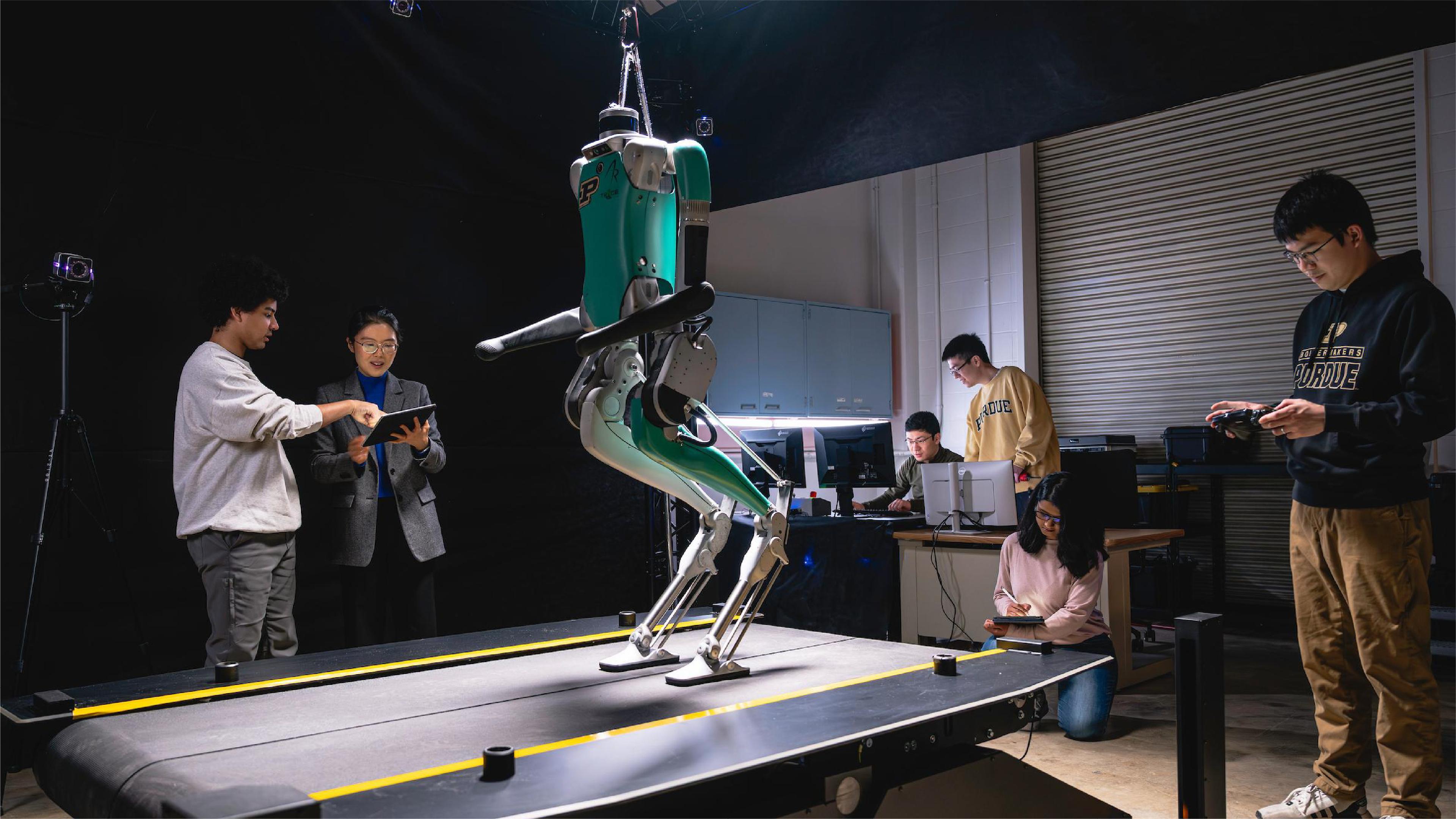
With humanoid robots making their way into our daily surroundings, researchers have now been looking at how they ought to behave when things don’t go as planned, and what can be done to stop minor errors from turning hazardous. There are plenty of chances for a mistake: a robot can have trouble with a movement, come to the wrong conclusion, or misread what its cameras are telling it. For a robot to successfully get down a busy corridor, it must always keep track of what’s around it, stay on its feet and work around anything in its way.
Some would say you cannot avoid accidents by having robots move properly alone. In a paper presented at the 2026 International Conference on Machine Learning, Joonkyung Kim and his team put forward three facets of robot safety: the physical act, the decision behind it and what humans expect. They make the case for other safety measures to oversee behaviour and step in as needed, pointing out the perils of an overreliance on AI to call the shots in novel circumstances.
The conference also saw the unveiling of EMBGuard, a means of nipping dangerous actions in the bud before an AI robot has a chance to act on them. The work was accompanied by a benchmark of 329 real-world cases in seven hazard categories and a dataset of 15,100 action-risk examples. Such tools should enable a robot to see where instruction could be unduly risky.
But one should not overlook physical safeguards. Be it speed limits, protective monitoring or an emergency stops to cut off motion at the first sign of trouble; these are part of the equation. ISO 10218, revised in 2025, lays down the law on industrial robots in a manufacturing setting, yet it is not a given that its provisions will apply to a mobile humanoid in public. Service robots have their own set of rules under ISO 13482, due for an overhaul in 2026.
There is also still a role for human oversight in testing, in places where people do not always move in a predictable fashion. For developers, it is not a matter of simply preventing robots from making mistakes but rather putting in place systems that will contain any damage and react in a safe manner to the unforeseen. As humanoids are called upon to do more, being able to recover from mistakes will be as much of an asset as getting the job done.
More articles on this topic
187 articles ReportWhat it Really Costs to Own a Personal Assistant Robot at Home
 ReportFour Humanoids Designed To Tackle Danger Zones
 ReportWhy Google's AI Made Spot Practise Using a Bin
 ReportTwo Tiny Robots Taking Heart Treatment from the Inside Out
 ReportPhysical Intelligence Opens Its Robot AI Models to Developers
 ReportAbu Dhabi’s New Robot Cooks Dinner Within Four Minutes
 ReportTry Before You Buy: Five Places to Test-Drive a Robot
 ReportGoogle AI Teaches Humanoid Robot to Play Cornhole by Watching Human Videos
 ReportYour Old Smartphone Could Soon Get a New Robotic AvatarReportWhy Google's AI Made Spot Practise Using a Bin
 ReportHumanoid Robots Are Learning to Navigate Obstacles Like Humans
 ReportFrom Factories to Homes: How Robots are Assisting at Construction Sites
BUSINESS NEWS WEEKLY LETTER
The Weekly Letter for Robotics Professionals, Summarizing the Most Important Industry Moves, Launches, Deals and Signals.