Two Tiny Robots Taking Heart Treatment from the Inside Out
Two wireless magnetic millirobots could one day deliver antibiotics directly to infected heart tissue, potentially reducing the need for invasive surgery and weeks of treatment.
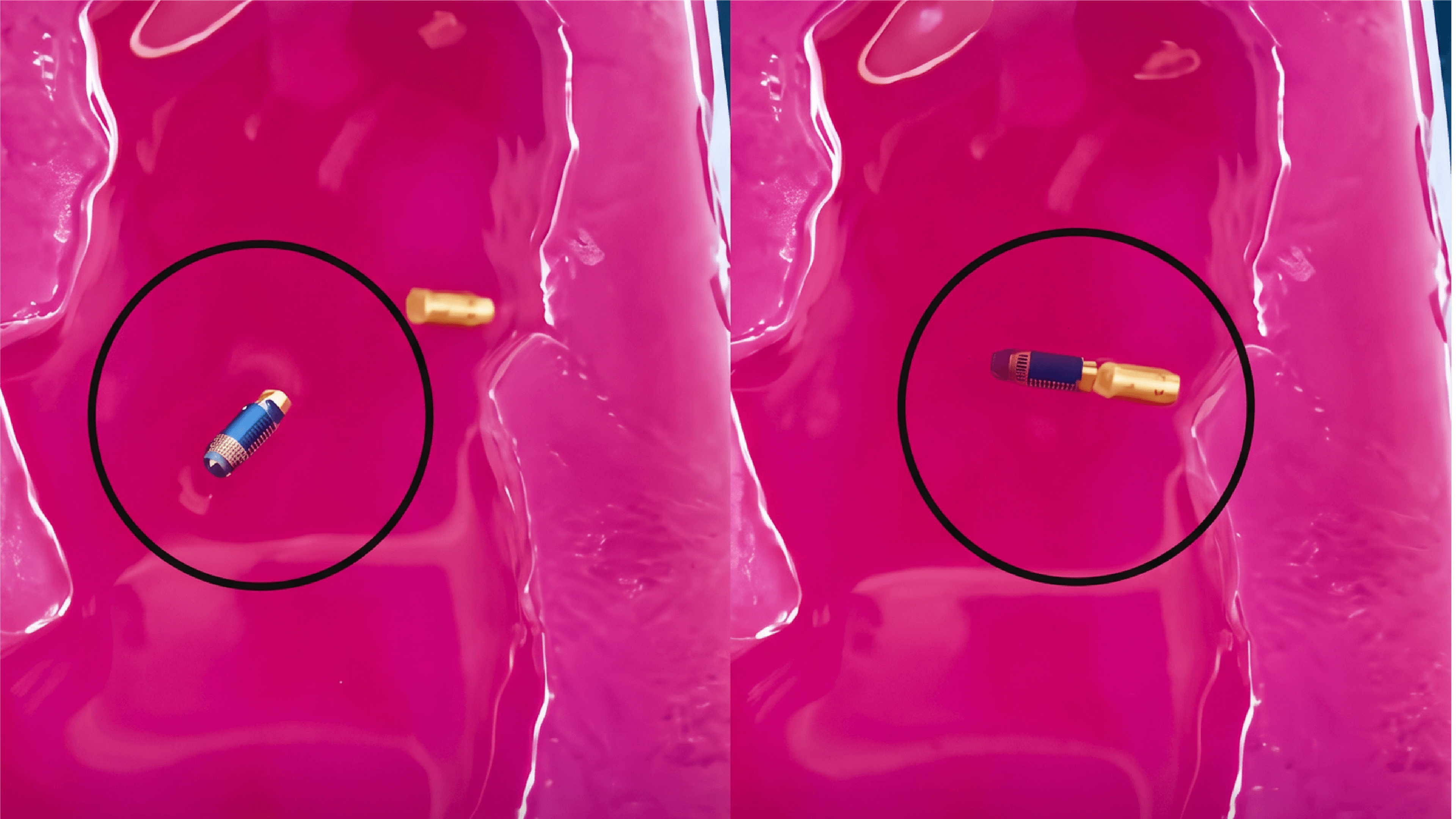
Is it possible to cure a serious heart infection without the ordeal of open-heart surgery or an antibiotic regimen that runs for weeks? Johns Hopkins University researchers are putting forward a small answer to that question in the form of magnetic robots, and they are working on them as a team.
Tiny Robots on a Big Mission
Their system is built around two millirobots with distinct roles. The needle module will put roots at the site of the infection and serve as a docking point; the drug module is what brings the antibiotics, makes a magnetic connection and then inserts the medication where it is required. It is a delivery service of sorts, one that knows its address and does not have to make its way through the neighbourhood to get the package there.
Then there is the ingenuity of having a docking station that can be left behind, so the drug module can be swapped out. In theory, that means repeat doses can be had without having to go through the whole procedure once more.
No Batteries. No Motors. Just Magnets.
You will not find motors or batteries on these little machines as you would with other robots. An external coil system of electromagnetic fields, like what is used for an MRI, does the guiding wirelessly.
The idea is to put the antibiotics right at the infection instead of releasing it into the bloodstream. For endocarditis, which can be fatal and involves the valves or inner lining of the heart, that is significant. A patient might otherwise face four or six weeks of intravenous drugs, and if those do not do the trick, surgery is the option.
From Lab Tests to Real-World Treatment
The millirobots have been put through their paces on real pig heart tissue and artificial models, showing they can hold their own against simulated blood flow. Although the team envisions the technology being used for cancer drug delivery down the line, they are under no illusions that this is anything but experimental. No living, beating heart has yet been treated by robots. More realistic models will be needed to see how they handle the contractions of the muscle.
In the long run, medicine may be able to send treatment straight to the problem rather than the patient to an operating room. These are small robots, but their mission is not.
More articles on this topic
187 articles ReportWhat it Really Costs to Own a Personal Assistant Robot at Home
 ReportFour Humanoids Designed To Tackle Danger Zones
 ReportWhy Google's AI Made Spot Practise Using a Bin
 ReportPhysical Intelligence Opens Its Robot AI Models to Developers
 ReportAbu Dhabi’s New Robot Cooks Dinner Within Four Minutes
 ReportTry Before You Buy: Five Places to Test-Drive a Robot
 ReportGoogle AI Teaches Humanoid Robot to Play Cornhole by Watching Human Videos
 ReportYour Old Smartphone Could Soon Get a New Robotic AvatarReportWhy Google's AI Made Spot Practise Using a Bin
 ReportHumanoid Robots Are Learning to Navigate Obstacles Like Humans
 ReportWhat Happens When a Humanoid Robot Makes a Mistake?
 ReportFrom Factories to Homes: How Robots are Assisting at Construction Sites
BUSINESS NEWS WEEKLY LETTER
The Weekly Letter for Robotics Professionals, Summarizing the Most Important Industry Moves, Launches, Deals and Signals.