Three Real Robots Inspired by Star Wars
Where real robotics has overtaken the droids, and where the films are still ahead.
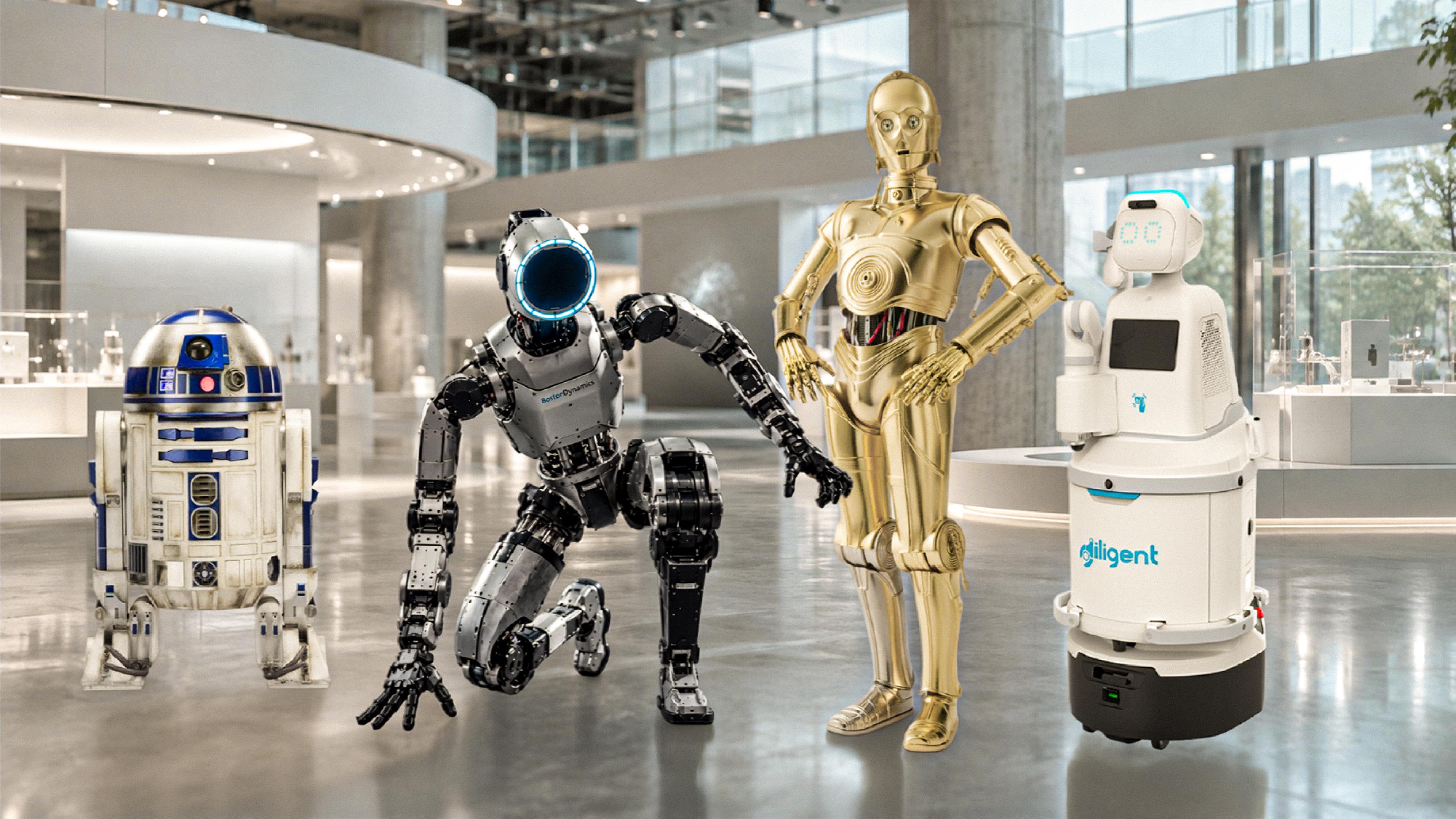
George Lucas didn't just build a cinematic empire, he drafted the blueprint for the future of robotics. Star Wars introduced us to mechanical sidekicks that augment human capability.
That galaxy far, far away is now so tantalisingly close.
Engineers are rapidly turning cinematic fiction into cutting-edge reality, putting real-world counterparts to work in space, hospitals, and living rooms.
Here are a few robots from Star Wars that have very similar real-world counterparts helping us to achieve things that were hard to imagine a decade ago.
R2-D2: The Swiss Army Knife of Sidekicks
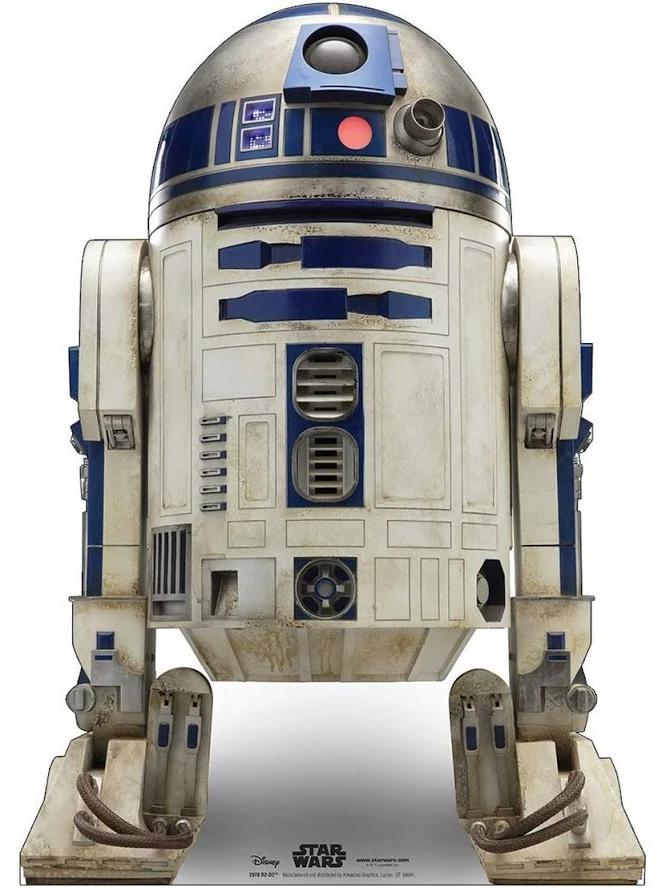
First appearing on the big screen in 1977 in Star Wars: Episode IV - A New Hope, R2-D2 was known to be a loyal, non-verbal sidekick. R2-D2 communicated his emotions, perspectives, and feelings by making beeps and chirps, and even rotating his head and body in particular ways to express specific moments and movements. The fandom fell in love with him because of his feisty nature.
In pop culture, R2-D2 was known as the "Swiss Army knife" because he was constantly packed with hidden tools like taser arms, holographic projectors, computer hacking interfaces, and even fire extinguishers.
Real-World AMRs: Meeting Moxi and Aethon TUG
Now let's look at a real-world counterpart for R2-D2. Hospitals and service industries have started using autonomous mobile robotics machinery like Diligent Robotics’ Moxi and the Aethon TUG. The design philosophy for these robots is similar to R2-D2: they are short, heavy, and wheel-based, with an interactive screen on top, blinking lights, and gently beeping to communicate to avoid startling patients. This physical structure heavily mimics R2-D2.
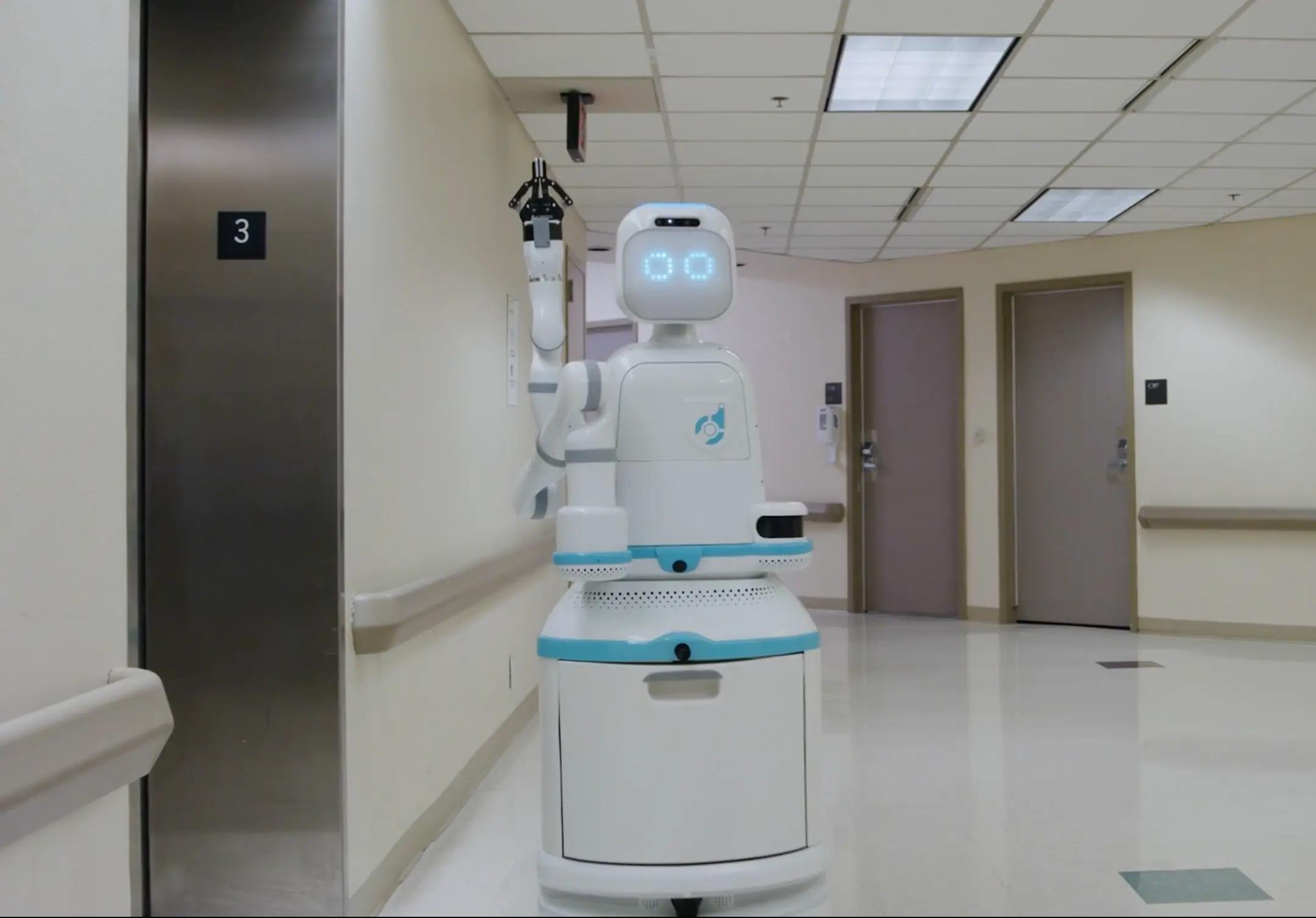
Real Autonomous Mobile Robots (AMRs) like Moxi can instantly create a 3D LiDAR map of building floor plans in minutes by observing the space carefully, and they can even automatically call elevators using Wi-Fi. In Star Wars, R2-D2 had to manually plug himself into wall terminals to get schematics of ships, which goes to show that real-world AMR technology is actually more sophisticated in some ways than R2-D2, especially when it comes to data mapping and connectivity.
Navigating the Unpredictable: Movies vs. Motion Sensors
The one clear-cut struggle that AMRs have is with sudden obstacles. R2-D2 used to effortlessly navigate through all kinds of terrain, be it desert sand, forest floors, or mud; whereas real-world bots are susceptible to getting tripped up by thick rugs, doors, crowded hallways, or unexpected hindrances on the floor. This difference shows that while we are working on achieving similar capabilities, there are still major improvements to be made, largely because the real world is far more unpredictable and dynamic than a scripted universe.
Life Imitates Art: Real-World Droid Drama
To lift patients' spirits and deliver snacks to tired staff, nurses in real hospitals even began dressing up Moxi droids in wigs and costumes to give them peppy, chirpy personalities that uplift everyone around as they roll across the hospital. However, in true Star Wars comedic fashion, there was an incident where Moxi got confused by elevator doors and accidentally wedged a nurse into an elevator corner, requiring a human handler to rescue her, just like Luke Skywalker pulling R2-D2 out of a swamp! These real-world parallels go to show that our interactions with these skilled robots draw strikingly similar connections to what we saw on screen.
C-3PO: The Polyglot Protocol Droid
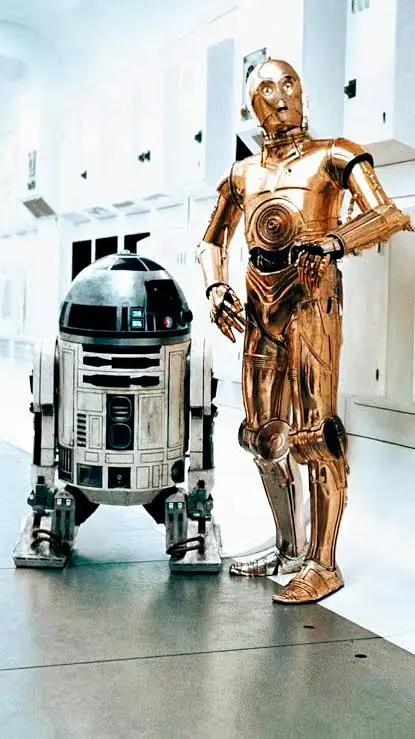
In 1977, another major robot from Star Wars made its way into human conversations: C-3PO. He was a roughly six-foot-tall golden humanoid specifically designed for "human-cyborg relations." One of the most important features of C-3PO was that he was fluent in more than six million forms of communication, allowing him to help humans communicate with almost any galactic species across the universe. Another memorable physical aspect viewers often recall is his famous wobbly, stiff-legged walk, which gave people their first vivid visual of what a real mechanical, metallic humanoid might look like in action. Physically rigid, he was also emotionally anxious and hyper-polite.
Real-World Humanoids: Agility Beyond the Golden Suit
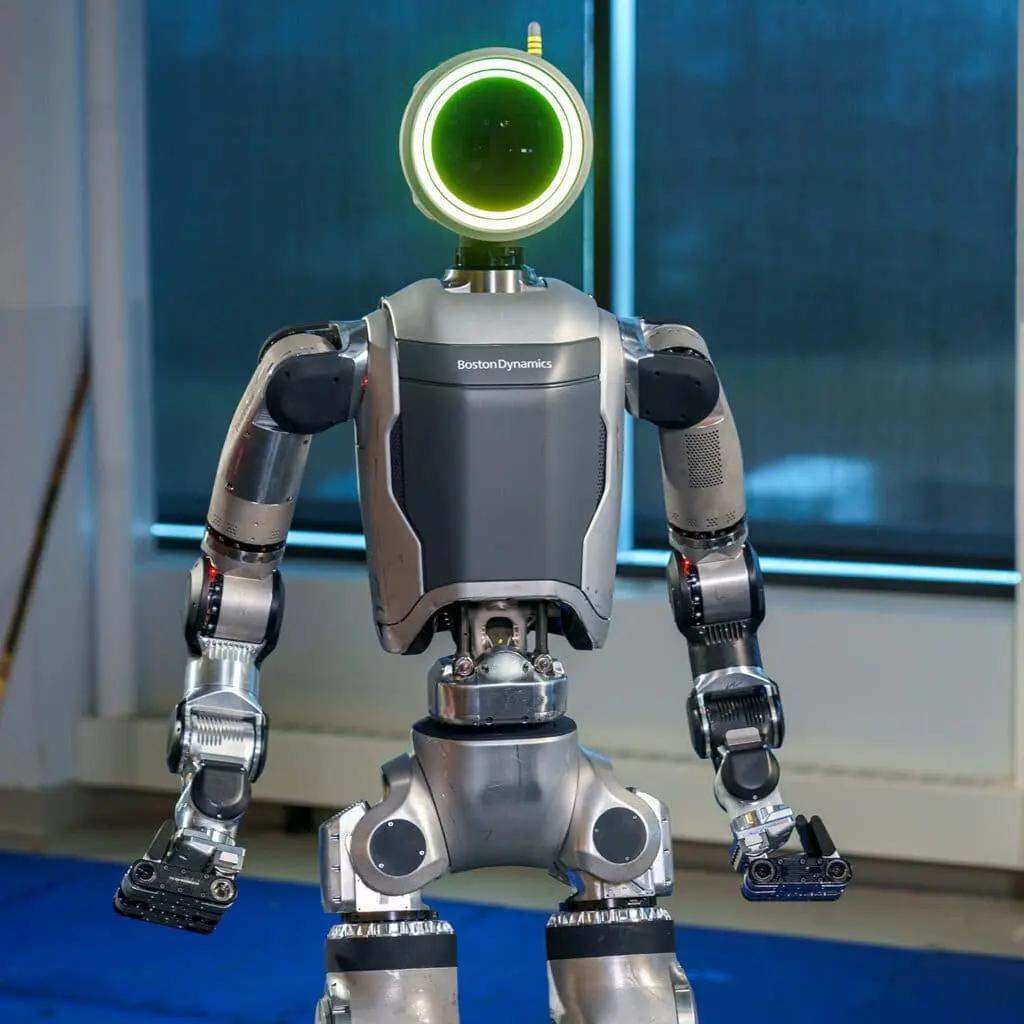
Similarly, in the real world, we have a few counterparts that mimic the appearance and capabilities of C-3PO. A few key examples include Boston Dynamics’ Electric Atlas, Tesla Optimus, and Figure 02.
When looking at what real bots can do that C-3PO couldn't, this modern category of bipedal robots exhibits far more physical agility and mobility. Where C-3PO was bound by a rigid metallic frame and a lack of flexibility, real-world humanoids are designed with specialized joints that mimic the human body. Engineers recognize that our physical world, from climbing stairs to gripping specific objects or opening doors was built for humans by humans, so modern humanoids are built to replicate complex joint structures to match human capabilities in real environments.
Translation vs. Live Intuition: Where C-3PO Still Wins
One area where C-3PO still holds a clear advantage over real-world humanoids is his instantaneous awareness during live translations across millions of cultures. While today's AI language models process and translate text impressively, humanoid robots still struggle to interpret human body language, subtle social cues, and emotional context at conversational speeds.
The Ultimate Upgrade: Self-Sufficiency on the Factory Floor
There is also a fascinating contrast in real-world self-sufficiency. In The Empire Strikes Back, C-3PO was famously blown apart and actually needed Chewbacca to carry him around in a net on his back. In contrast, during factory trials at BMW in 2026, Boston Dynamics' Electric Atlas detected its own battery running low, walked over to a charging station, swapped out its own heavy battery pack, and got right back to work without any human assistance whatsoever.
This goes to show that while C-3PO had clear physical limitations on screen, real-world engineering is already pushing past those bounds.
BB-8: Enclosing Hardware's Worst Enemy
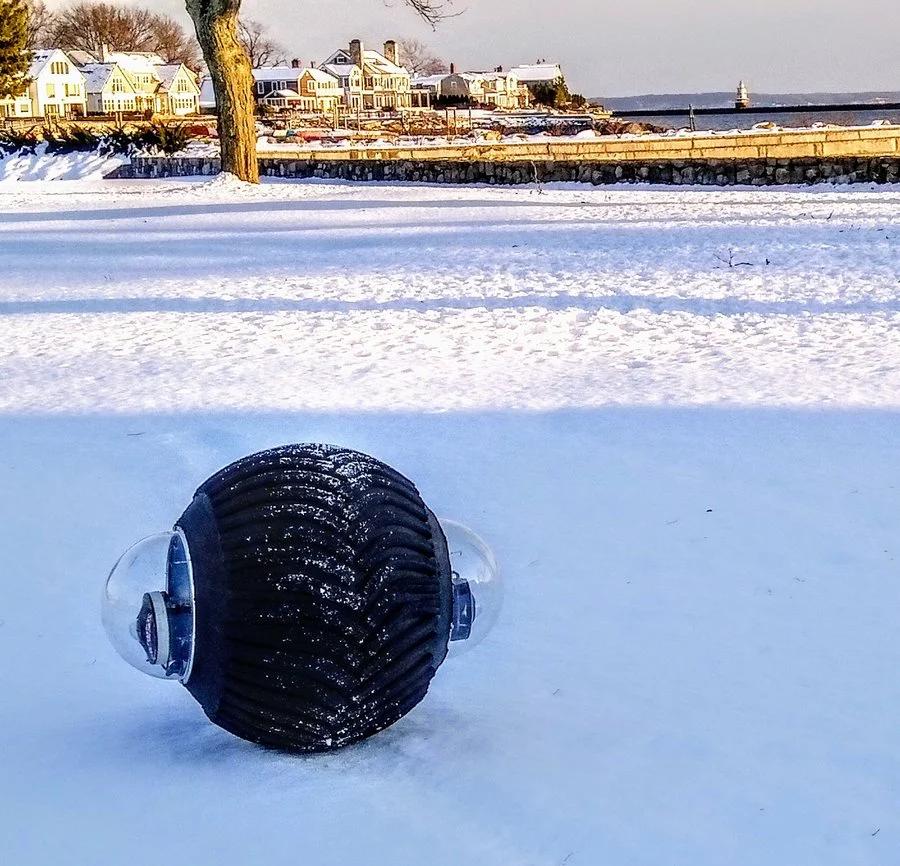
Lastly, let's look at BB-8, the rolling sphere. BB-8's rolling body introduced a design to the Star Wars universe where all internal electronics were enclosed inside a smooth sphere, solving hardware's worst problem: exposed joints vulnerable to weather, sand, and dirt. 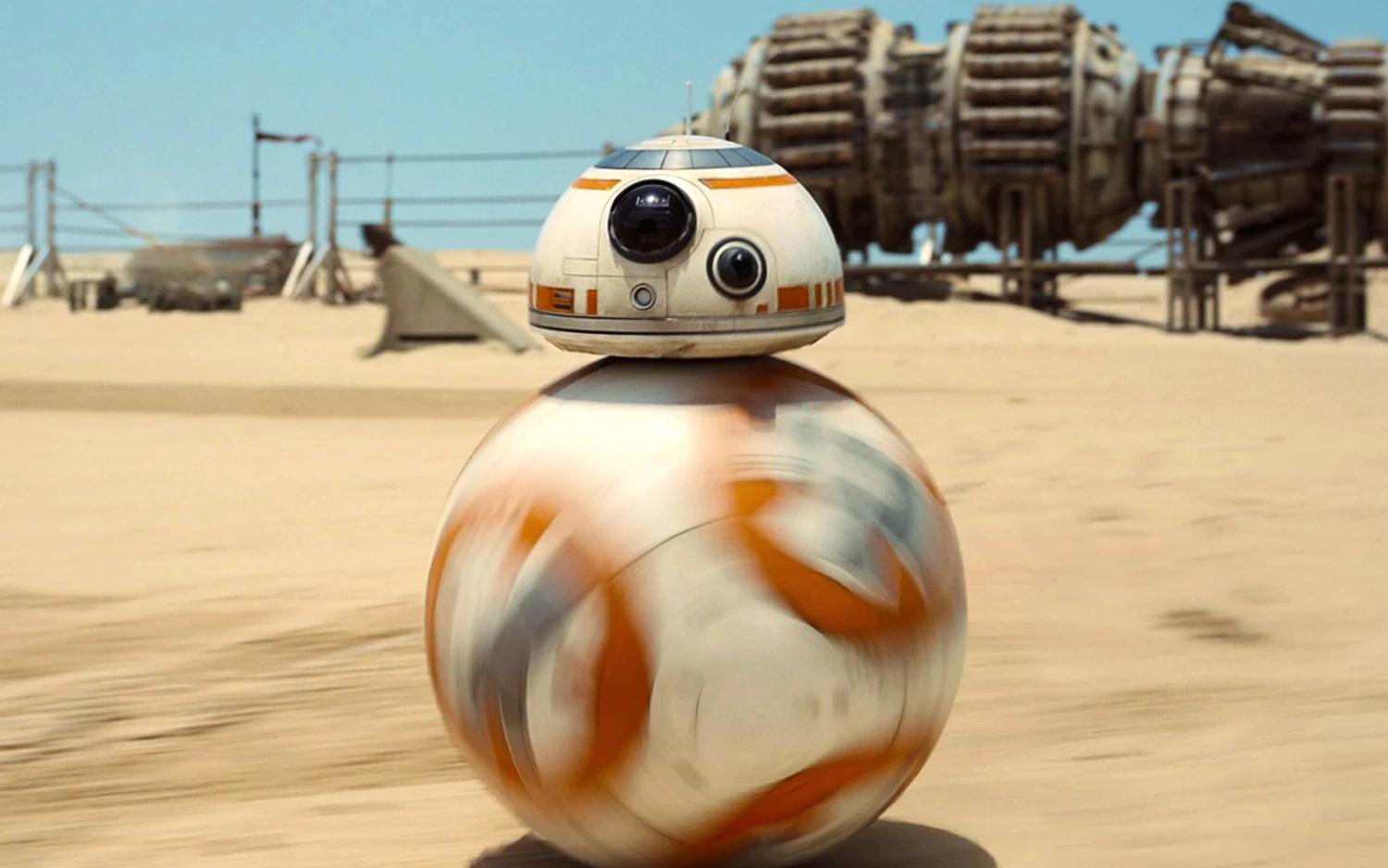 Similarly, in the real world, we have GuardBot, a security robot engineered with a similar spherical design. While GuardBot struggles with steep dunes and inclines due to gravity, unlike its movie counterpart, this real-world bot can actually float and propel itself across open water.
Form Follows Function: Sci-Fi Meets Reality
Star Wars showed us that droids aren't one-size-fits-all; every droid had a distinct structure tailored to its specific purpose. Similarly, in the real world, we are seeing this variety come alive through modern engineering marvels, whether on a factory floor, in a hospital ward, or increasingly within our own homes.
More articles on this topic
148 articles ReportSix Giant Robots from Around the World
 ReportJobs You Didn't Know Were Done by Robot Dogs
 ReportBatteries Included: Why Staying Powered is Hard for Robots
 ReportPudu Robotics BG1 vs. VIGGO SC50 Pro Plus: Which Cleaning Robot Fits Your Facility?
 ReportAutodiscovery Secunit vs. Argus Argus S5.3: Which Security & Patrol Robot Fits the Job?
 ReportFaraday Future to Launch Nine Robots
 ReportChecking In With Dinosaurs: Japan’s Henn na Hotels Put Robots at the Heart of Hospitality
 ReportGeek+ Opens Düsseldorf Lab for Live Warehouse Robot Demonstrations
 ReportExein Raises $270 Million to Secure Robots and Connected Devices
 ReportChangi Airport Deploys Up to 18 Autonomous Wheelchairs After Year-Long Trial
 ReportUBTech Robots Only 'Half as Good' as Humans
 ReportGoogle's DeepMind AI Can Switch Robot Bodies
BUSINESS NEWS WEEKLY LETTER
The Weekly Letter for Robotics Professionals, Summarizing the Most Important Industry Moves, Launches, Deals and Signals.