Cainiao Upgrades Climbing Warehouse Robots to Improve Storage Efficiency
One robot that drives the aisle, climbs the shelf and carries the tote. Cainiao says that single design doubles storage productivity and packs in more stock.

November 4, 2026 by Dr Maulik Vyas
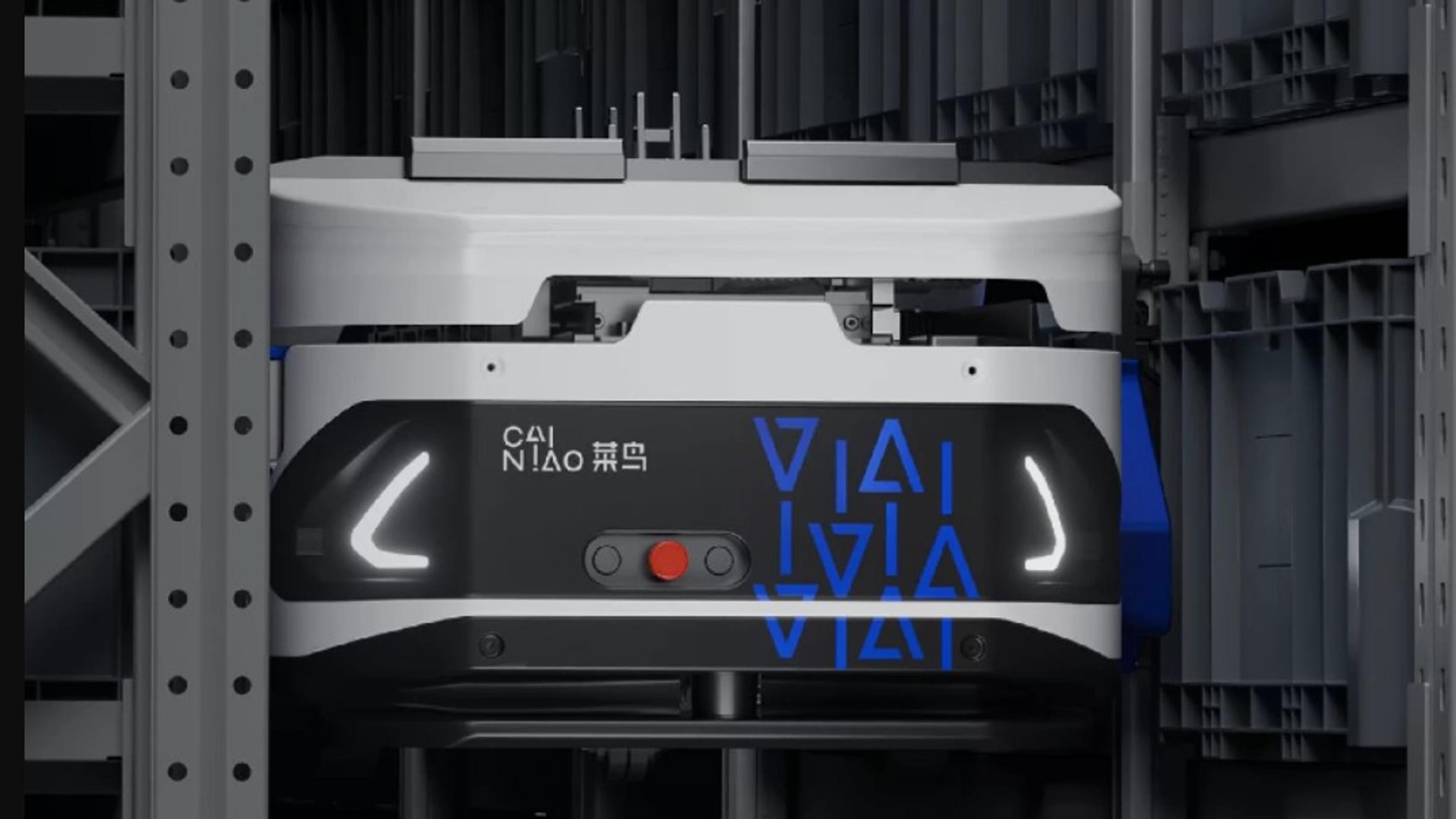
Cainiao, Alibaba's logistics arm, is pushing its ZeeBot climbing robots into more warehouses, and it says the machines are improving both storage density and speed. The company is also rolling them out well beyond China.
ZeeBot is Cainiao's first self-developed rack-climbing robot, and the company counts it as its fifth generation of logistics robot. Most automated warehouses split the work between machines that move along the floor and others that lift along the racks, so goods get handed from one to the other, and that handoff can slow things down. ZeeBot does both jobs. It rolls through narrow aisles at up to 4 meters per second, then climbs the racking to put away or pull-out storage totes. Cainiao says it can reach the top of a five-level rack in about 10 seconds and work at heights of up to 14 meters.
The numbers Cainiao gives are bold. Compared with other automated warehouses, it claims space is used 40 percent more efficiently. Against a manual warehouse of the same footprint, taller racking lets it store about three times as much, and it says storage and retrieval productivity has doubled. The company also puts efficiency 20 to 30 percent above conventional automation such as CTU systems.
The robots first went to work in Dongguan, in southern China, at a cross-border warehouse that serves customers in more than 40 European countries and handles millions of outbound parcels a day. It had 126 ZeeBots in May and ran 134 through the 618 shopping festival.
Overseas is the bigger story. On June 17, Cainiao opened a European fulfillment center near Rotterdam in the Netherlands, with more than 100 ZeeBots working inside a 26,000 square meter site on a 10-year lease. A project in Spain was in preparation, plans for the United States and Canada were in early stages, and the Middle East and Japan were in talks, according to reports earlier this year. The company says it runs more than 50 warehouses overseas across 18 countries and regions.
Cainiao is frank about the economics. Bi Jianghua, who runs the company's logistics technology unit, has said payback takes about 18 months in China but five to 10 years overseas, because installation, fire safety, transport and after-sales service cost far more abroad. Overseas customers, he says, care more about after-sales support and total running costs than raw speed.
The next step is picking. ZeeBot already handles carrying and storing on its own, and Cainiao says it plans to add robots with arms and AI that pick items out of the totes. The long-term goal is a fully automated dark warehouse.
Most of these figures come from Cainiao. Analysts note that the threefold space gain applies only to the automated zone, and oversized or oddly shaped items still go to human workers. Keeping hundreds or thousands of robots running smoothly in new countries hasn't been proven, and Hai Robotics, which already has a climbing robot system installed at scale in Europe and the US, brings more overseas experience.
More articles on this topic
250 articles ReportWhat it Really Costs to Own a Personal Assistant Robot at Home
 ReportFMC3 Robotics Advances Two Factory Projects Using Autonomous Mobile Robots
 ReportSouth Korean Startup MOVIN Raises KRW 10 billion to Advance Robot Training Technology
 ReportAgiBot Deploys Six Genie G2 Humanoids for a 24-Hour Convenience Store Challenge
 ReportFF EAI Robotics Reports 1,168 Robot Deliveries Since February After Record October Sales
 ReportUBTECH Launches Thinker-Sim to Train and Test Robots in Virtual Environments
 ReportAgility Robotics Expects $465 Million Gross Capital Raise in Proposed Nasdaq Listing
 ReportHD Hyundai Robotics Says Palantir AI Cuts Robot Problem-Solving Time by 63%
 ReportMeta Builds Humanoid Robot Prototype with China's Fourier, Begins Work on Second Version
 ReportWhy Turning a Doorknob is Robotics’ Hardest Test
 ReportThe Ultimate Blind Spot: How Rescue Robots Sense the Invisible
 ReportCan Powered Exoskeletons Make Physically Demanding Jobs Easier?
BUSINESS NEWS WEEKLY LETTER
The Weekly Letter for Robotics Professionals, Summarizing the Most Important Industry Moves, Launches, Deals and Signals.