Tesla Optimus: What's Really Happening Behind the Scenes?
As Tesla moves forward with its Optimus humanoid robot, questions remain over production, real-world performance and commercial readiness. Can Tesla turn its ambitious vision into a reliable, market-ready product as competitors advance and investor scrutiny grows?
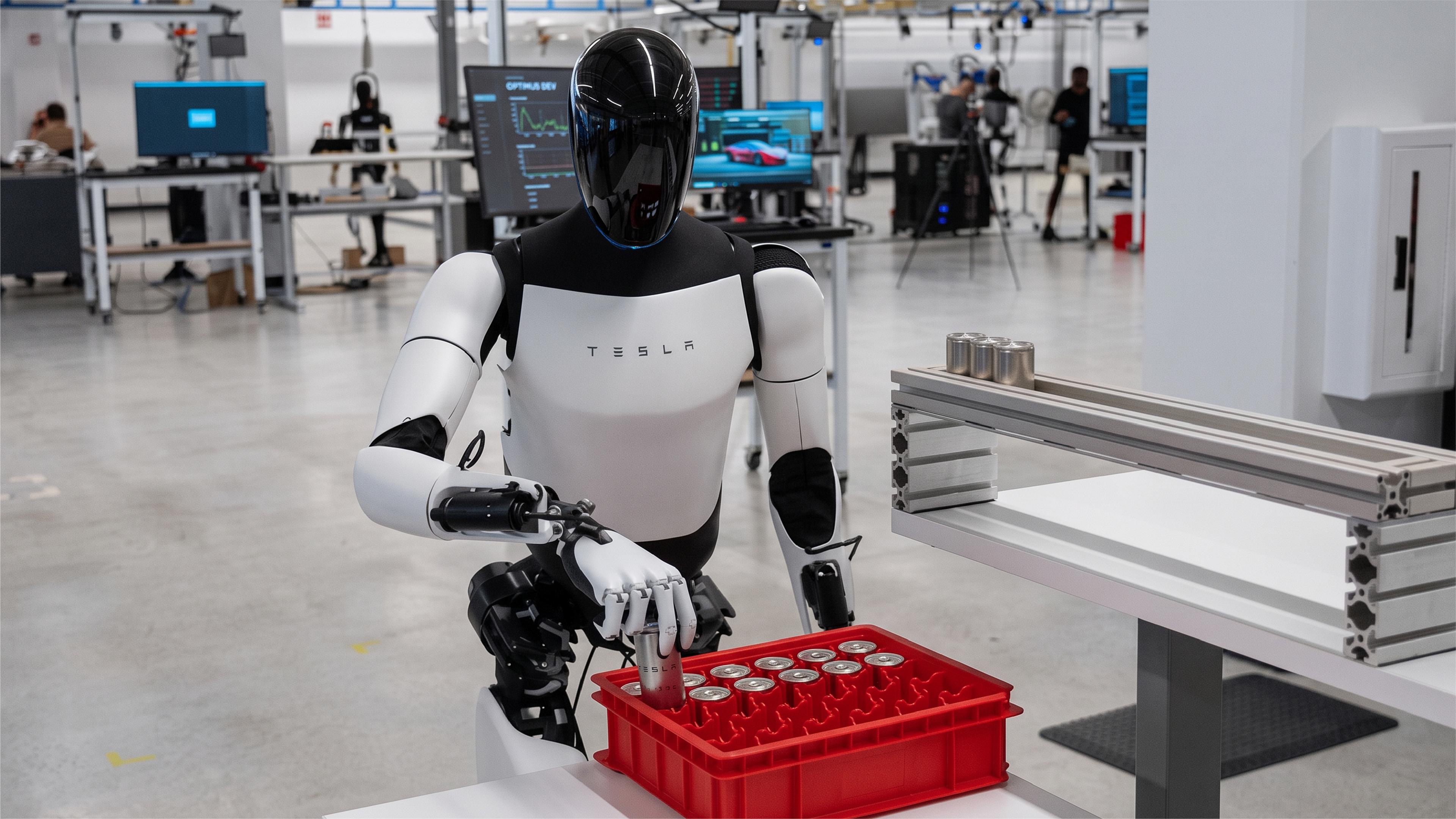
For years now, Tesla has put forward the Optimus humanoid robot in the guise of a product that could be transformative. Yet, with other manufacturers of robots putting on display their own advances and taking commercial trials to new levels, there is an increasing measure of doubt as to whether Optimus is in any position to do useful work on a large scale.
What’s currently causing concern is the limited information Tesla has put out on its robot’s progress.
Wall Street has been made to take notice of the company’s silence over Optimus, as was reported by several outlets this week; all the more so with competitors such as Figure AI and Unitree putting their own strides in humanoid robotics on display.
In preparation for a ramp up of robot production at the Fremont, California plant, Tesla has been making the necessary arrangements for that to happen.
To further its robotics endeavours, the company is putting aside room that was once devoted to Model S and X output. While the manufacturing strategy is a sign of Tesla’s ongoing dedication to Optimus, it does little to show how the robot measures up beyond a staged demo.
This distinction really matters as Tesla's ambitions extend far beyond producing another industrial machine.
In the words of CEO Elon Musk, Optimus is a product of considerable commercial promise for the long haul; he sees a time when his humanoid robots will be called on to do the physical work in homes and businesses alike.
However, turning that vision into a reliable product requires progress in several areas. That means the robot must be able to move under its own power autonomously, pick up new tasks, put in consistent work with little need for human intervention and do so without any risk to those in its vicinity.
While Tesla has demonstrated Optimus at work in various tasks, it remains difficult to find any public data that puts to rest questions as to whether such aptitudes can be relied on for the rigours of commercial use.
The company has also been apparently hesitant to share much details on present day robot production volumes or operating expenses, not to mention results from any performance tests conducted by an outside party.
According to the financials it released for the second quarter, Tesla is investing in Optimus development and getting ready to produce on a large scale. However, one would not be able to conclude from those filings that the robot has been commercially deployed in any numbers. The lack of detailed public benchmarks makes direct comparisons with competing humanoids rather quite difficult.
Tesla’s investment approach in general is attracting scrutiny. In the first half of 2026, the company put $8.28 billion to work in capital expenditure on everything from manufacturing to AI, a sum more than twice what was recorded for the same period last year.
The outlays for Optimus are only one part of those expenditures, as Tesla has not publicly separated its full robot-development costs. All eyes will be on the company when it puts out its third-quarter earnings on October 21; that will give management a chance to put some more definition on how far along its robotics progress really is.
For now, the next big step for Optimus probably won’t be just another slick demonstration; it may be measurable evidence that the robot can do useful work, reliably, over and over, at a cost that makes commercial sense.
More articles on this topic
224 articles ReportWhat it Really Costs to Own a Personal Assistant Robot at Home
 ReportThe Dawn of the Mechanical Safari: Why Robotic Zoos Are the Talk
 ReportHumanoids Struggle With Unfamiliar Chores, New Research Finds
 ReportQuadruped Solves Giant Rubik’s Cube Using Only Its Feet
 ReportNVIDIA Uses AI Agents to Teach Tiny Walking Robot to Navigate Obstacles
 ReportScientists Develop System to Help Robots Gesture Without Losing Balance
 ReportRobotic Fish Offer New Way to Track River Pollution
 ReportHigh Torque Robotics Partners With Sharebot to Expand Humanoid Access Across China
 ReportAudi Tests Agile Robots' Mobile Humanoids for Factory Logistics
 ReportFrom Flips to Dance Moves: New AI Trains Humanoid Robots in Record Time
 ReportHow a Tiny Robot Searches for Hidden Damage Inside the Wind Turbine Blades
 ReportRadioactive Mess? Better Call Spot
BUSINESS NEWS WEEKLY LETTER
The Weekly Letter for Robotics Professionals, Summarizing the Most Important Industry Moves, Launches, Deals and Signals.