NEURA Robotics Unveils AI System That Gives Robots Memory and Multiple Senses
NEURA Robotics has unveiled Neuron AI, a system that combines sight, sound, touch and memory to help robots perform complex real-world tasks.
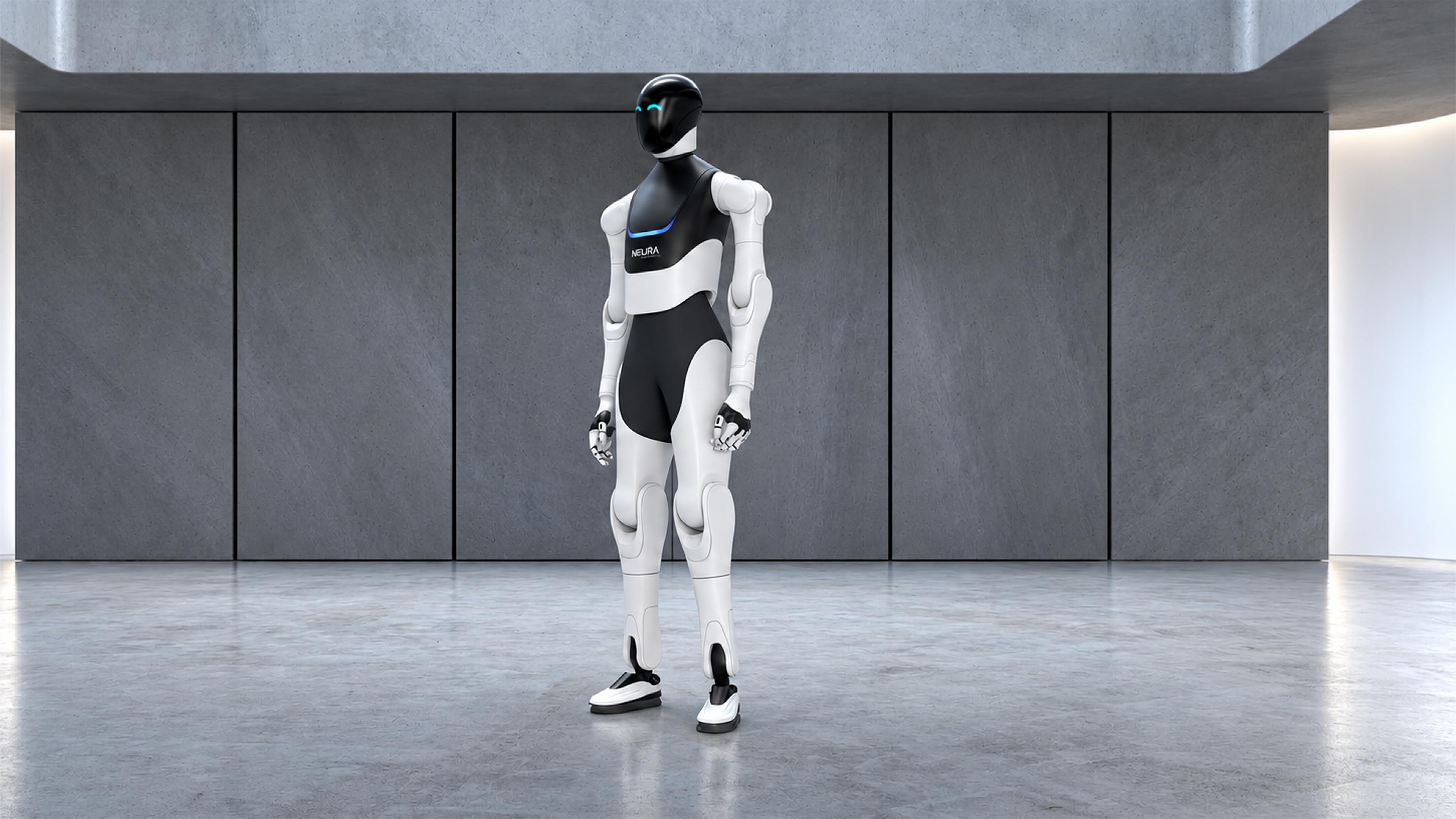
With the aim of providing robots with a heightened sense of what is going on around them as they go about physical tasks, NEURA Robotics of Germany has introduced an AI system that makes use of memory, sight, sound and touch.
The Neuron AI was made public on October 14. By melding different kinds of sensory data in one system, it gives robots the capacity to deal with circumstances beyond the reach of a camera. The technology was developed at NEURA’s Metzingen headquarters in Germany, and the technology is part of the company’s efforts to produce intelligent robots better suited for the rigors of industry and everyday environments.
How Neuron AI Works
NEURA puts it in terms of a Perception-Language-Action (PLA) model. To decide on a course of action, the model will take in account language commands, robot movement, 3D visuals, sound and any physical contact.
Then there is the matter of memory, which is integral to the system. A robot might detect the click of a mechanism or have an object’s location in mind once it is out of the camera’s line of sight. Also, because Neuron AI is run locally on the robot, decisions can be made on the machine itself without having to stay connected to the cloud.
“An intelligent robot needs a brain that brings its senses together and remembers what happened,” David Reger, founder and CEO of NEURA, said during the company’s announcement.
As of now, the model is compatible with five robot set-ups, some of them being the 4NE1 humanoid.
Humanoid Robot to Demonstrate Laundry Tasks
On October 20–22, NEURA will be showing off Neuron AI at NVIDIA GTC Berlin. There the 4NE1 is to put in an unassisted 11 minutes of laundry work: sorting clothes, putting them in the washing machine and taking them out to the dryer, opening and shutting the machine in the process. The point of the display is to convey the robot’s awareness over a series of linked tasks, not just discrete motions.
But the event is still to come and NEURA has not independently verified benchmarks as to how dependable the system is.
Training Robots for Practical Work
Training for Neuron AI comes from human demonstrations, simulated settings and actual robotic data; NEURA has been able to source material relevant to manufacturing from industrial partners such as Bosch and Schaeffler. With the Neuraverse platform, the company intends to let customers tailor the system to hand down learned abilities to other robots of a similar kind.
It is yet another move in the direction of robots capable of reading their environment and modifying their conduct while at work. Nevertheless, how well Neuron AI holds up in practice when not in a controlled situation will tell whether it has true value.
More articles on this topic
188 articles ReportWhat it Really Costs to Own a Personal Assistant Robot at Home
 ReportFour Humanoids Designed To Tackle Danger Zones
 ReportWhy Google's AI Made Spot Practise Using a Bin
 ReportTwo Tiny Robots Taking Heart Treatment from the Inside Out
 ReportPhysical Intelligence Opens Its Robot AI Models to Developers
 ReportAbu Dhabi’s New Robot Cooks Dinner Within Four Minutes
 ReportTry Before You Buy: Five Places to Test-Drive a Robot
 ReportGoogle AI Teaches Humanoid Robot to Play Cornhole by Watching Human Videos
 ReportYour Old Smartphone Could Soon Get a New Robotic AvatarReportWhy Google's AI Made Spot Practise Using a Bin
 ReportHumanoid Robots Are Learning to Navigate Obstacles Like Humans
 ReportWhat Happens When a Humanoid Robot Makes a Mistake?
BUSINESS NEWS WEEKLY LETTER
The Weekly Letter for Robotics Professionals, Summarizing the Most Important Industry Moves, Launches, Deals and Signals.